AI for Property Management Scaling: The 2026 Guide
Learn how AI for Property Management Scaling automates tenant support, maintenance, and leasing, integrates with AppFolio/Yardi, and lifts NOI. Get 2026 guide.

Feeling overwhelmed by the constant flood of tenant calls, maintenance fires, and leasing inquiries? You’re not alone. For property managers looking to grow their portfolios, the old way of doing things (hiring more people for every new set of doors) just isn’t sustainable. The key to breaking this cycle is smart technology. This is where AI for property management scaling comes in, transforming your operations from reactive and manual to proactive and automated.
This guide explores how artificial intelligence is not just a futuristic buzzword but a practical toolkit for today. We’ll cover everything from automating daily tenant communications to implementing a long term strategy, giving you a clear roadmap for using AI for property management scaling to build a more efficient and profitable business.
How does AI scale property management?
AI scales property management by automating the "Triple-A" workflow:
Automated Communication: 24/7 AI assistants resolve up to 80% of routine tenant inquiries.
Autonomous Maintenance: AI triages requests, creates work orders in your PMS (like AppFolio or Yardi), and dispatches vendors.
Algorithmic Leasing: AI qualifies leads and schedules tours instantly, reducing vacancy days by up to 30%.
Key Takeaway: By 2026, AI is no longer a luxury; it is the only way to increase door count without a linear increase in headcount costs.
Building the Foundation: Automating Core Tenant Interactions
At the heart of property management is communication. When you get this right, everything else becomes easier. AI provides the tools to deliver instant, consistent, and helpful support that keeps tenants happy and frees up your team.
Tenant Communication and 24/7 Support
The modern renter expects immediate answers. Tenant communication automation uses technology to streamline how you talk to residents, sending notifications, updates, and responses automatically. This is often powered by a 24/7 support chatbot or voice assistant.
These AI assistants are always on, ensuring no tenant query is missed, even at 3 AM. This is crucial since 45% of emergencies are reported out-of-hours. An AI can instantly triage a situation, calming a frantic tenant and logging the issue, which is a game changer for response time reduction. In fact, properties using 24/7 AI support have reported a 15% increase in renter retention because residents feel heard and cared for.
Automating Routine Tasks and Improving Accessibility
A sophisticated AI can handle up to 80% of routine questions on its own. This routine task automation covers everything from “What’s my rent balance?” to “What are the pool hours?”. The system can even perform sentiment analysis, detecting an upset tenant and escalating the conversation to a human manager for a more personal touch.
Furthermore, AI enhances accessibility. To meet ADA accessibility requirements, AI tools can offer voice based interactions for visually impaired tenants and provide communication in multiple languages, ensuring every resident has equal access to information and support.
Revolutionizing Maintenance from Request to Resolution
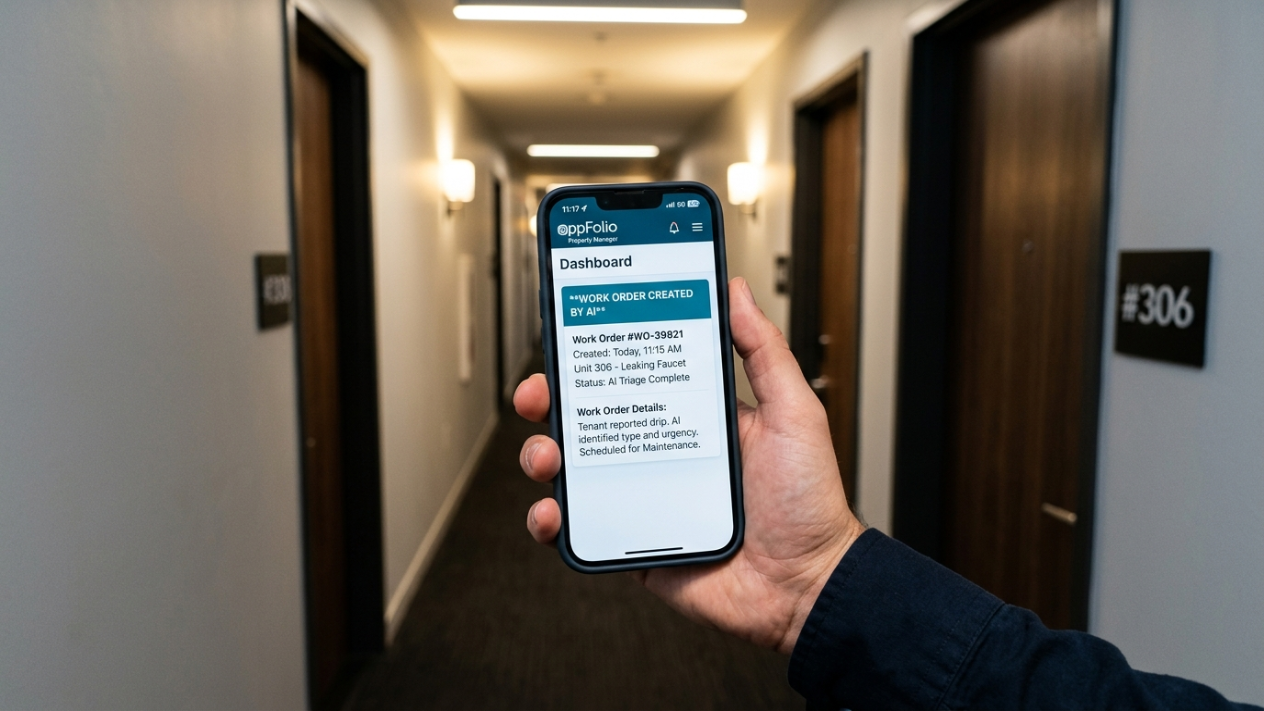
Maintenance is often the most demanding part of property management. It’s also where AI for property management scaling delivers some of the most dramatic results by creating a smooth, automated workflow.
Automating the Entire Maintenance Workflow
Maintenance request automation starts the moment a tenant reports an issue. Instead of a phone call leading to a sticky note, an AI assistant logs the details, categorizes the urgency, and creates a work order directly in your property management system.
This leads to a massive improvement in efficiency. Automated systems have been shown to cut maintenance response times by eliminating manual delays. From there, maintenance scheduling optimization takes over, with AI assigning the right job to the right technician based on skill, location, and availability. This efficient process is a cornerstone of using AI for property management scaling.
For a real world example, AI solutions like Haven’s Maintenance AI can take a tenant’s call about a leak, create an urgent work order in AppFolio, and dispatch the on call plumber in minutes, all without human intervention.
From Reactive to Predictive
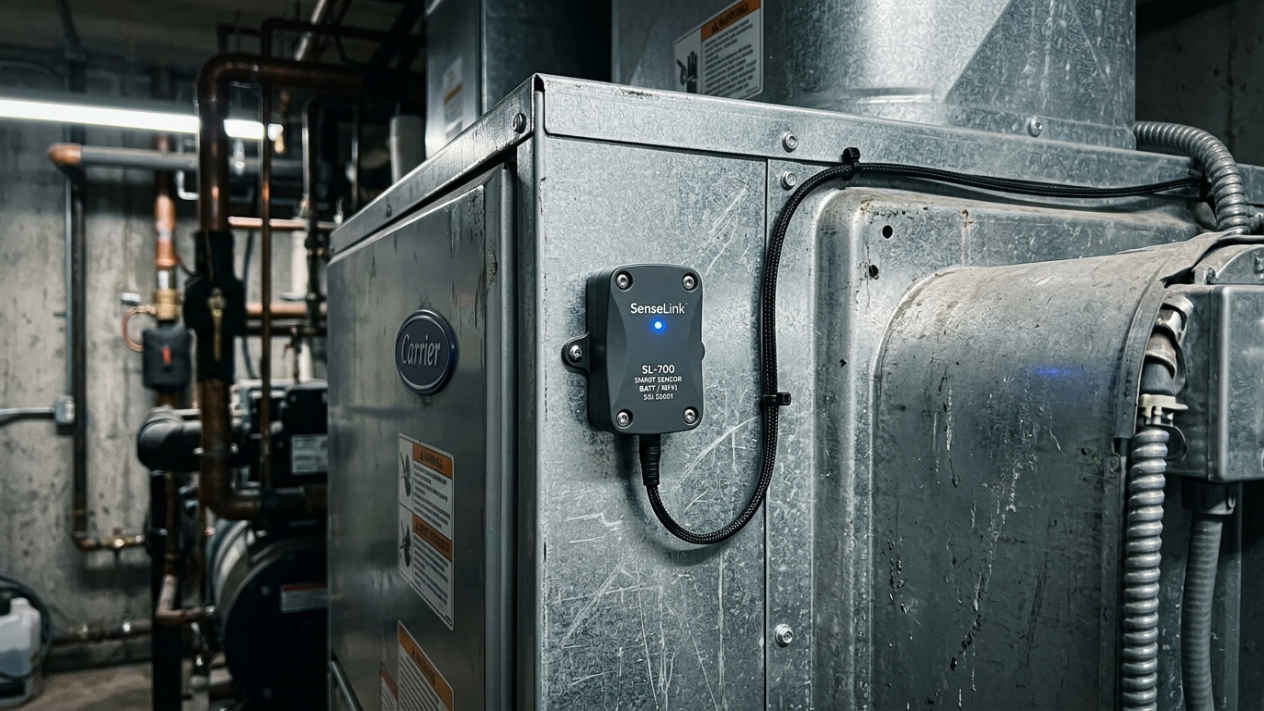
The ultimate goal is to fix problems before they happen. Predictive maintenance uses AI to analyze data from sensors and equipment logs to forecast potential failures. An AI might detect a subtle vibration in an HVAC unit and flag it for service before it breaks down on the hottest day of the year. This proactive approach can reduce overall maintenance costs by up to 40% and slash unplanned equipment downtime, extending the life of your valuable assets. This is a powerful strategy for long term AI for property management scaling.
To close the loop, AI also enables better vendor performance tracking. By logging every step from dispatch to completion, the system creates a clear record of response times and job quality, helping you make data driven decisions about your preferred vendors.
Supercharging Your Leasing Funnel
A vacant unit is a liability. AI accelerates the entire leasing process, ensuring you attract, qualify, and sign the best tenants faster than ever before.
Automating Leasing from First Contact to Signed Lease
Leasing automation provides an “always on” front door for your properties. An AI leasing assistant can respond to inquiries from sites like Zillow and Apartments.com in seconds, 24/7. This speed is critical, as studies show that responding to a lead within an hour makes you nearly seven times more likely to qualify them.
The process includes:
Lead qualification: The AI asks screening questions about move in dates, budget, and pets to separate serious prospects from casual browsers.
Tenant screening automation: For qualified leads, the system can run integrated credit, background, and eviction checks in minutes, not days. This consistent, data driven approach also helps with Fair Housing compliance.
Document processing automation: AI can handle the flow of applications and paperwork, reducing manual data entry. Some advanced tools even perform lease abstraction automation, extracting key dates, clauses, and financial details from signed leases and inputting them directly into your PMS.
Smart Pricing and Retention
To maximize revenue, dynamic rent pricing algorithms analyze market data, occupancy rates, and seasonal demand to recommend the optimal rent for every unit in real time. This strategy has provided revenue lifts of 3% to 7% by ensuring you’re never underpriced during high demand or overpriced during a lull. This data driven approach is key to profitable AI for property management scaling.
The Tech Backbone: How to Make AI Work for You
Implementing AI doesn’t have to mean a massive IT project. Modern solutions are designed to be accessible, integrable, and user friendly.
Seamless Integration and Easy Deployment
The most powerful AI tools offer deep integration with a property management system (PMS) like AppFolio or Yardi, as well as integration with CRM platforms. This allows the AI to read and write data in real time, creating work orders, logging communications, and updating lead statuses automatically. This data unification creates a single source of truth, eliminating duplicate entries and ensuring your team always has the most current information.
Best of all, this is often achieved through no code AI deployment. You don’t need to be a developer. Platforms like Haven are designed for property managers to configure and launch AI agents through simple dashboards. This makes it easy to choose between a prebuilt vs custom AI solution, with most managers finding that prebuilt, industry specific tools offer the fastest path to ROI.
Think of these tools as an AI copilot for property managers. They work alongside your team, handling the repetitive tasks so your people can focus on the high value work that requires a human touch. Curious to see how it works? You can book a demo with Haven to see an AI agent in action.
The 2026 AI Property Management Tech Stack
To successfully scale, your AI must "talk" to your existing software. Here are the core components of a scalable stack:
The Brain (PMS): AppFolio, Yardi, or Buildium (where your data lives).
The Voice (AI Agent): Tools like Haven for autonomous maintenance and tenant communication.
The Closer (Leasing AI): AI assistants that integrate with Zillow and Apartments.com.
The Optimizer (Predictive Analytics): Sensors and IoT devices that feed data into your AI for predictive maintenance.
Strategic AI Adoption: Your Roadmap to Success
Rolling out AI is a strategic journey, not a single event. A smart approach ensures you get maximum value at every stage.
Your Implementation and Adoption Strategy
A successful implementation roadmap often starts with a single, high impact pain point, like after hours maintenance calls. A phased adoption strategy allows you to prove the concept, build team confidence, and then expand AI into other areas like leasing or collections.
The key is to measure your success. Setting up clear KPI and ROI measurement is essential. Track metrics like:
Reduction in average maintenance response time.
Increase in leads converted to tours.
Cost savings from reduced call center usage.
Decrease in tenant churn.
AI can feed this data into a portfolio analytics dashboard, giving you a live view of your operational health. Over time, AI can even help with churn prediction by identifying patterns in tenant communications or maintenance requests that suggest a resident may not renew their lease. Some systems can even contribute to energy optimization by analyzing utility data to spot anomalies and recommend efficiency improvements across your portfolio.
AI Scaling Impact: 2026 Industry Benchmarks
Operational Area | Manual Process Cost | AI-Automated Impact | Scaling Benefit |
Tenant Support | $15–$25 per call | $0.50–$2.00 per interaction | 24/7 coverage with 90% cost reduction |
Leasing Funnel | 3–5 days to qualify | < 2 minutes to qualify | 7x higher lead-to-tour conversion |
Maintenance | 24–48hr triage time | Instant (Real-time) | 40% reduction in emergency repair costs |
Staff Capacity | 50–75 units per PM | 150–200 units per PM | 3x growth without new hires |
Governance, Compliance, and Building Trust
Using AI comes with responsibilities. A thoughtful approach to governance and compliance is non negotiable.
Ensuring Fairness, Privacy, and Oversight
First, human in the loop oversight is critical. This means a human is always able to review, override, or handle escalations from the AI. This is vital for complex or emotionally charged tenant issues. While AI handles the routine 80%, humans handle the exceptional cases.
This connects directly to ethical AI governance and fair housing compliance. Your AI must be built and monitored to prevent bias in tenant screening or leasing. All automated communications must use compliant, neutral language.
Finally, data privacy compliance GDPR CCPA is paramount. You must ensure your AI systems protect sensitive tenant information, are transparent about data usage, and adhere to all relevant privacy laws. Building trust is essential for a successful AI for property management scaling strategy.
Conclusion: The Future of Scaling is Now
The challenges of property management are only growing, but the tools to meet them are more powerful than ever. AI for property management scaling is no longer a concept; it’s a practical reality that helps you provide better service, operate more efficiently, and grow your business without burning out your team.
By automating routine tasks, supercharging your maintenance and leasing workflows, and making data driven decisions, you can build a more resilient and profitable portfolio. The journey starts with a single step.
Ready to see how an AI agent can transform your operations? Explore what Haven’s AI agents can do for you.
Frequently Asked Questions
1. What is the first step to using AI for property management scaling?
The best first step is to identify your biggest operational bottleneck. For many, this is managing after hours maintenance calls or responding quickly to leasing inquiries. Start with a prebuilt AI solution that targets that specific pain point to see a fast and measurable ROI.
2. Can small to mid sized property managers use AI?
Absolutely. Thanks to no code deployment and subscription based models, AI for property management scaling is accessible to portfolios of all sizes. You don’t need a large IT team to get started. The goal is to make your existing team more productive, which is especially valuable for smaller operations.
3. How does AI integrate with my existing software like AppFolio or Yardi?
Modern AI solutions are built to integrate directly with major Property Management Systems (PMS) through APIs. This allows the AI to act like a virtual employee, creating work orders, logging notes, and updating records in the software you already use, ensuring all your data stays in one place.
4. What kind of ROI can I expect from property management AI?
ROI comes from multiple areas: hard cost savings from replacing expensive call centers, reduced staff overtime, faster vacancy filling which reduces lost rent, and improved tenant retention which lowers turnover costs. Companies have reported saving property managers an average of five hours per week on communication tasks, and some are now planning to reduce call center services costs by 65%.
5. How does AI help with Fair Housing compliance?
By automating tenant screening and initial communications with standardized, pre approved criteria and language, AI helps ensure every applicant is treated consistently. This reduces the risk of human error or unconscious bias that can lead to Fair Housing violations. However, human oversight remains crucial for final decisions.
6. Will AI replace property managers?
No, AI is designed to augment property managers, not replace them. By taking over the repetitive, time consuming tasks, an AI copilot frees up human managers to focus on strategic work, complex problem solving, and building strong relationships with tenants and owners, which are all key to successful AI for property management scaling.