Future of AI Property Management: 5 Trends for 2026
Explore the Future of AI Property Management in 2026: 5 trends delivering ROI—from maintenance and leasing automation to predictive maintenance. See how.

In 2026, artificial intelligence has moved past buzzword status—it is now a core driver of innovation and efficiency in property management. AI powered analytics and automated workflows are fundamentally changing how property managers operate, engage with tenants, and boost profitability. The discussion has shifted from if AI will be used to how it’s being executed to build more resilient and profitable portfolios. For property managers, the future of AI property management is about practical tools, measurable ROI, and smarter, more streamlined operations.
What are the top AI property management trends for 2026? The five most impactful AI trends in property management for 2026 are:
Maintenance AI: 24/7 automated triage and work-order creation.
Leasing AI Assistants: Instant lead qualification and 24/7 tour scheduling.
Voice AI Technology: Natural-language phone agents that eliminate missed calls.
Rent Collections AI: Predictive delinquency modeling and automated outreach.
Predictive Maintenance: IoT-integrated sensors that detect failures before they occur. These technologies are projected to reduce operational expenses by up to 20% while increasing lead-to-tour conversions by 33%.
What is AI in Property Management and How We Got Here
AI in property management involves using technology to automate and enhance tasks that traditionally required human intervention. This includes everything from machine learning algorithms that forecast rent trends to natural language processing that powers 24/7 tenant communication.
The journey began with simple spreadsheets and on-premise software in the 1980s and 90s, which digitized basic accounting and lease management. The 2000s brought cloud computing, offering real time data access and scalability. Today, AI has evolved into sophisticated systems that can triage maintenance requests, qualify leasing leads, and provide data driven insights to optimize everything from pricing to energy consumption. This evolution reflects a larger shift from manual processes to intelligent, automated operations that are now essential for staying competitive.
The Current State in 2026: Adoption Momentum and Ecosystem
The adoption of AI in property management has surged, with a majority of property management professionals now using AI in at least one aspect of their business. Industry reports confirm the acceleration: AI adoption has now reached 58% across multifamily operators, up from just 20% the prior year, confirming this is no longer an early-adopter advantage but a baseline competitive necessity. The global AI in real estate market is projected to grow exponentially, expecting to reach $1.3 trillion by 2030.
Despite this momentum, there's a "pilot paradox": while 86% of multifamily property management operators are running multiple AI pilots simultaneously, only a fraction have progressed to live, production use. This gap is often due to challenges with fragmented data, legacy system integration, and a lack of trust in AI-generated financial analysis—but increasingly, it's also because many pilots were designed without a clear path to integration. The winners in 2026 aren't those running the most pilots; they're the ones who designed their first pilot with live production in mind, treating it as a 90-day proof of a specific workflow rather than an indefinite experiment. The ecosystem is now focused on solving these issues, with a new generation of AI platforms like Haven offering deep integrations with existing Property Management Systems (PMS) to make AI more accessible and actionable.
The 2026 AI Adoption Landscape
As of early 2026, the AI in real estate market has reached an estimated $404.9 billion, growing at a CAGR of over 34%. While 90% of firms are now testing AI, the "competitive gap" is widening between those running isolated pilots and those with fully integrated "Agentic AI" workflows that sync directly with their PMS.
Why AI Matters: Business Benefits and Real World Impacts
The future of AI property management is tied directly to its tangible business benefits. Companies using AI see significant returns on investment, with some reporting improves the day-to-day productivity of onsite teams by 10% and 20% reduction in operations expenses. These aren’t just marginal gains; they are powerful competitive advantages.
Key benefits include:
Increased Efficiency: AI automates routine tasks, freeing up staff to focus on high value work like resident relationships and strategic growth. In 2025, one portfolio handled over 242,000 leasing messages with an AI assistant, showcasing the technology’s ability to manage volume.
Cost Reduction: Predictive maintenance AI can identify potential equipment failures before they become costly emergencies, reducing repair expenses. Some companies have cut energy and maintenance costs by up to 20% using these tools.
Enhanced Tenant Experience: Renters increasingly prefer digital self service options for paying rent and submitting maintenance requests. AI powered chatbots and voice agents provide 24/7 support, answering common questions instantly and improving overall resident satisfaction.
Faster Leasing Cycles: AI leasing assistants can respond to inquiries in seconds, qualify leads, and schedule tours around the clock. This 24/7 availability means about 60% of leasing interactions can happen outside of business hours, ensuring no lead is missed.
For many, this translates into replacing expensive call centers and achieving a measurable ROI within the first year of implementation.However, the hidden win in 2026 isn't cost savings—it's optionality. Operators who deploy AI leasing assistants and maintenance triage don't just cut labor spend; they free up senior staff to focus on relationship-critical work like retention strategy and vendor negotiation. In a tight labor market, this shift from "we can't afford to hire" to "we choose not to hire routine-task specialists" is a profound competitive advantage that compounds over time.
AI Application | Primary Benefit | Key 2026 Performance Metric |
Leasing Assistants | Lead Conversion | 400% increase in response speed |
Maintenance AI | Cost Reduction | 20% lower after-hours call center spend |
Voice AI | Occupancy Lift | 1.2% average increase in portfolio occupancy |
Rent Collections | Cash Flow | 73% of tenants more likely to pay on time |
Predictive Sensors | Risk Mitigation | 35-45% reduction in equipment downtime |
Where AI Already Delivers Value Today (Core Applications)
The future of AI property management is already here in several core applications that deliver immediate value. These aren't experimental concepts but proven solutions actively streamlining operations for property managers. (See our breakdown of AI property management software solutions to compare the specific tools optimized for each use case.)
Maintenance Coordination
AI is transforming maintenance from reactive to proactive. AI agents can intake tenant requests 24/7 via phone or text, triage issues to identify emergencies, and automatically create work orders in your PMS. Advanced systems like Haven’s Maintenance AI can even dispatch preferred vendors and follow up with tenants once work is complete, automating the entire workflow.
Leasing Automation
AI leasing assistants work as a force multiplier for leasing teams. They handle initial inquiries from sites like Zillow and Apartments.com, qualify prospects based on your criteria, and schedule tours. This ensures every lead is nurtured, even after hours, significantly boosting conversion rates and reducing vacancies.
Tenant Communication
AI provides a centralized, 24/7 communication hub for residents. Whether it’s a question about community policies or an update on a maintenance request, AI agents offer instant, consistent answers. This improves the tenant experience and is a key feature of modern Voice AI technology that frees up your team from repetitive inquiries.
Top 5 Trends Shaping the Future of AI Property Management
As the real estate landscape undergoes a rapid digital transformation, several key innovations are emerging as the frontrunners in operational efficiency and resident satisfaction. These five trends represent the most impactful applications of artificial intelligence currently revolutionizing how property managers handle everything from initial inquiries to long-term asset preservation. By integrating these specific technologies, firms can move beyond reactive management and embrace a proactive, data-driven approach to their entire portfolio. For a detailed side-by-side evaluation of which best AI property management software fits your ops, see our guide below; for now, let's break down each trend's mechanics and ROI.
1. Maintenance AI
Rising 2026 operating costs and resident expectations make after-hours maintenance the pressure point in property ops. Maintenance AI steps in as a 24/7 triage specialist, eliminating manual intake and PMS re-entry while catching true emergencies fast, shrinking downtime, call-center spend, and resident frustration in one motion.
Channels: Voice-first with SMS and email for confirmations, updates, and escalations.
Data & integrations: Bi-directional sync with AppFolio/Buildium and phone systems; can ingest ILS inquiries to route non-maintenance calls appropriately.
Actions: Create/update work orders, route to on-call or preferred vendors, text ETA/status, and hand off to humans with full transcripts when needed.
Mechanics: Intent detection, emergency rules, conversation memory, and SLA-driven escalation ensure nothing stalls or slips.
Operators like Luke Properties manage 360+ units with leaner teams using AI to contain after-hours volume and automate work-order creation inside the PMS. Expect faster dispatch, and meaningful call-center savings driven by first-contact resolution.
Best for: Portfolios ≥350 units on AppFolio or Buildium needing reliable after-hours coverage.
Prereqs: PMS access, on-call schedules, and vetted vendor lists with SLAs.
Compliance: Fair Housing guardrails and consent-based call recording with transparent resident notices.
Rollout: Run a 2 to 4 week pilot; track first-contact resolution, dispatch speed, and cost-per-door before expanding.
2. Leasing AI Assistants

ILS consolidation and higher call-center costs mean unanswered inquiries now translate directly to lost occupancy. Leasing AI assistants provide round-the-clock coverage, qualifying leads instantly, booking tours on the spot, and keeping Fair Housing compliance front and center, so every prospect is acknowledged and advanced.
Channels: Unified voice, SMS, and email across property sites and ILS listings.
Data & integrations: PMS/CRM sync (AppFolio, Yardi) plus API/email lead delivery from Zillow/Apartments.com; IVR routing for phone.
Actions: Real-time tour scheduling, instant FAQs, automated follow-ups/nurture, and emergency maintenance intake when residents call the leasing line.
Mechanics: Conversational intent detection with memory and escalation to humans for complex or policy-sensitive cases.
Teams deploying assistants report major efficiency gains. Veris Residential achieved a 33% lead-to-tour conversion rate and saved over 12,000 staff hours; maintenance intake accuracy can reach 99.94%, reducing after-hours misroutes and preventing costly dispatch errors.
Best for: Centralized leasing across portfolios ≥350 units.
Prereqs: PMS API access, tour calendar integration, and defined qualification criteria.
Compliance: Strong Fair Housing guardrails, approved responses, and all-party recording consent.
Rollout: Pilot 30 days at high-volume sites; benchmark first-contact resolution, booked tours, and cost-per-door before regional rollout.
3. Voice AI Technology
When labor tightens and occupancy softens, missed calls are expensive. Voice AI turns every phone line into a 24/7 virtual agent that authenticates callers, classifies intent, and takes action, so after-hours maintenance is triaged instantly and leasing prospects never land in voicemail.
Channels: Natural-language voice with SMS follow-ups for confirmations and updates.
Data & integrations: PMS/CRM (e.g., AppFolio) for availability and service history, plus phone systems for failover and warm transfers.
Actions: Qualify leads, schedule tours, create work orders, and dispatch vendors; hand off to staff with live transcripts.
Mechanics: Caller authentication, emergency vs. routine classification, SLAs, and PII safeguards with auditable logs.
Voice automation correlates with real gains: with On average, multifamily professionals miss 49% of all calls to their properties., portfolios centralizing with AI report a 1.2% occupancy lift. EliseAI data shows 24.4% of maintenance requests are resolved at intake, speeding responses while cutting third-party call-center costs.
Best for: Portfolios ≥350 units needing dependable after-hours coverage and leasing availability.
Prereqs: PMS API access, clear emergency protocols, and escalation paths.
Compliance: Fair Housing alignment and TCPA disclosures, including recording notices and opt-out logic.
Rollout: Start with a 30-day regional pilot; track first-contact resolution, tour set rate, and cost-per-door before scaling.
4. Rent Collections AI
As median outstanding balances climb and rents cool, collections needs precision and empathy at scale. Rent Collections AI automates compliant outreach, predicts delinquency risk, proposes payment options, and posts back to ledgers, reducing manual dialing while protecting NOI with a fully auditable trail.
Channels: Compliant voice, SMS, and email with time-of-day and consent controls.
Data & integrations: Deep PMS/accounting access (AppFolio, Yardi) for real-time balances, notes, and payment status.
Actions: Prioritize accounts, negotiate plans, process ACH, log promises-to-pay, and escalate hardship cases with transcripts.
Mechanics: Historical risk scoring with Reg F/TCPA rules, cadence automation, and conversation memory for consistent, humane follow-through.
rograms that pair AI with rent reporting have shown Seven in 10 renters (73%) would be more likely to make on-time rent payments if property managers reported rent payments to a credit bureau., lifting recoveries while preserving resident relationships.
Beyond collections, many operators pair rent AI with leasing AI software so the same tenant who qualifies via an AI agent is later managed by an AI collections system—creating a continuous, compliant relationship arc from prospect to payer.
Best for: Centralized AR operations across ≥1,000 units.
Prereqs: PMS API access, approved settlement matrices, and payments gateway integration.
Compliance: FDCPA, TCPA, and NYC DCWP (2026) standards with consent and documented disclosures.
Rollout: Pilot 60 days; monitor 30+ DPD rate, promise-to-pay conversion, and recovery cycle time, then expand.
5. Predictive Maintenance
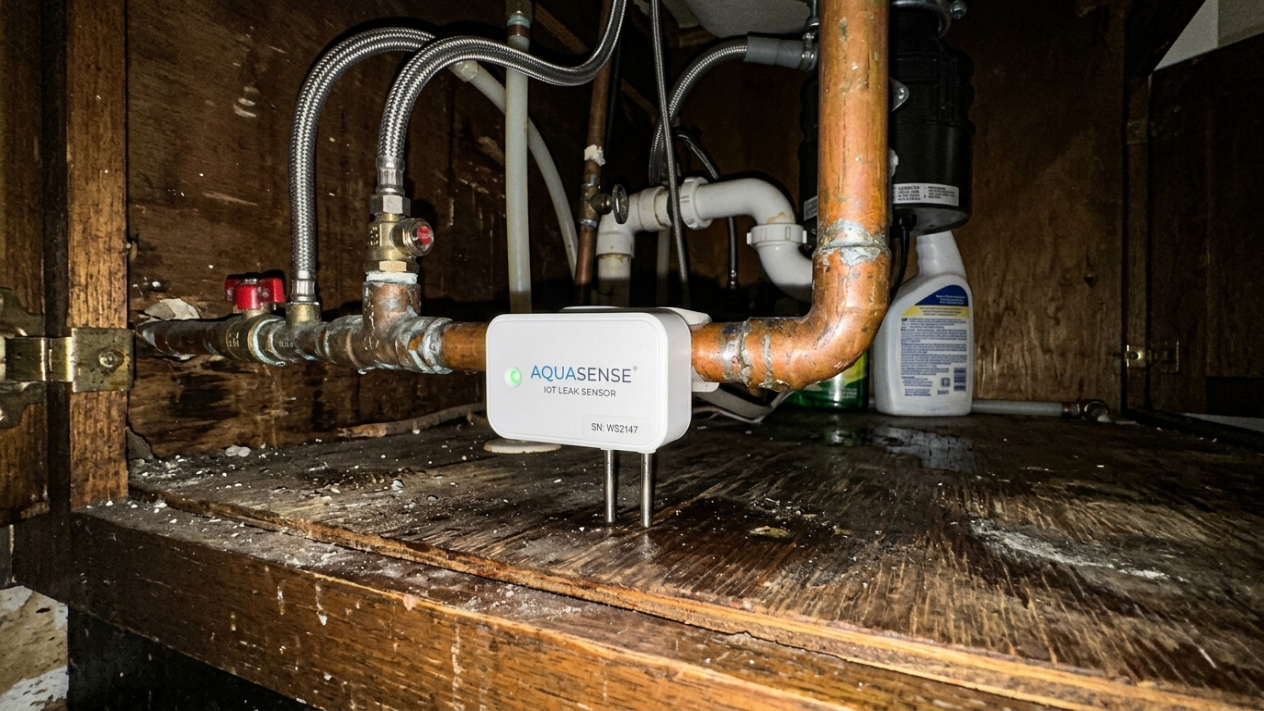
Equipment failures create outsized cost, risk, and resident churn. Predictive maintenance blends IoT sensors with PMS history to detect anomalies early, autogenerate tickets, and dispatch the right vendor, cutting emergency calls, averting water damage, and stretching capex lifecycles in a labor-constrained 2026.
Channels: Proactive alerts via SMS, email, and optional voice notifications to on-call staff.
Data & integrations: PMS service history, connected sensors (water, HVAC), and BMS where available.
Actions: Create work orders, attach diagnostics, auto-dispatch vetted vendors, and update tickets with status.
Mechanics: Fault detection, trend analysis, and triage rules to separate routine from high-priority incidents and escalate immediately.
Results are material: predictive programs cut downtime 35% to 45% and maintenance costs ~12%. One Florida community avoided a $25,000 loss through early leak detection; operators also report up to 15% insurance premium discounts tied to connected-sensor mitigation, per DOE benchmarks.
Best for: Assets with water exposure, aging HVAC, or high after-hours volume.
Prereqs: Sensor rollout plan, PMS integration, vendor SLAs, and response playbooks.
Compliance: CCPA/CPRA-aligned data retention and consent for any automated voice dispatch.
Rollout: Start with a 2 to 4 week regional pilot; validate alert fidelity, response time, and avoided-loss metrics before scaling.
Challenges and Best Practices in Adoption
While the future of AI property management is bright, successful adoption requires navigating a few key challenges.
Common Challenges:
Data Quality and Integration: AI is only as good as the data it's trained on. Fragmented or inaccurate data from legacy PMS systems can limit an AI's effectiveness.
High Upfront Costs: The initial investment for some AI solutions can be a barrier for smaller operators.
Team Buy In and Training: Staff may be resistant to new technology if they don't understand how it benefits them. Proper training is critical to ensure tools are used effectively.
Security and Compliance: AI systems handle sensitive tenant data, so ensuring compliance with privacy laws and Fair Housing regulations is crucial.
The overlooked challenge: scope creep. Many operators deploy AI property management software with a single, laser-focused goal—say, after-hours maintenance triage—then immediately ask the platform to do 10 other things at once. This dilutes the ROI signal, makes measurement impossible, and burns out the team. The discipline to say "not yet" on feature requests and prove success on one workflow before expanding is rare but essential. It separates operators who saw a 20% cost drop from those who saw a 2% drop on paper while chaos reigned in practice.
Best Practices for Success:
Start with Clear Goals: Define what you want to achieve, whether it’s reducing maintenance response times or increasing lead conversion.
Choose Integrated Solutions: Opt for AI tools designed to work seamlessly with your existing PMS to avoid data silos. A platform like Haven that specializes in property management integrations can prevent major headaches.
Prioritize Team Training: Involve your team early and provide clear training that shows how AI makes their jobs easier, not harder.
Balance Automation with a Human Touch: Use AI to handle repetitive tasks but retain human oversight for complex, nuanced situations that require empathy and judgment.
Checklist: Is Your Portfolio Ready for AI Integration?
[ ] PMS Compatibility: Does your Property Management System (e.g., AppFolio, Yardi) have open API access?
[ ] Data Hygiene: Are your unit records, vendor lists, and tenant ledgers updated and accurate?
[ ] Hardware Audit: For predictive maintenance, do you have IoT-ready sensors on high-risk assets like main water lines?
[ ] Compliance Review: Have you updated your resident privacy notices to include AI voice recording and data processing?
[ ] Staff Pilot: Have you identified a "super-user" on your onsite team to lead the 30-day trial?
How to Get Started and Prepare for These Trends
Getting started with the future of AI property management doesn’t require a complete operational overhaul. The key is to start small, identify your biggest pain points, and choose a partner that understands the unique needs of property management.
First, assess your current workflows. Are you missing after hours maintenance calls? Are leasing inquiries falling through the cracks? Pinpointing these areas will help you identify the right AI solution.
Next, look for platforms with built in AI features and a focus on easy integration. The goal is to enhance your current systems, not replace them. Solutions that offer tailored onboarding and setup, like Haven, ensure the technology is configured to solve your specific problems.
Finally, prepare your team for the change. Frame AI not as a replacement, but as a powerful assistant that will handle the repetitive tasks, allowing them to focus on more strategic and fulfilling work. To see how these tools work in the real world, book a demo and explore how an AI agent could fit into your operations.
Conclusion: AI’s Future is Practical, Embedded, and Measurable
The future of AI property management is not about hype or far off concepts. It’s about practical, embedded tools that deliver measurable results today. By automating workflows, enhancing communication, and providing data driven insights, AI is empowering property managers to operate more efficiently, reduce costs, and provide a superior tenant experience.
As technology continues to advance, AI will become even more integrated into the core infrastructure of property management. The companies that embrace this shift won’t just be keeping up; they’ll be leading the way, building more scalable and profitable businesses. The future of AI property management is about augmenting human expertise, not replacing it, creating a powerful partnership that unlocks new levels of performance. To prepare your portfolio for this future, explore what AI agents can do for you at Haven.
FAQ
What is the future of AI property management?
The future of AI property management is centered on deep integration with core systems, hyper automation of workflows like maintenance and leasing, and predictive analytics for smarter decision making. It will shift from being a standalone tool to an essential, embedded part of daily operations that drives efficiency and improves resident experiences.
How is AI currently used in property management?
Today, AI is used for a variety of tasks, including 24/7 tenant communication through chatbots and voice agents, automated maintenance request intake and dispatch, AI leasing assistants that qualify leads and schedule tours, and data analysis to optimize rental pricing and identify market trends.
What are the main benefits of AI for property managers?
The primary benefits include significant cost savings from operational efficiency, increased productivity by automating repetitive tasks, faster leasing cycles, reduced staff burnout, and improved tenant satisfaction through instant, 24/7 support.
Will AI replace property managers?
No, AI is not expected to replace property managers. Instead, it acts as a powerful tool that augments their capabilities. AI handles the routine, administrative work, freeing up managers to focus on strategic initiatives, relationship building, and complex problem solving where human judgment is essential.
What are the risks of using AI in property management?
Potential risks include issues arising from poor data quality, the high initial cost of some platforms, violating data privacy or Fair Housing regulations if not implemented carefully, and over reliance on automation without necessary human oversight for nuanced situations.
How can a small property management company start using AI?
Small companies can start by identifying their biggest operational pain point, such as handling after hours calls or responding to leasing leads. From there, they can adopt scalable, cost effective solutions like AI voice agents or leasing chatbots that integrate with their existing software without requiring a massive upfront investment.