Property Management AI Myths: 10 Facts That Matter (2026)
Cut through the noise with 10 proven answers to Property Management AI Myths—implementation, ROI, compliance, and resident experience. Get the facts now.

Artificial intelligence is the talk of the town in property management, and for good reason. It promises to streamline operations, answer calls around the clock, and free up your team for more important work. But with all the excitement comes a lot of noise and a fair share of confusion about property management AI. Is AI coming for your job? Is it just for big corporations?
At a Glance: The Reality of Property Management AI in 2026 Property management AI is not a replacement for human staff, but a digital co-pilot designed to automate high-volume tasks. In 2026, the most significant facts are that AI can reduce maintenance response times by up to 76%, lower operational costs by 20%, and integrate with existing systems like AppFolio or Yardi in less than two hours. Contrary to myths, AI enhances the resident experience by providing 24/7 instant support without losing the "human touch" for complex issues.
Let’s cut through the hype. We’re going to tackle the ten most common property management AI myths one by one, separating the facts from the fiction. By the end, you’ll have a clear picture of what AI can realistically do for your business.
Myth 1: AI Will Replace Property Managers (Job Security)
This is the big one, the fear that robots will take over and make human managers obsolete. It’s a common anxiety whenever automation comes up, but it’s one of the most persistent property management AI myths.
The Reality: AI is here to empower property managers, not eliminate them. The industry consensus is that property management is fundamentally a people business. AI lacks the human touch needed to negotiate a sensitive rent dispute, build a relationship with a property owner, or calm an angry tenant.
Instead of replacement, think augmentation. Modern AI can handle a significant portion of a manager’s administrative workload, like answering common questions and logging work orders, among many other use cases. This frees up your team to focus on high value activities that build relationships and grow the business. The reality isn’t “AI replacing managers,” it’s “managers who use AI replacing those who don’t”. AI is a power tool, not a pink slip.
Myth 2: AI is a Brand New Idea in Property Management
It’s easy to think that AI just dropped out of the sky and is a totally new, untested concept in real estate. This is a common myth that makes some managers hesitant to adopt the technology.
The Reality: While the technology is more advanced than ever, AI driven tools have been part of the property management landscape for years. Adoption has only skyrocketed since then. What we’re seeing today isn’t a sudden arrival but the next stage of an evolution that has been happening for a while. AI is quickly moving from being the new kid on the block to standard practice.
Myth 3: AI is Too Complicated to Implement
There’s a perception that you need a team of developers and a massive IT budget to get AI up and running. This is one of the most discouraging property management AI myths for small to mid sized companies.
The Reality: Getting started with AI doesn’t have to be a technical nightmare. Many modern AI tools are designed for easy, no code integration. Some platforms can be deployed in under two hours, plugging directly into your existing Property Management System (PMS) without disrupting your workflow. (See how integration works in our FAQ.)
The key is choosing a partner that understands property management. For instance, providers like Haven work with you to train the AI on your specific processes. One customer noted that the Haven team “worked closely with us to customize the work order setup in AppFolio to fit our needs perfectly”. With the right vendor support, implementation is very doable, even for smaller portfolios without a dedicated tech team.
Myth 4: AI is Limited to Leasing (Maintenance & Operations)
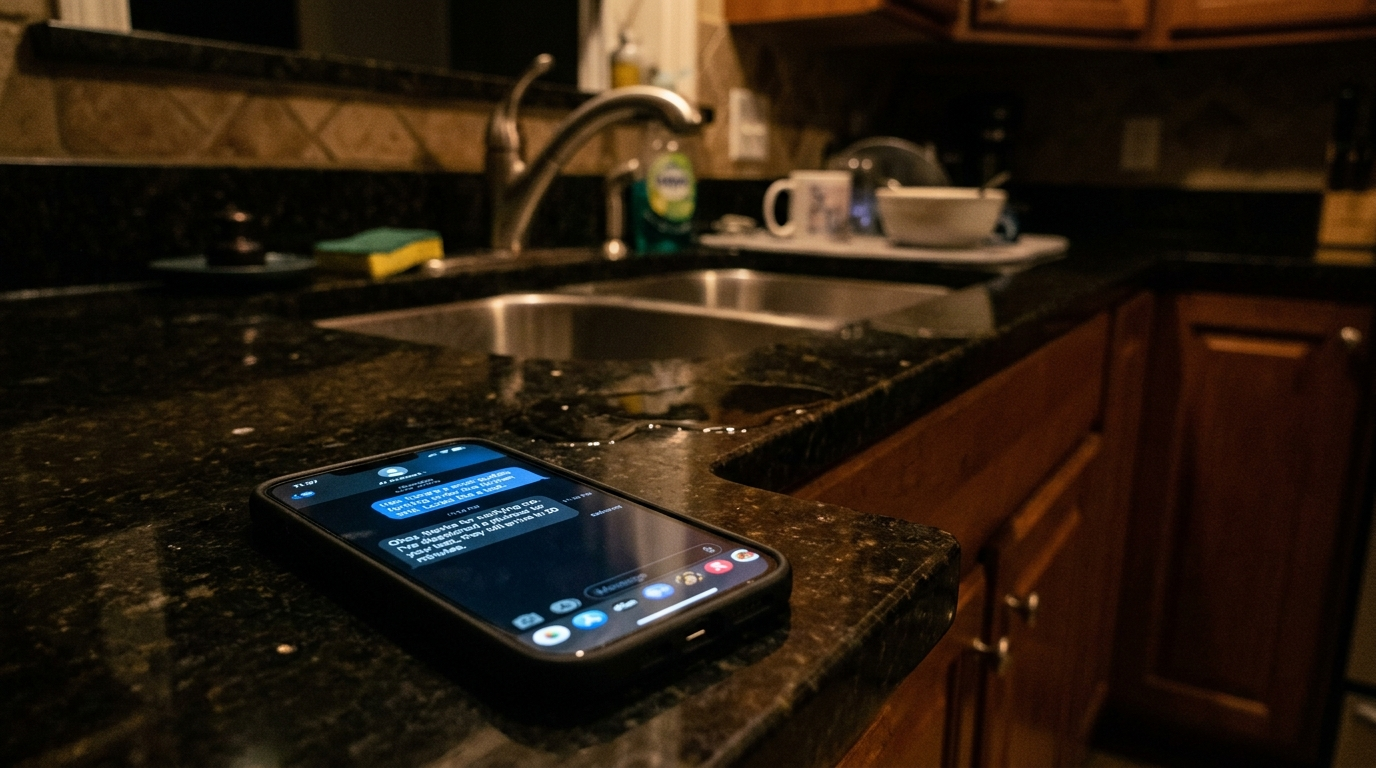
Because AI leasing assistants were one of the first popular applications, many people believe that’s all AI can do. They think it’s just a smart tool for answering Zillow inquiries and nothing more.
The Reality: AI’s usefulness extends far beyond leasing. While it excels at lead engagement (a 65% improvement in lead-to-lease conversion rate when using an apartment chatbot (2.8% vs. 1.7%)), it’s transforming nearly every corner of property operations.
Consider these other use cases:
Maintenance: AI can handle after hours emergency calls, troubleshoot issues with tenants, and automatically dispatch the correct vendor. Property managers using AI for maintenance report maintenance issues resolved 76% faster.
Rent Collection: AI can flag tenants who might pay late, send automated reminders, and even help arrange payment plans.
Operations: Smart energy management AI cut utility costs by 20% in a 200-unit multifamily building (case study).
AI is a team of specialists. You can have a Leasing AI agent qualifying leads while a Maintenance AI agent like the one from Haven is coordinating repairs, creating a smoother operation across the board.
Property Management Function | Traditional Method (Manual) | AI-Enhanced Method (2026) | Impact Metric |
Maintenance Requests | Manual intake; delayed dispatch. | 24/7 AI triage & auto-dispatch. | 76% faster resolution |
Lead Conversion | Human follow-up (business hours). | Instant AI chat & scheduling. | 65% higher conversion |
Utility Management | Monthly bill review. | Real-time smart monitoring. | 20% cost reduction |
Rent Collection | Manual reminders/notices. | Predictive delinquency flagging. | Lower late-payment rates |
Myth 5: AI Can’t Handle a Real Conversation
Skeptics believe AI assistants are just glorified phone trees that can’t understand context or have a natural, human like conversation. They assume tenants will quickly get frustrated by robotic, scripted responses.
The Reality: Conversational AI has become so advanced that tenants often don’t realize they’re not speaking with a person. Powered by natural language processing, modern AI can understand complex inquiries, remember context within a conversation, and even detect a person’s intent.
The results speak for themselves. One multifamily firm saw appointment bookings surged by nearly 40% after an AI assistant started handling their leasing calls, smoothly answering detailed questions about pricing, pets, and move in dates. Good AI systems also know their limits. When they detect an angry tone or a question they can’t answer, they are programmed to escalate the conversation to a human team member, ensuring no one gets stuck in a frustrating loop.
Myth 6: AI Can’t Be Trusted with Compliance or Accuracy
This is a serious concern. What if a bot misquotes the rent, gives incorrect information about a lease, or says something that violates fair housing laws? These are valid questions that fall under the umbrella of property management AI myths.
The Reality: A well designed AI can actually reduce human error and improve compliance. Unlike a person, an AI never forgets a step in a programmed workflow and won’t invent answers. It pulls information directly from your PMS, ensuring the data it provides is accurate.
This consistency is a major benefit. An AI can be programmed with strict guardrails, such as never asking questions about protected classes, which helps bulletproof your operations against certain fair housing violations. Humans still oversee the system, but the day to day error rate often drops significantly with AI.
Note on AI Governance: While AI automates the "doing," humans remain the "deciders." Modern systems use a Human-in-the-Loop (HITL) framework where the AI flags high-risk compliance issues for manual review, ensuring zero Fair Housing violations.
Myth 7: AI is Unsuitable for Unique Property Types
If you manage a manufactured housing community, student housing, or a scattered portfolio of single family homes, you might think AI is too generic for your unique needs.
The Reality: Modern property management AI is highly customizable. It can be trained on the specific rules, vocabulary, and processes of any portfolio. If your community uses terms like “lot rent,” the AI can learn them. If you have a unique pet policy, that can be programmed in.
AI platforms like Haven are explicitly built to be tailored, understanding “the nuances of your unique portfolio and policies”. Your community isn’t too unique for AI; the AI is simply trained to become an expert on your unique operations.
Myth 8: AI is Too Expensive for Small and Mid Sized Businesses

Another one of the most pervasive property management AI myths is that the technology is a luxury reserved for large enterprises with deep pockets.
The Reality: For most companies, AI is an investment with a powerful return. Staff respondents said 36% of their time is spent on “busy work,” down from 40% in 2022. AI automates that work for a fraction of the cost. (Learn more about how AI is priced.)
The ROI is often staggering, with some analyses showing a record ROI of 708%. It comes from reduced call center bills, lower staffing costs, and increased revenue from captured leads and better tenant retention. One mid sized firm owner said of his AI investment, “The ROI is crazy!!!”. When you consider the cost of missed calls and staff burnout, the question becomes, can you afford not to use AI?
Myth 9: AI Lacks a Personal, Human Touch
There’s a worry that automating communication will make interactions feel cold and impersonal, ultimately damaging the resident experience.
The Reality: Many tenants today prioritize speed, availability, and consistency just as much as small talk. Getting a maintenance issue logged and resolved at 2 AM can feel more personal and caring than waiting until the next morning for a friendly phone call.
The data backs this up. Modern AI can also be programmed with a friendly, helpful tone and use personalization tokens (like a tenant’s name and unit number) to make the interaction feel specific to them. The best approach is a blend: let AI handle routine inquiries with personalized efficiency, freeing up your team for the high touch moments that truly require human empathy.
Myth 10: AI is Just a Passing Trend
With so many new technologies coming and going, some believe AI is just the latest buzzword that will fade away in a few years. Viewing it this way is one of the riskier property management AI myths.
The Reality: All signs point to AI being a fundamental and permanent shift in how property management works. More than nine in ten C-suite leaders believe AI will change the way the workforce operates over the next five years, and a similar proportion plans to accelerate investment in AI over that period. By 2025, nearly 9 in 10 real estate firms had AI pilot projects underway.
This isn’t a fad; it’s an evolution. The market for property management AI is projected to grow at double digit rates annually for the foreseeable future. Companies who treat AI as a passing trend risk being left behind by competitors who are becoming more efficient and responsive. If you’re ready to embrace this lasting transformation, you can book a demo with Haven to see how AI can become a stable, long term asset for your business.
Frequently Asked Questions About Property Management AI
Can AI really handle emergency maintenance calls?
Yes. A properly trained AI can detect keywords related to emergencies (like “fire” or “flood”), gather critical information from the tenant, and immediately escalate the issue to the on call human or dispatch an emergency vendor according to your protocol.
How much does property management AI cost?
Pricing varies, but it’s far more accessible than most people think. Many solutions are priced to be scalable for smaller portfolios. The cost is typically a fraction of hiring an additional employee or paying for a traditional after hours call center, and the ROI is often realized very quickly.
Will my tenants get frustrated talking to a robot?
Modern conversational AI is surprisingly natural, and many tenants prefer the instant, 24/7 answers it provides. For routine requests, a quick, efficient resolution from an AI is often preferred over waiting for a human. Plus, good systems are designed to seamlessly hand off complex or emotional conversations to a person.
Is it difficult to integrate AI with my existing software?
No. Most modern AI platforms are designed for easy, no code integration with popular property management software like AppFolio, Yardi, and Rent Manager. A good provider will handle the setup and ensure the AI works perfectly with your current systems. You can see how an integration works to understand the process better.
Is Your Portfolio Ready for AI?
Before debunking the final myths, use this checklist to see if your operations are ready for an AI transition:
Centralized Data: Is your lease and tenant info in a modern PMS (AppFolio, Yardi, etc.)?
Defined Workflows: Do you have a clear process for maintenance emergencies?
Communication Gaps: Identify where you miss the most calls (after-hours, weekends).
Scalability Goals: Are you looking to grow units without adding additional headcount?
Conclusion
AI is here, and it’s already reshaping the property management industry. The biggest property management AI myths often stem from a misunderstanding of what the technology is and how it’s best used.
AI isn’t a replacement for human expertise; it’s a tool that handles the repetitive, time consuming tasks, allowing you and your team to focus on strategy, growth, and resident relationships. It’s affordable, easy to implement, and incredibly versatile. The data is clear: property managers who embrace AI are gaining a powerful competitive advantage. Don’t let myths hold you back from making your business more efficient and profitable.