AI Property Management Compliance: 2026 Guide to HUD & FHA
Master AI Property Management Compliance in 2026—covering FHA/HUD rules, ad and screening risks, bias audits, human oversight, and data privacy. Get steps now.

Artificial intelligence is quickly changing the property management landscape. From 24/7 leasing assistants to smart maintenance coordinators, AI tools promise incredible efficiency. But with great power comes great responsibility. How can you leverage these innovations without running into legal trouble? The answer lies in a solid understanding of AI property management compliance.
This guide breaks down the essential legal and ethical concepts you need to know. We will cover everything from fair housing laws to data privacy, giving you the confidence to use AI responsibly. Whether you’re using an AI to answer calls or screen applicants, these are the principles that will keep your operations fair, ethical, and on the right side of the law.
The Legal Foundation: Fair Housing and AI
At the heart of property management are strict laws designed to prevent discrimination. These rules don’t disappear just because a machine is involved. In fact, regulators are paying closer attention than ever to how algorithms make decisions in housing.
Fair Housing Act Compliance for AI Use
The U.S. Fair Housing Act (FHA) is a federal law that prohibits housing discrimination based on seven protected characteristics: race, color, religion, national origin, sex (including gender identity and sexual orientation), disability, and familial status. AI property management compliance starts here.
This means any AI system you use must treat all applicants and tenants equally. You cannot use an algorithm to do what a human is legally forbidden from doing. The U.S. Department of Housing and Urban Development (HUD) has been crystal clear on this. In 2024, HUD issued specific guidance stating that the FHA's rules "apply to tenant screening and the advertising of housing, including when artificial intelligence and algorithms are used."The key takeaway is that you, the property manager or landlord, are responsible for your AI’s behavior. You can’t blame the algorithm if it produces a discriminatory outcome.
AI Advertising Compliance

AI can supercharge your marketing, but it also introduces new risks. Advertising compliance means ensuring your AI driven marketing efforts don’t accidentally (or intentionally) exclude protected groups. For example, an ad algorithm might learn to show apartment ads only to single people under 30 or to residents of certain neighborhoods, which could be seen as discriminatory steering.
The Department of Justice's groundbreaking 2022 case against Meta (formerly Facebook) is a powerful example. The DOJ alleged that Meta’s ad delivery algorithm was illegally filtering who could see housing ads based on protected characteristics. The settlement forced Meta to completely overhaul its system to ensure more equitable ad distribution. For property managers, this means you must carefully configure your ad campaigns, use special housing categories when available, and monitor who your ads are reaching to ensure they are inclusive.
AI Tenant Screening Compliance
Using AI to screen tenants can speed up the leasing cycle, but it requires careful oversight. AI tenant screening compliance means ensuring your automated screening process is fair, transparent, and legally sound. If you use an AI to score or sort applicants, you are just as responsible for its decisions as if you made them yourself.
HUD’s guidance makes it plain: “use of third party screening companies, including those that use AI… must comply with the Fair Housing Act.” This also brings the Fair Credit Reporting Act (FCRA) into play. The FCRA requires you to get an applicant's consent before running a report and to provide them with an "adverse action notice" if you deny them based on that report. This notice must explain their right to see the report and dispute any errors.
Solutions like Haven’s AI agents are designed with these rules in mind. Haven’s AI can pre-qualify leads with objective questions but leaves the final screening and approval to your team, ensuring a human remains in control of the decision making process.
Preventing Algorithmic Bias
Even with the best intentions, AI can produce biased results. This often happens when the data used to train the AI reflects historical inequalities or when the criteria it uses have an unfair impact on certain groups. Proactive AI property management compliance involves actively looking for and rooting out this bias.
Understanding Disparate Impact Risk
Disparate impact is a legal concept where a policy or practice that seems neutral on its face has a disproportionately negative effect on a protected group. You don’t have to intend to discriminate to be liable for disparate impact. The U.S. Supreme Court affirmed this principle for housing in a 2015 landmark case, Texas Dept. of Housing v. Inclusive Communities.
For AI, this means you must assess whether your algorithms are unintentionally harming certain demographics. For example, if an AI screening tool approves 80% of white applicants but only 50% of Black applicants with similar financial profiles, that’s a major red flag for disparate impact. A proper risk assessment involves analyzing your AI’s outcomes across different groups to catch these imbalances.
Selecting Relevant Screening Criteria
An algorithm is only as good as the data and criteria it’s given. Using relevant screening criteria means focusing on factors that genuinely predict a person’s ability to be a good tenant while avoiding those that are unfair or irrelevant. For example:
Criminal Records: A blanket policy of rejecting anyone with a criminal record is legally risky. Research has shown little connection between most past convictions and being a reliable tenant. HUD recommends a nuanced approach that considers the nature of the offense, how long ago it occurred, and evidence of rehabilitation.
Credit Scores: Relying solely on a credit score can unfairly penalize applicants who are financially responsible but may be “credit invisible” or recovering from past hardships like medical debt.
The DOJ's involvement in the Louis v. SafeRent case highlights this issue The lawsuit alleged that a screening algorithm disproportionately disqualified Black and Hispanic applicants partly because it overemphasized non tenancy debts while ignoring guaranteed income from housing vouchers. This is a clear case of poor criteria selection. A good AI property management compliance strategy ensures your screening focuses on what truly matters.
Bias Mitigation and Outcome Monitoring
You can’t just launch an AI and assume it will stay fair forever. Bias mitigation and outcome monitoring are the ongoing processes of actively reducing unfairness and tracking results over time. As one federal prosecutor said, “Algorithms are written by people. As such, they are susceptible to all of the biases, implicit or explicit, of the people that create them.”
Mitigating bias can involve using more diverse training data or adjusting the algorithm’s decision thresholds. Monitoring outcomes means regularly checking your AI’s performance. For instance, you could run quarterly reports to see the demographic breakdown of approved and denied applicants. If you spot a concerning pattern, you can investigate and adjust the system. Fairness isn’t a one time setup; it’s a continuous commitment.
The Human Element in AI Compliance
Technology should empower your team, not replace their judgment entirely. Keeping a human in the loop is one of the most effective ways to ensure fairness and navigate the complexities of property management.
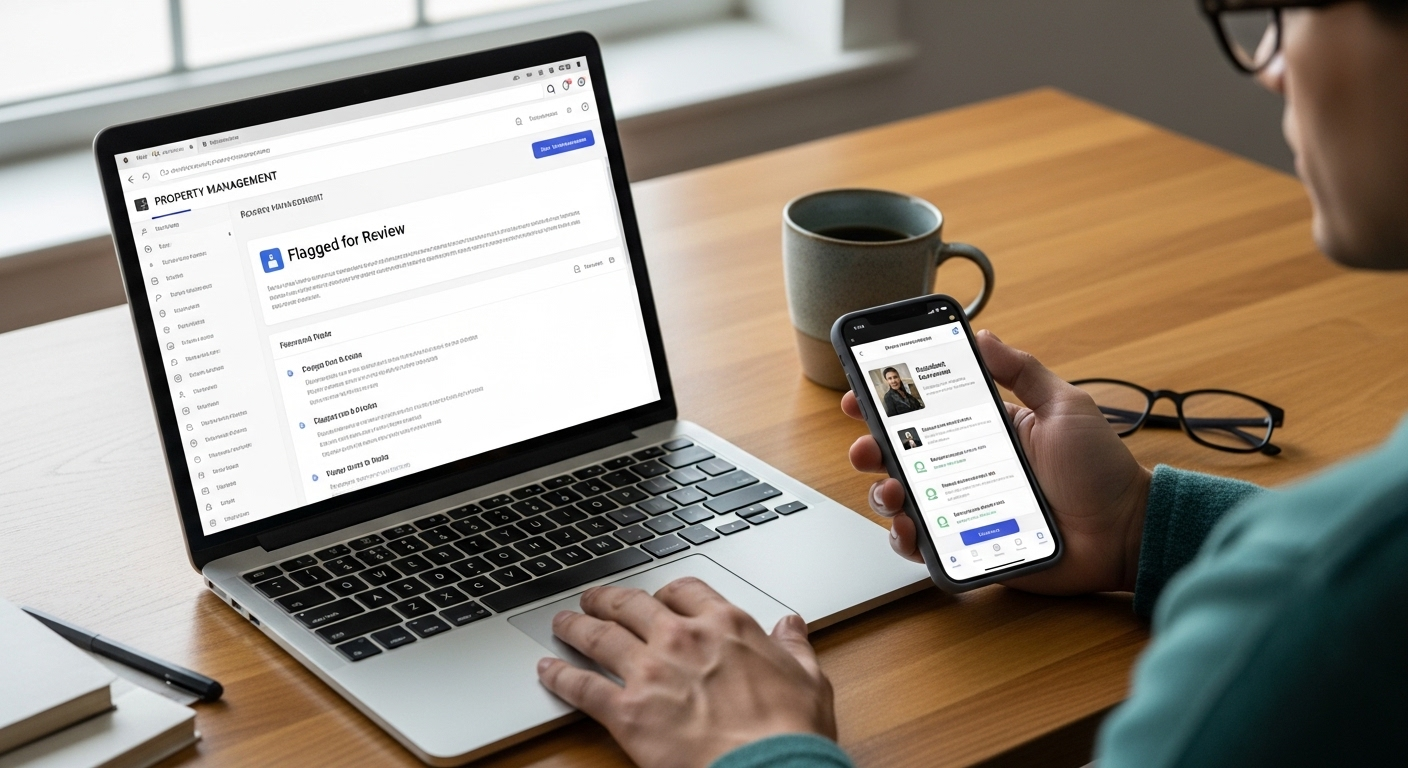
The Importance of Human Oversight and Individualized Assessment
AI is great at applying rules consistently, but it can lack nuance and context. Human oversight means a person reviews and validates an AI’s recommendations, especially for high stakes decisions like denying an application. This allows for individualized assessment, or looking at the person behind the data.
For example, an AI might flag a low credit score, but a human manager can see it was caused by a one time medical emergency and decide to make an exception. HUD encourages this kind of holistic review, noting that property managers should consider the full context of an applicant’s history before making a final decision. This combination of AI for efficiency and humans for judgment often leads to the fairest and best outcomes.
Haven is a strong advocate for keeping a human in the loop. Our AI agents handle repetitive tasks like answering questions and pre qualifying leads, but final approvals are always left to your property management team. Book a demo with Haven to see how this balanced approach works.
Creating an Applicant Notice, Dispute, and Appeal Process
Transparency is key to building trust and staying compliant. If you deny an applicant based on information from a screening report, the FCRA legally requires you to send them an adverse action notice. This notice tells them why they were denied and gives them information on how to dispute any errors in their report.
Beyond the legal requirement, it’s a best practice to have a clear process for applicants to appeal decisions, especially when an algorithm is involved. This could be as simple as an email address where they can request a human review or provide additional context. This process helps you catch errors, demonstrates your commitment to fairness, and can prevent minor issues from escalating into legal complaints.
Staff Training and Professional Responsibility
Your team is your first line of defense in maintaining AI property management compliance. Staff need to be trained on how your AI tools work, what their limitations are, and what their own professional responsibilities are. This includes:
Ongoing fair housing education.
Understanding what criteria the AI uses.
Knowing when to override the AI or escalate an issue to a manager.
Following data privacy and security protocols.
A well trained team will use AI more effectively and will be better equipped to spot potential problems before they become serious.
Responsible AI in Property Management
A framework for responsible AI goes beyond compliance—it's about demonstrating genuine commitment to fairness and transparency. Responsible AI for property management combines human oversight, systematic testing, and continuous accountability.
Governance & Written Standards
Document your AI decision-making process. A responsible AI governance policy specifies which decisions require human review, how often you audit for bias, and who is accountable for outcomes. This creates a clear trail of intentional, defensible choices.
Bias Testing & Validation
Before deploying any AI screening tool, conduct a baseline bias audit. Compare approval rates, response times, and rejection reasons across demographic groups using historical test data. If you detect disparities (e.g., 80% approval vs. 50% approval between groups with similar profiles), flag them immediately for investigation. Test again quarterly to catch drift.
Human-in-the-Loop by Default
Keep humans actively involved, not just as final sign-off. This means:
Leasing agents review AI-generated reasons for any denial before sending an adverse action notice.
Managers spot-check AI-approved applications monthly to ensure consistency.
Maintenance coordinators verify emergency classifications chosen by the AI before routing.
Audit Trails & Transparency
Every AI decision should be logged with full context: the data input, the rule or model applied, the outcome, and any human override. This audit trail protects you in disputes and helps you spot systematic errors. When an applicant asks "why was I rejected?", you should be able to produce a clear, defensible answer from your audit log.
Building a Compliant AI Framework
A successful AI strategy isn’t just about buying software; it’s about building a framework of policies and procedures to govern its use. This proactive approach ensures everyone in your organization is on the same page.
AI Governance and Written Policies
An AI governance policy is your company’s internal rulebook for using AI. It documents your standards for fairness, transparency, and accountability. A recent survey found that four out of five workers say their employers lack clear guidelines for AI use, which can lead to confusion and misuse. A written policy creates consistency and assigns responsibility. It might specify, for example, that all AI based denials must be reviewed by a human or that your team will conduct quarterly bias audits.
Vendor Due Diligence and Transparency
When you use a third party AI tool, you are still responsible for its actions. That’s why thorough vendor due diligence is so important. Before partnering with an AI provider, you should ask tough questions:
Has your algorithm been tested for bias?
What data and criteria does your AI use to make decisions?
What are your data security and privacy standards?
How do you help your clients stay compliant with fair housing laws?
Avoid vendors who offer a “black box” solution where you have no insight into how it works. A transparent partner will be open about their methods and work with you to ensure your use case aligns with your commitment to AI property management compliance.
AI Decision Documentation and Audit Trails
If an applicant ever challenges a decision, you need to be able to show how it was made. An audit trail is a detailed log of an AI’s actions, including the data it considered, the outcome it produced, and any human overrides. This documentation is crucial for resolving disputes, passing compliance reviews, and identifying areas for improvement. Keeping clear records turns your AI from a mysterious box into a transparent process you can stand behind.
As a partner in compliance, Haven provides transparency into how our AI agents operate. We work with you to establish clear workflows and ensure our platform’s settings align with your company’s governance policies. Learn more about Haven’s ethical approach to AI in property management.
Managing Data and Operational Risks
Beyond legal compliance, using AI introduces new operational considerations. A comprehensive strategy must also account for data security, system reliability, and the human side of technological change.
Data Privacy and Cybersecurity Controls
Your AI systems will handle a lot of sensitive personal information, from contact details to financial histories. Protecting this data is a legal and ethical imperative. This means following data privacy best practices, like only collecting necessary information and being transparent about how you use it. It also requires strong cybersecurity controls, such as encryption and secure access protocols, to defend against data breaches. When choosing an AI vendor, always verify their security certifications.
Operational Risk and Mitigation
What happens if your AI system goes down or makes a critical error? Operational risk management involves identifying what could go wrong and having a backup plan. This could include:
Having a human on call to handle emergencies if your AI is unavailable.
Requiring human review for high stakes decisions to catch AI errors.
Thoroughly testing AI integrations with your Property Management System (PMS).
By planning for potential failures, you can ensure that AI becomes a reliable asset, not a single point of failure.
Change Management for a Smooth AI Deployment
Technology is only effective if people use it. Change management is the process of preparing your team and culture for a new way of working. This involves clear communication from leadership about why the change is happening, involving employees in the implementation process, and providing robust training and support. By addressing fears and building buy in, you can ensure your investment in AI pays off.
Understanding All Regulatory and Ethical Requirements
The legal landscape for AI is constantly evolving. A core part of AI property management compliance is staying educated on new regulations and guidance from agencies like HUD and the FTC. This commitment to continuous learning ensures that your policies and practices remain current and that your entire team understands the “why” behind your compliance efforts.
Your Path to Confident AI Adoption
Adopting AI in property management offers a powerful opportunity to streamline operations and improve service. However, it requires a thoughtful and proactive approach to compliance. By embracing the principles of fair housing, preventing bias, keeping humans in the loop, and building a strong governance framework, you can innovate with confidence.
A robust AI property management compliance strategy protects your business, builds trust with your residents, and ensures that you are creating a fairer housing experience for everyone.
Frequently Asked Questions
What is the most important part of AI property management compliance?
While all aspects are important, ensuring compliance with the Fair Housing Act is the absolute foundation. All AI systems used in advertising, leasing, and tenant screening must be free of bias and must not lead to discriminatory outcomes against protected classes.
Can I be sued if my third party AI screening tool is biased?
Yes. Both you (the housing provider) and the software vendor can be held liable if the algorithm discriminates in violation of the Fair Housing Act. This is why thorough vendor due diligence is critical.
How does HUD view the use of AI in housing?
HUD has made it clear that long standing civil rights laws apply to modern technology. Their 2024 guidance emphasizes that landlords and property managers are responsible for ensuring any AI they use for advertising or tenant screening complies with the Fair Housing Act and does not produce discriminatory results.
Does using an AI from a vendor like Haven make me automatically compliant?
Using a compliance conscious vendor like Haven is a significant step in the right direction, but ultimate responsibility for AI property management compliance rests with the property manager. Haven builds its AI agents with compliance in mind, for example by leaving final decisions to humans and ensuring uniform communication. However, you must still implement fair policies, train your staff, and monitor outcomes.
What is an AI “black box” and why should I avoid it?
An AI “black box” is a system where the decision making process is opaque, meaning you can’t understand why it produced a certain result. This is a major compliance risk because if you can’t explain a decision (like a rental denial), you can’t defend its fairness or check it for bias. Always choose vendors who offer transparency into their algorithms.
How can I test my AI for bias?
You can test for bias by conducting regular outcome monitoring or audits. This involves analyzing the decisions your AI has made (e.g., approvals vs. denials) and comparing the rates across different demographic groups. If you see significant disparities, it’s a sign that your algorithm may have a disparate impact and needs to be adjusted.
Is it okay for an AI to make a final leasing decision?
It is a widely recommended best practice to not allow an AI to make a final, autonomous decision on a rental application. Keeping a human in the loop for final approval allows for individualized assessment, helps catch algorithmic errors, and is a key part of a strong AI property management compliance framework.
What should I do if an applicant wants to appeal an AI assisted decision?
You should have a clear, documented process for handling appeals. The first step is to provide the required adverse action notice if applicable. Then, allow the applicant to request a human review of their file and provide any additional context or information they believe is relevant. A human on your team should then conduct a fresh review of the application.
What are the legal consequences of an AI screening tool that violates Fair Housing?
Both you (the property manager) and the software vendor can face civil penalties, including damages to applicants, attorney's fees, and potential settlements in the millions. The Department of Justice's case against Meta over ad bias resulted in a substantial settlement and system overhaul. In the housing context, FHA violations can lead to injunctions requiring you to stop using the tool and implement corrective measures. This is why vendor due diligence and outcome monitoring are not optional.
Can I use AI to screen for criminal history?
Yes, but with caution. HUD guidance recommends a nuanced approach: consider the nature and severity of the offense, how much time has passed, and evidence of rehabilitation. A blanket policy that rejects all applicants with any criminal record is legally risky and has poor predictive value for tenant quality. If your AI uses criminal history as a screening criterion, regularly audit whether it is producing disparate impact and adjust thresholds if patterns emerge.
What should my AI vendor provide to prove their system is compliant?
A responsible vendor should provide:
[placeholder — confirm number] documented bias audits across demographic groups
Transparency into the specific criteria and decision logic the AI uses
A clear data privacy and security policy (SOC 2 certification or equivalent)
A commitment to assist you with Fair Housing compliance, not a "black box" that leaves you exposed
Ask these questions before signing any contract.
How often should I conduct bias audits on my AI system?
A best practice is quarterly audits at minimum, comparing approval and rejection rates across demographic groups. If you deploy a new version of your AI or make significant changes to screening criteria, audit immediately. Some vendors provide real-time outcome reporting; if yours does, monitor it continuously and flag concerning patterns as soon as they appear.
What is "disparate impact" and how do I know if my AI has it?
Disparate impact occurs when a policy that appears neutral on its surface has a significantly negative effect on a protected group. For AI tenant screening, this might look like: your algorithm approves 80% of white applicants but only 50% of Black applicants, even when their financial profiles are similar. The legal standard is usually a "four-fifths rule"—if one group's approval rate is less than 80% of another group's rate, that's a statistical red flag. Test your AI across all protected classes and investigate any disparity.
Do I need a dedicated compliance officer for AI?
[placeholder — confirm internal practice] For larger portfolios (1,000+ units), assigning one person to oversee AI governance and bias audits is strongly recommended. For smaller operators, this can be part of a compliance or operations manager's role. The key is not the job title but the accountability: someone must own the AI compliance strategy, audit outcomes regularly, and escalate issues.
What if my AI vendor goes out of business or shuts down their service?
This is an operational risk. Ensure any vendor contract includes a data exit clause—you should be able to export all your data (screening reports, decision logs, applicant records) in a standard format if the vendor closes. Have a backup plan: identify an alternative vendor and test integration before you need it. Do not build your entire screening process on a single vendor's proprietary system.
How do I communicate AI use to applicants and residents?
Transparency builds trust. You should disclose to applicants that you use AI in your screening process, explain what criteria the AI considers, and provide a clear path for human review or appeal. For residents, explain what AI tools you use (e.g., maintenance dispatch, communication) and how they can request human assistance. This transparency also supports your compliance posture if disputes arise.