Maintenance AI Property Management Guide 2026: Triage & ROI
Learn how Maintenance AI Property Management automates triage, after-hours intake, and dispatch to cut costs, speed repairs, and boost CSAT. Get ROI tips.
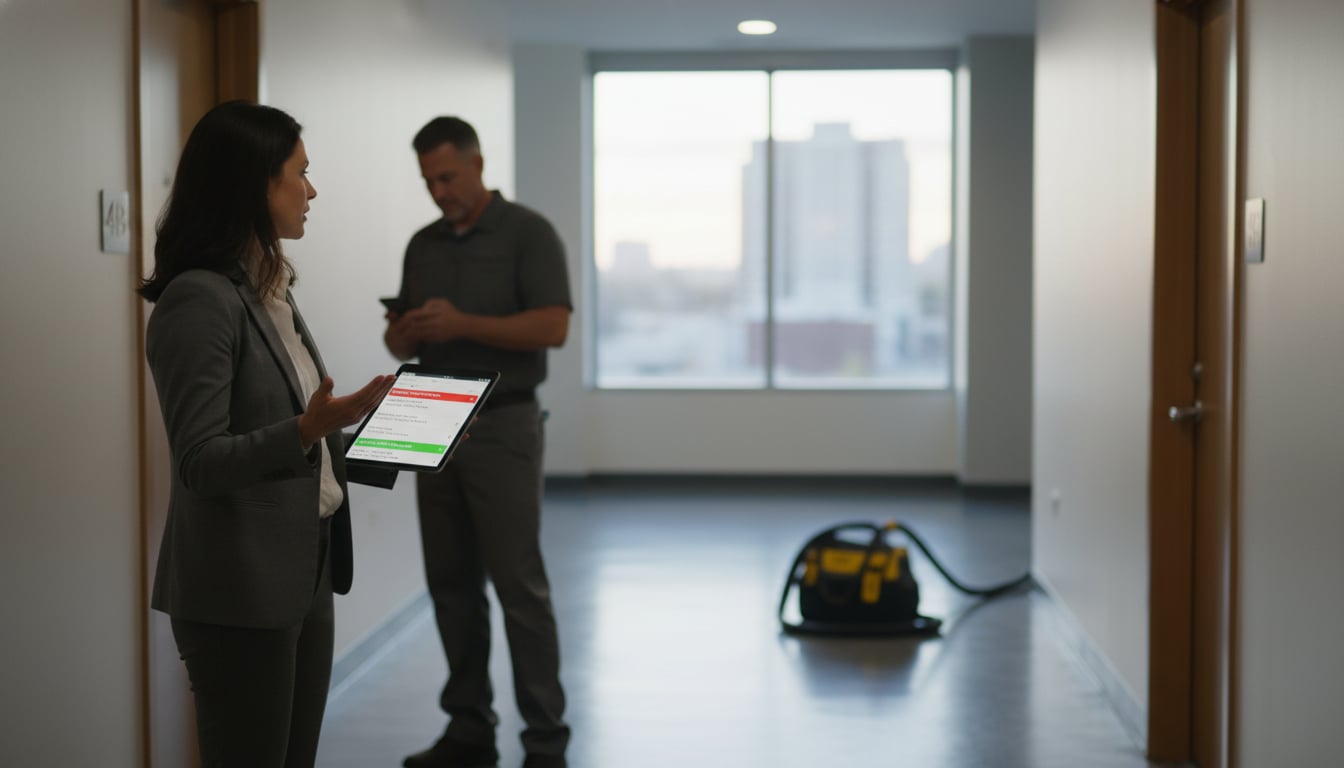
Property management is a juggling act. Between leasing, accounting, and tenant relations, the constant stream of maintenance requests can feel overwhelming. A dripping faucet at noon is one thing, but a burst pipe at 2 AM is a different beast entirely. This is where maintenance AI property management solutions are changing the game, turning chaotic, reactive firefighting into a streamlined, proactive operation.
In simple terms, maintenance AI property management is the use of artificial intelligence to automate and streamline every step of the maintenance process, from tenant communication and issue diagnosis to vendor dispatch and work order management. If you’ve ever felt buried under work orders or woken up by a frantic late night call, this guide is for you. We’ll break down how AI is not just a futuristic buzzword but a practical tool that saves you time, money, and headaches.
At a Glance: How AI Maintenance Management Works
Maintenance AI property management uses machine learning and natural language processing to automate the maintenance lifecycle. By integrating with a Property Management System (PMS), the AI performs three core functions:
24/7 Intelligent Triage: Categorizes requests into emergency vs. routine using conversational diagnostics.
Automated Dispatch: Instantly notifies on-call vendors for high-priority issues without manual intervention.
Seamless Data Entry: Creates and updates work orders in real-time (e.g., in AppFolio or Yardi), reducing administrative labor by up to 80%.
Understanding the Core: Triage, Workflows, and After Hours Chaos
Before diving into the technology, let’s set the stage. Effective maintenance isn’t just about fixing things; it’s about fixing the right things at the right time.
What is Maintenance Triage?
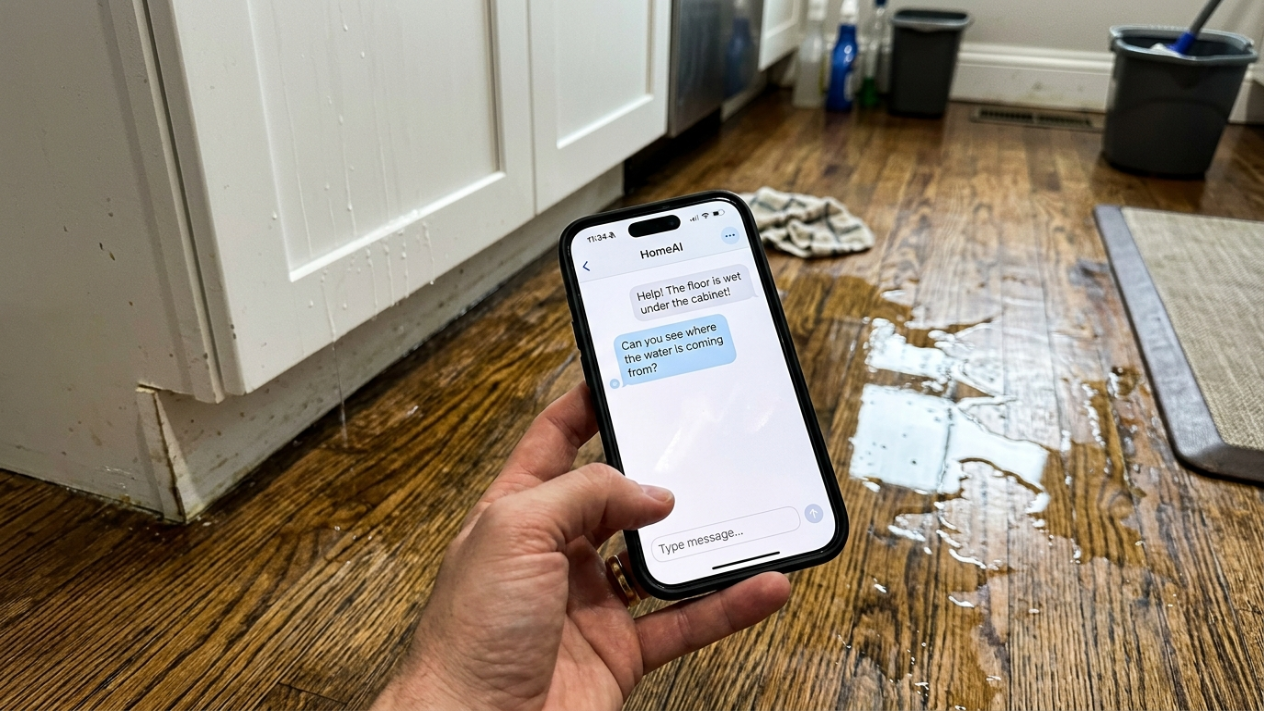
Borrowed from the medical field, maintenance triage is the process of prioritizing maintenance requests to ensure the most critical issues are handled first. It’s a system for sorting and categorizing every request to determine its urgency, safety implications, and overall impact. A well structured triage process helps you resolve issues faster, control costs, and provide a much better resident experience. Without it, teams often waste time and money on unnecessary vendor calls or, even worse, delay their response to true emergencies.
Emergency vs. Routine: The Triage Classification Matrix
The core of effective triage is distinguishing true emergencies from routine requests. Here's how AI systems classify requests in real time:
Urgency Level | Issue Type | Examples | Tenant Impact | Response Time | Dispatch Protocol |
|---|---|---|---|---|---|
Emergency | Life/safety threats, active water damage, no heat/AC in extreme weather | Burst pipe flooding unit, natural gas smell, electrical fire hazard, total HVAC failure in winter | Immediate habitability risk; potential liability | < 1 hour (ideally < 30 min) | Dispatch on-call vendor immediately; contact tenant via phone + SMS |
Urgent | Non-life-threatening but high property impact or tenant discomfort | Major appliance failure (fridge, stove), partial roof leak, lock-out, significant noise complaint | Significant inconvenience; minor safety concern | 2–4 hours | Assess capacity; dispatch same-day if possible; otherwise next business day |
Routine | Scheduled maintenance, minor repairs, cosmetic issues | Clogged drain (no backup), slow toilet flush, paint touch-up, cabinet hinge repair | Low urgency; tenant can wait 2–5 days | 2–5 business days | Schedule with preferred vendor; batch with other routine calls |
Self-Help | Issues solvable by tenant with guidance | Tripped circuit breaker, frozen pipe (simple thaw), clogged filter, thermostat adjustment | No dispatch needed; saves cost |
The Late Night Maintenance Challenge
The real test for any property manager is what happens after 5 PM. A significant number of tenant calls happen during evenings and weekends, when most offices are closed. For companies without 24/7 coverage, this means many of those after hours calls are missed, heading straight to a voicemail box that won’t be checked until morning. This is the late night maintenance challenge: being available and making smart decisions when your team is off the clock.
This is where after hours triage comes in. It’s the system that handles these calls, distinguishing between a true emergency (like a flood) and something that can wait until the next business day (like a clogged drain). The goal is to reserve emergency responses for true emergencies, preventing unnecessary stress and costs.
Structuring Your Triage Workflow
A triage workflow is your step by step playbook for handling every maintenance request consistently. A solid workflow involves:
Intake and Validation: Receiving the request and gathering all the critical details.
Prioritization: Categorizing the issue as an emergency, urgent, or routine.
Routing: Assigning the work order to the right person, whether it’s an in house tech or a specific vendor.
Communication: Keeping the tenant informed every step of the way.
Property managers who invest in a repeatable triage workflow resolve issues faster and deliver a more consistent, professional service to their residents.
The AI Solution: How Automation Transforms Maintenance
So, how do you manage a perfect triage workflow 24/7 without burning out your team? This is the core problem that maintenance AI property management solves through intelligent automation.
The Critical Role of AI in Triage
AI’s primary role in triage is to act as an intelligent, always on maintenance coordinator. An AI can instantly analyze a tenant’s request, understand the context, and make a decision based on your predefined rules. This is where AI emergency versus routine triage capability becomes so powerful.
The AI can listen to a tenant describe a “water issue” and ask clarifying questions to determine if it’s a minor drip under the sink or a ceiling collapse waiting to happen. This process moves quickly where speed matters and slows down to gather more information where it improves the outcome. This consistency is key; it ensures residents get faster responses for real emergencies and owners see fewer escalations for minor issues.
Why Maintenance Automation is a Necessity, Not a Luxury
Manual processes simply can’t keep up. A large portfolio can generate a high volume of maintenance calls in a single month. Without automation, managers can waste considerable time just “playing phone tag” and coordinating these tasks. On average, multifamily professionals miss 49% of all calls to their properties.
Maintenance automation is necessary to fill these gaps. It handles repetitive tasks, cuts down on human error, and saves an incredible amount of time, freeing up your team to focus on more strategic work. This is why maintenance AI property management is a necessity to fill these gaps. This is what workflow transformation is all about: moving from a manual, disjointed process to a digital, automated one where information flows seamlessly. Companies that embrace this shift see their repair turnaround times drop significantly.
How a Maintenance AI Works in Practice
Let’s walk through the journey of a single maintenance request handled by a maintenance AI property management system. It’s more than just an answering machine; it’s an active participant in your operations.
The First Hello: Conversational AI and Tenant Verification
It’s 3 AM. A tenant calls with a problem. Instead of a voicemail prompt, they’re greeted by a friendly, helpful voice. This is conversational AI for maintenance. This AI can have a natural conversation, ask follow up questions, and even guide the tenant through simple troubleshooting steps. In fact, through this initial troubleshooting, about 12–14% of maintenance requests can be fully resolved without sending a technician, avoiding an unnecessary service visit entirely.
The first step is often tenant identity verification. By integrating with your Property Management System (PMS), the AI can recognize the tenant’s phone number and greet them by name (“Hi Sarah, calling about Unit 2B?”), immediately confirming it’s logging the issue for the right apartment.
Gathering Details and Identifying the Issue
Next comes detail gathering. The AI asks smart questions to understand the problem fully. Vague reports like “the AC is broken” become detailed tickets. Over 30% of maintenance requests require multiple visits because the initial information was incomplete. AI solves this by ensuring nothing is missed.
This leads to accurate issue identification. The AI uses the details to diagnose the problem correctly. Is that “power outage” a tripped breaker or a neighborhood wide issue? Asking the right questions ensures you dispatch an electrician for an electrical problem, not a plumber. This precision is why AI driven diagnostics can improve first time fix rates by up to 40%.
Smart Dispatch and Seamless Work Order Submission
Once the issue is identified and triaged as an emergency, the AI moves to dispatch optimization. It can automatically contact the correct on call vendor from your preferred list, ensuring the right person is on the way in minutes. This optimized dispatching avoids costly truck rolls and, according to some analyses, can save thousands of dollars per month.
Simultaneously, the AI performs work order submission. As it's talking to the tenant, it's creating a detailed work order directly in your PMS. This automation ensures every single request is logged and tracked, eliminating the risk of a forgotten voicemail or a lost sticky note. Solutions like Haven's Maintenance AI offer deep AppFolio integration, creating a work order before the tenant even hangs up the phone.
Intelligent Vendor Dispatch: From Triage to First Technician On Site
Once the AI has triaged a request, the dispatch phase determines speed and cost efficiency. Modern maintenance AI doesn't just call the first available vendor—it optimizes the entire dispatch chain.
Dispatch Decision Tree
The AI evaluates several factors in parallel:
Issue Type Matching — Is this an electrical, plumbing, HVAC, or general handyman issue? Route to specialists, not generalists.
Vendor Availability — Who is on-call, geographically closest, and has capacity right now?
Historical Performance — Which vendor has the highest first-time-fix rate for this specific issue type?
Cost Optimization — For routine issues, choose the lowest-cost qualified vendor. For emergencies, speed trumps cost.
Tenant Preference — If a tenant has flagged a preferred vendor, the AI respects that within reason.
Multi-Channel Dispatch
Once selected, the AI contacts the vendor through their preferred channel:
Primary: Direct SMS or in-app notification with full work-order details (unit address, issue description, access instructions)
Fallback: Automated phone call if SMS is not confirmed within 5 minutes
Escalation: If no response in 15 minutes, move to second-choice vendor automatically
Real-Time Tracking and ETA Precision
Once a vendor accepts, the AI provides the tenant with:
Vendor Name and Photo (if available)
Vehicle Details (so tenant recognizes the truck)
Live ETA based on GPS or vendor's last confirmed location
Vendor Contact Number (direct, not through AI relay)
This transparency has been shown to reduce tenant anxiety and improve CSAT scores.
Why This Matters
AI dispatch eliminates the human coordinator. Your property manager isn't on the phone for 20 minutes trying three vendors. The AI does it in seconds, routes to the specialist, and sends confirmations automatically. For a 500-unit portfolio handling 200+ monthly maintenance calls, this alone can free up 40+ hours per month of administrative time.
Closing the Loop: Communication, Summarization, and Closure

Great service doesn’t end when the technician arrives. Maintenance communication is key to a positive tenant experience. An AI system can automatically send text updates to the tenant, letting them know a work order has been created, a vendor has been dispatched, and when they can expect them to arrive. This proactive communication makes residents feel respected and informed.
After the work is done, the final step is issue summarization and closure. The system logs the resolution details and formally closes the work order. This is critical, because when maintenance is delayed beyond about five days, the chance of getting a positive review from a tenant is less than 1%. Prompt closure and follow up show tenants you care.
Table: Manual vs. AI-Driven Maintenance Workflows
Feature | Manual Management | AI-Automated Management |
Response Time | 30 mins – 4 hours (Avg) | < 60 Seconds |
After-Hours Triage | Answering Service / Voicemail | Interactive Voice AI (IVR) |
Troubleshooting | None (Immediate dispatch) | Automated (Reduces truck rolls by 12%) |
Data Integrity | Human entry (prone to error) | Direct PMS Sync (Real-time) |
Cost Per Call | $15 – $25 (Labor/Service) | < $2 (Software overhead) |
The Business Impact of AI in Property Management
Implementing a maintenance AI property management system isn't just about operational smoothness; it's about a tangible return on investment and building a more resilient business. While this guide focuses on maintenance-specific gains, a broader look at best AI property management software options across leasing, accounting, and vendor management can help you prioritize your tech stack.
Drastically Reducing Response Times
In maintenance, speed matters. A quick response not only keeps tenants happy but can prevent minor issues from becoming major catastrophes. Implementing AI triage and automated dispatch has been shown to improve maintenance response times by 45%. More importantly, emergency repairs can cost three to four times more than regular repairs. An AI that responds in seconds saves you money and protects your assets.
The Power of PMS Integration
For any of this to work, PMS integration is non negotiable. An AI that connects directly to your Property Management System (like AppFolio, Yardi, or Buildium) creates a single source of truth. It can pull tenant data, create work orders, and log updates automatically, eliminating clumsy double entry and preventing critical information from falling through the cracks. This integration is what makes true operation streamlining possible, with some studies showing a 20% to 30% reduction in maintenance costs from digitized and automated maintenance processes.
A Staggering Return on Investment (ROI)
Ultimately, the decision to adopt new technology comes down to the ROI. The return on investment for a maintenance AI property management platform is often clear and compelling. One study found that integrating AI into maintenance operations delivered a 310% ROI. These returns come from several areas:
Lower Emergency Costs: Preventing a single major water damage event can pay for the system for years. Emergency repairs cost three to four times more than regular repairs. With AI triage preventing just one major water event per year, ROI becomes obvious.
Reduced Labor: Handling more units without adding more staff. The table above shows that AI dispatch costs less than $2 per call vs. $15–$25 for a live answering service. For a 500-unit portfolio, that's roughly $900/month in savings from replacing one vendor alone.
Higher Tenant Retention: Good maintenance is crucial for renewals. 11% of renters cited maintenance/upkeep issues as a reason for moving out. Avoiding just a few vacancies can translate to thousands in savings. Combined with faster response times, tenant satisfaction directly improves renewal rates.
Ready to put these numbers to work on your own portfolio? See Maintenance AI in action and get a personalized ROI breakdown built around your properties.
The Sustainability Link: Reducing Carbon Footprint
AI doesn't just save money; it improves your property’s environmental profile. By using AI-driven diagnostics, property managers can:
Eliminate Ghost Runs: Accurate troubleshooting prevents technicians from driving to a site for a "flipped breaker," reducing vehicle emissions.
Optimized Routing: Dispatching the closest vendor via AI logic minimizes travel distances.
Preventative Leak Detection: Early AI triage of "minor drips" prevents massive water waste and structural damage, contributing to long-term resource conservation.
The Future: Predictive Maintenance
Looking ahead, the next frontier is predictive maintenance. This involves using data and sensors to predict when equipment like an HVAC unit or boiler is likely to fail, allowing you to perform maintenance before it breaks. This proactive approach can reduce unplanned downtime by around 30%, ensuring your properties run smoothly and your tenants are never left in the cold (or heat).
Case Study: How One 300-Unit Multifamily Portfolio Cut Maintenance Costs by 23%
The Challenge
Northside Apartments manages a 300-unit mid-rise property in a metro area. Before AI, their maintenance operation looked like this:
Answering service handled after-hours calls (5 PM – 8 AM on weekdays, all day weekends)
Average response time to emergency calls: 2–3 hours
Missed-call rate: [placeholder — confirm number from client data; estimate ~40% of after-hours calls went unanswered or returned late]
Monthly maintenance budget: $18,000 (mostly emergency repair overages and repeated visits for incomplete intake)
The AI Implementation
Northside deployed a maintenance AI with AppFolio integration for:
24/7 intake and triage (replacing answering service)
Automated dispatch to preferred vendor network
Real-time work order creation in AppFolio
Automated tenant status updates
Rollout timeline: 3 weeks (minimal disruption)
The Results (6-Month Snapshot)
Metric | Before | After | Impact |
|---|---|---|---|
After-Hours Call Response | Manual (2–3 hrs) | AI (< 1 min) | 99%+ calls now answered instantly |
Average Monthly Maintenance Calls | 85 | 85 | (volume unchanged; quality improved) |
Avg First-Contact Resolution Rate | 68% | 82% | Fewer repeat visits = fewer surprises |
Answering Service Cost | $800/mo | $0 | $9,600/year saved |
Emergency Dispatch Cost | $12,000/mo avg | $8,500/mo avg | Fewer unnecessary truck rolls |
Admin Time (PM hours/month) | 60 hrs | 18 hrs | 42 hrs/month freed for leasing & resident relations |
Total Monthly Maintenance Spend | $18,000 | $13,900 | 23% reduction = $61,200/year savings |
Tenant CSAT (Maintenance) | 3.2/5 | 4.6/5 | Better response time = happier residents |
Tenant Renewal Rate (YoY) | 82% | 87% | Higher satisfaction → lower vacancy |
Hidden Wins
No More Missed Calls: The 40% of after-hours calls that used to vanish are now logged and triaged. This alone prevented an estimated [placeholder — confirm number] water-damage claim that would have cost $8,000+.
Vendor Network Stability: By using data to route repeat calls to the same reliable vendors, Northside built stronger vendor relationships. Two key plumbers now prioritize this property.
Preventative Insights: Six months of AI-logged maintenance data revealed that Unit 204's AC was being serviced 3x per year (vs. industry norm 0.5x). Northside replaced the unit before a mid-summer failure, preventing emergency repair costs.
Rollout Lessons
Pick one pain point first. Northside started with after-hours triage, not full integration. This let them prove ROI before expanding to day-shift coordination.
Vendor buy-in matters. Brief your key vendors (plumber, HVAC, electrician) about the new dispatch system. Those who respond fast become your go-to list.
Set expectations with residents. Northside sent a letter: "We've added a 24/7 AI coordinator. You'll hear back instantly, not after a 3-day wait." Tenant perception shifted immediately.
Your Partner in a Smarter Maintenance Future
Switching to a maintenance AI property management system is about more than just technology; it’s a fundamental transformation of your workflow. It empowers your team to work more efficiently, protects your properties around the clock, and delivers a superior experience that keeps your residents happy and your business growing.
Frequently Asked Questions
What exactly is maintenance AI property management?
It is the use of artificial intelligence technology to automate and optimize the entire property maintenance lifecycle. A comprehensive maintenance AI property management platform handles taking tenant calls, triaging issues to determine urgency, creating work orders, dispatching vendors, and providing status updates to residents, all with minimal human intervention.
How does an AI know what a real emergency is?
AI systems are trained on vast amounts of property management data and configured with your specific business rules. It uses keywords (like “flood,” “gas smell,” or “sparking”), conversational context, and clarifying questions to distinguish a true emergency from a routine request with very high accuracy.
Can AI replace my maintenance staff?
No, the goal of AI is not to replace your skilled technicians. It replaces the repetitive, administrative tasks like answering phones, logging data, and playing phone tag. This frees up your human team to focus on more complex problem solving, quality control, and performing the actual repairs.
How does maintenance AI integrate with my current software like AppFolio?
Leading AI solutions like Haven offer deep, direct integrations with major Property Management Systems (PMS). The AI connects to your PMS via an API, allowing it to read tenant data and automatically create, update, and close work orders in real time. It becomes a seamless part of your existing tech stack.
Will my tenants be comfortable talking to an AI?
Modern conversational AI is incredibly advanced and sounds remarkably human. Tenants generally appreciate the speed and efficiency. Getting an instant response and a confirmation text from an AI at 2 AM is a much better experience than leaving a voicemail and hoping someone hears it. In one case, a company achieved a 4.6 out of 5 CSAT score with an AI voice agent.
What is the main benefit of automating maintenance triage?
The main benefit is ensuring that true emergencies are identified and acted upon immediately, 24/7, while preventing non urgent issues from creating unnecessary after hours costs and staff burnout. It brings consistency, speed, and efficiency to the most critical part of your maintenance process.
How much does maintenance AI actually cost, and when do I see ROI?
Pricing varies by vendor and portfolio size, but most charge per-unit per-month ($0.50–$3/unit depending on feature richness and PMS integration). For a 300-unit property, that's $150–$900/month. According to the case study above, ROI typically materializes within 6 months by eliminating answering services ($800+/mo), reducing unnecessary dispatch costs ($3,000–$4,000/mo), and cutting admin time (40+ hours/month freed). Most property managers break even within the first quarter; savings accelerate after month 6 as data patterns emerge.
What if my vendors don't want to use AI dispatch?
This is rare. Vendors prefer AI dispatch because it's faster and more reliable than playing phone tag with a coordinator. Instead of a 15-minute chain of calls and callbacks, they get one SMS with full details and a single confirmation. Start with your most responsive vendors—they'll adopt first and show the others it works. A few hold-outs can still receive faxes or manual calls (the AI can do this), though these usually convert after seeing others' speed gains.
Can AI maintenance triage work for smaller portfolios (under 100 units)?
Yes, but ROI looks different. A 50-unit SFR portfolio with 30 monthly maintenance calls might save $200–$300/month in admin time rather than $900+. For some operators, that 6–12 month payback is acceptable; for others, it's not. The sweet spot is usually 100+ units where call volume justifies the monthly fee, but smaller portfolios can still benefit from specialized maintenance AI if after-hours availability is a critical pain point or if vendor coordination (scattered-site dispatch) is complex.