AI Maintenance Follow-Up Tenants Expect: 2026 Guide
Build the AI maintenance follow-up tenants expect: 24/7 triage, instant updates, PMS-integrated work orders, and compliant automation. Learn how in 2026.

Property management is a juggling act. Between leasing, collecting rent, and day to day operations, the constant stream of tenant communication can feel overwhelming. Maintenance requests, in particular, create a massive workload. From the initial call at 2 AM to coordinating vendors and confirming the job is done, it’s a time consuming cycle. This is where technology steps in, specifically with systems designed to provide the AI maintenance follow-up tenants expect, transforming a manual grind into a streamlined, automated process that keeps residents happy and your team sane.
This guide explores the essential components of a modern, AI powered property management system. We’ll break down how these technologies work together to create a seamless experience from the moment a tenant reports an issue to the final satisfaction survey, proving that a great system for AI maintenance follow-up tenants rely on is about more than just closing a work order.
Quick Takeaway: The Impact of AI Maintenance Follow-Ups
In 2026, AI maintenance follow-up systems have become a standard in property management, primarily used to automate resident status updates, emergency triage, and satisfaction surveys. Key performance data shows that implementing AI for maintenance can:
Reduce acknowledgment time from hours to under 10 seconds.
De-escalate 34% of "emergency" calls that are actually routine.
Increase lease renewal intent by 71% through consistent post-repair communication.
Save ~$4,000 per unit by reducing tenant turnover caused by poor communication.
The Foundation: Smart Intake and Communication
Before you can follow up, you have to receive and understand the initial request. This is where automation first makes a huge impact, ensuring every message is heard and correctly categorized, 24/7. This level of automation sets the stage for the kind of AI maintenance follow-up tenants appreciate.
Tenant Communication Automation
At its core, tenant communication automation uses tools like chatbots and AI voice assistants to handle routine interactions. Instead of your phone ringing off the hook with questions like “What are the pool hours?” or “My garbage disposal is jammed,” an AI can provide instant answers. This is crucial because modern renters expect digital convenience. In fact, a whopping 79% of them believe they should get what they need from property managers through digital channels like text or chat.
An AI assistant can answer your office phone, respond to texts, and manage emails around theclock. This technology can handle about 70% of repetitive communications, freeing up your team to focus on the complex issues that truly require a human touch. If you’re weighing options, see our AI vs. call center comparison.
Maintenance Request Triage
Maintenance request triage is the process of sorting incoming issues by severity. Think of it as an emergency room for property repairs. When a tenant calls about a burst pipe at midnight, an AI can immediately recognize it as an emergency. A call about a squeaky cabinet door, on the other hand, is logged as a routine request for business hours.
This is a game changer for property managers. Traditionally, they had to personally answer every after-hours maintenance call and make a judgment. With an AI triage system, true emergencies get escalated instantly while non urgent issues are politely scheduled, giving tenants peace of mind that their request was received. This automated sorting is so effective that it can significantly cut unnecessary after-hours escalations by de-escalating 34% of all emergency maintenance calls.
Prioritizing and Responding with Speed
Once a request is triaged, the system needs to prioritize the work and track how quickly your team responds. These steps are vital for running an efficient and tenant friendly operation and providing the AI maintenance follow-up tenants deserve.
Work Order Prioritization and Urgency Scoring
Urgency scoring is a system for assigning a priority level to each maintenance request. This ensures that a gas leak is handled before a running toilet. An AI can calculate this score in real time based on keywords and answers to troubleshooting questions.
Emergency: A fire or major flood gets the highest score, triggering immediate action.
Urgent: A broken air conditioner in the summer or a clogged toilet in a single bathroom unit is high priority.
Routine: A dripping faucet or broken drawer can be scheduled within a few days.
This systematic approach, known as work order prioritization, guides your maintenance team to tackle the most critical jobs first, optimizing their time and preventing minor issues from becoming catastrophic failures. Getting this right is critical, as tenants who have a poor emergency maintenance experience are more likely to not renew their lease.
Response Time Tracking
In property management, speed matters. Response time tracking measures how quickly you acknowledge a tenant’s request. Slow responses are a top complaint for renters, often more frustrating than the maintenance issue itself.
AI completely changes this metric. A platform like Haven’s AI assistant can answer a call on the first ring or reply to a text in seconds, providing immediate acknowledgment. One management company that implemented AI cut its average maintenance acknowledgment time from 6 hours down to just 8 minutes. That instant feedback tells tenants you’re on the job, building trust and satisfaction from the very first interaction.
Manual vs. AI-Driven Maintenance Workflows
Feature | Manual Process | AI-Powered Process | Efficiency Gain |
Initial Response | 2–6 Hours (Avg) | < 1 Minute | 99% Faster |
Emergency Triage | Human Judgment (Error Prone) | Instant Keyword Analysis | High Consistency |
Status Updates | Manual (Often Missed) | Automated via SMS/Email | 100% Coverage |
Post-Job Follow-up | Occasional/Random | 100% Automatic | Higher Retention |
PMS Integration | Manual Data Entry | Real-Time Sync | 5+ Hours Saved/Week |
Keeping Everyone Informed, Automatically
The biggest communication failures often happen after the initial request. Tenants are left wondering what’s happening, leading to frustration and follow up calls. Automation solves this by proactively sending updates at every stage.
Resident Status Update Automation
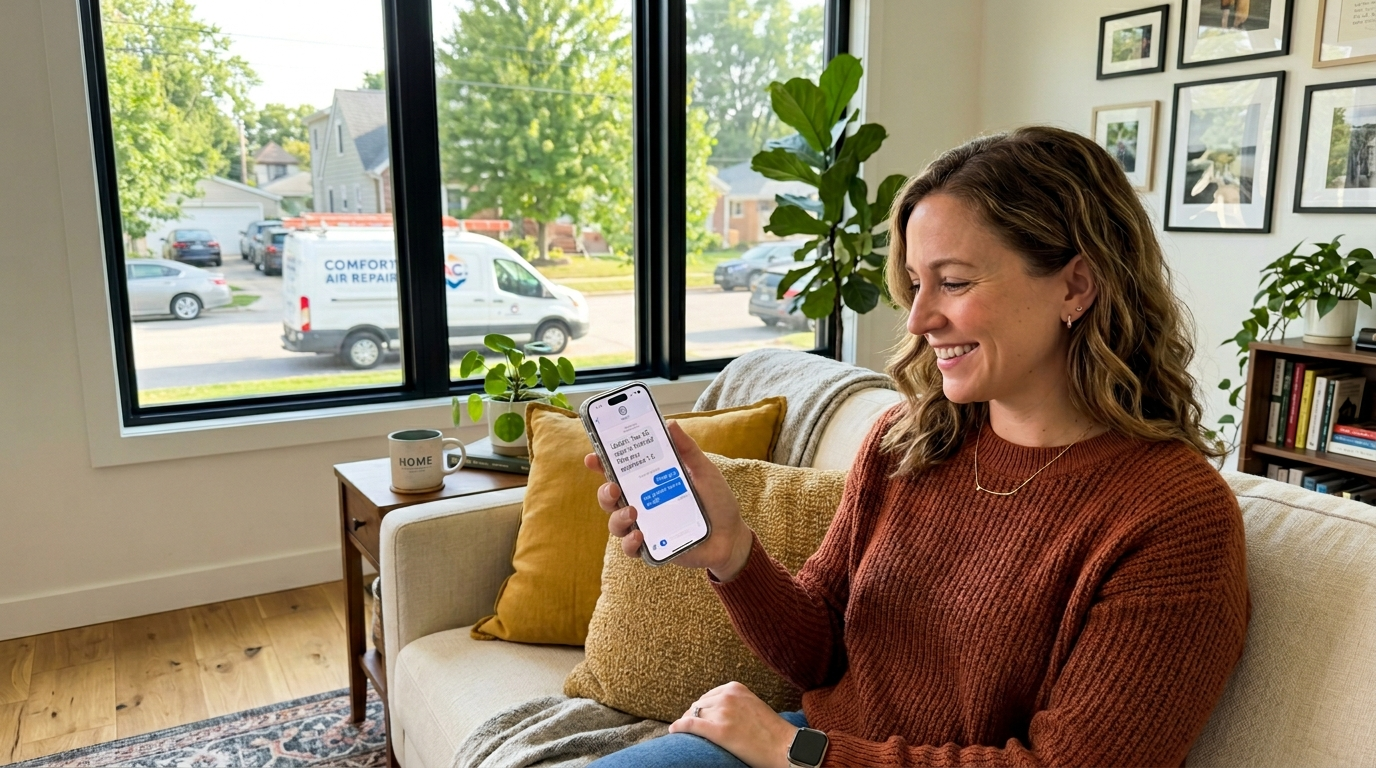
This means using technology to automatically keep tenants informed about their request’s progress. Instead of a resident calling to ask, “Has the plumber been scheduled yet?”, the system sends a text or email notification:
“Your request for a leaky faucet has been received.”
“We’ve scheduled a plumber to visit on Tuesday at 10 AM.”
“The work order is now complete.”
These simple, automated pings eliminate the dreaded “black hole” where requests seem to disappear. The speed of this communication is often more important to tenants than the speed of the actual repair.
Follow up Communication Automation
The final step in a great service experience is the follow up. Follow up communication automation automatically checks in with a tenant after a work order is completed. This step is a crucial component of AI maintenance follow-up tenants will remember. A simple, automated text like, “Hi, we see your sink repair was completed. Is everything working to your satisfaction?” does two powerful things:
It shows the tenant you care about the quality of the work.
It gives you a chance to catch any unresolved issues before they become a bigger problem.
This proactive approach is key to retention. Tenants who are satisfied with how maintenance is handled are 71% more likely to renew their lease. Automating this step ensures a consistent, positive experience for every resident, which is the core of an effective strategy for AI maintenance follow-up tenants value.
Measuring Success and Closing the Loop
How do you know if your communication and maintenance strategies are working? You need to collect feedback and track your most important business metric: tenant retention.
Satisfaction Survey Automation
This involves automatically sending a short survey to tenants after a key interaction, like a completed maintenance request. It can be a simple one to five star rating or a question like, “How likely are you to recommend our maintenance service to a friend?”
This provides a constant stream of measurable data, helping you identify what’s working and what’s not. Maybe you discover one vendor consistently receives low ratings, or that residents at a specific property are less satisfied. Acting on this feedback is crucial. Residents who are satisfied with their property manager are 73% more likely to plan to renew their lease. By automating surveys, you create a powerful feedback loop for continuous improvement.
Renewal Rate Measurement
Ultimately, the goal of great service is to keep good tenants. Renewal rate measurement tracks the percentage of tenants who choose to renew their leases. This is a vital Key Performance Indicator (KPI) because tenant turnover is incredibly expensive, costing an average of around $4,000 per unit. By improving service through the better AI maintenance follow-up tenants receive, you can directly impact this number.
The Technology That Makes It All Work
This level of automation relies on smart, interconnected systems that can take action, escalate to humans when needed, and always operate within legal guidelines.
Property Management Software Integration
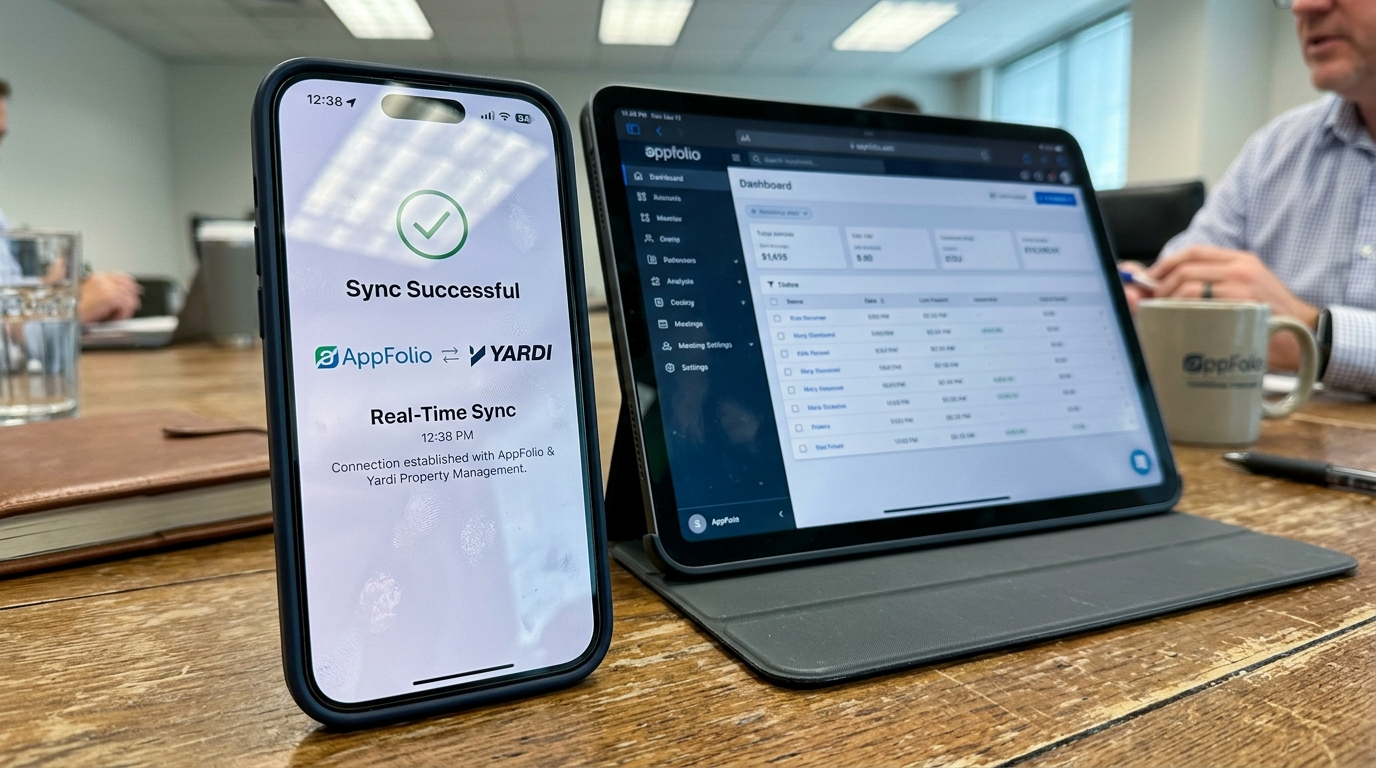
For an AI tool to be truly useful, it needs to connect with your existing Property Management Software (PMS) like AppFolio, Yardi, or Buildium. PMS integration allows the AI to act like a digital team member. When a tenant reports a maintenance issue, an integrated AI can automatically:
Create a work order in your PMS.
Log all communication notes.
Update the work order status when complete.
This eliminates double data entry and keeps your PMS as the single source of truth. With large property management companies using a PMS, this integration is non negotiable. If you’re looking to see how this works in practice, you can book a demo of Haven’s AI to watch it create work orders in real time.
Vendor Routing Optimization
A smart AI system can also handle vendor dispatch. Based on the issue type, property location, and urgency, it can automatically contact the right vendor from your preferred list. This vendor routing optimization ensures a qualified plumber is sent for a leak and an HVAC technician is dispatched for a heating issue, without a manager needing to manually make the call. This speeds up resolution times and ensures the right person is sent for the job every time.
Human Escalation Rule
No AI is meant to handle everything. A human escalation rule is a predefined trigger that tells the AI when to hand a situation over to a person. For example, if a tenant mentions “fire” or “lawyer,” or if the AI cannot understand a request after two attempts, the system immediately notifies a human staff member. This creates a critical safety net, ensuring sensitive or complex issues get the human attention they require.
Fair Housing Compliance in AI Communication
Finally, all communication, whether from a human or an AI, must comply with the Fair Housing Act. This means the AI must be trained to avoid any language that could be seen as discriminatory based on protected classes like race, religion, or familial status. A well designed AI assistant helps ensure compliance by sticking to factual, neutral language and avoiding biased statements, protecting your business from significant legal risk. This programming makes a reliable system for AI maintenance follow-up tenants a safe and compliant choice.
5 Steps to Implementing AI Maintenance Follow-Up
Audit Your PMS: Ensure your software (AppFolio, Yardi, etc.) allows for API integrations.
Define Escalation Triggers: Clearly script which keywords (e.g., "smoke," "flood") require immediate human intervention.
Standardize Communication Tone: Choose a persona for your AI (Professional, Friendly, or Direct) to match your brand.
Sync Vendor Lists: Input your preferred vendors into the system so the AI can route requests to the correct specialists.
Set Feedback Loops: Automate a 24-hour follow-up text after a work order is closed to capture satisfaction scores.
The Future of Property Management is Here
Implementing a strategy for the kind of AI maintenance follow-up tenants need is no longer a futuristic concept; it’s a practical solution to the industry’s biggest challenges. By automating communication from the initial request to the final feedback survey, property managers can save time, reduce costs, and dramatically improve resident satisfaction. The result is a more efficient operation, a happier team, and a thriving community of tenants who are eager to renew their leases year after year, thanks to superior service and the AI maintenance follow-up tenants have come to expect.
Frequently Asked Questions about AI Maintenance Follow-Up for Tenants
What exactly is AI maintenance follow-up for tenants?
It is the use of artificial intelligence to automate the communication process with residents after a maintenance request is made. This includes initial acknowledgments, status updates during the repair, and post completion check ins to ensure satisfaction, creating a complete and positive service loop.
Can an AI system truly handle emergency maintenance calls?
Yes. A properly trained AI can perform maintenance triage 24/7. It uses keyword detection and a series of questions to identify emergencies like fires, floods, or gas leaks. When an emergency is detected, it follows a human escalation rule to immediately contact your on call staff or emergency services.
How does an AI assistant integrate with software I already use?
AI platforms like Haven are built to integrate directly with major Property Management Software (PMS) systems. They use APIs (Application Programming Interfaces) to read and write data, allowing the AI to create work orders, log notes, and update statuses directly in your system of record without manual data entry.
Will my tenants feel like they are talking to a robot?
Modern voice AI is incredibly advanced. It uses natural language processing to understand and respond in a conversational, human like tone. Many tenants may not even realize they aren’t speaking with a person. The goal is a smooth and efficient experience, and a quality AI delivers that without sounding robotic.
What is the biggest benefit of automating maintenance follow ups?
The biggest benefit is a significant increase in tenant satisfaction and retention. Consistent, proactive communication makes residents feel cared for and valued. This positive experience makes them far more likely to renew their lease, which directly impacts your property’s bottom line by reducing expensive turnover costs.
How does AI help with Fair Housing compliance?
An AI communicates using a pre approved, carefully vetted script. This ensures that every interaction is neutral, professional, and free of any language that could be interpreted as discriminatory. This consistency helps mitigate the risk of accidental Fair Housing violations that can sometimes occur in human conversations.
Is it difficult to set up an AI communication system?
Leading providers offer a guided onboarding process. For instance, you can explore solutions with a Haven expert who will help configure the AI to match your specific properties, vendors, and communication protocols, ensuring a smooth rollout for your team and tenants. The system for AI maintenance follow-up tenants interact with is designed to augment your current workflow, not replace it entirely.