Emergency Maintenance Triage AI: 2026 Complete Guide
Discover how Emergency Maintenance Triage AI handles 24/7 intake, severity triage, work orders, and dispatch to cut costs, speed repairs, and boost CSAT.

That 2 AM phone call. Every property manager knows the feeling. It’s never good news. Usually, it’s a burst pipe, a broken furnace, or some other catastrophe that requires immediate attention. For years, the only solutions were costly on call staff or impersonal answering services. But what if technology could handle it all? Enter emergency maintenance triage AI, a game changing solution designed to manage after hours chaos, keep tenants happy, and protect your properties, all without waking you up.
At a Glance: What is Emergency Maintenance Triage AI?
Emergency Maintenance Triage AI is an automated system that uses Natural Language Processing (NLP) to receive, categorize, and respond to tenant maintenance requests 24/7. It replaces traditional answering services by instantly identifying high-priority emergencies (like floods or gas leaks), providing troubleshooting steps for minor issues, and automatically dispatching vendors or creating work orders in systems like Yardi or AppFolio.
Key Benefits:
70%+ Reduction in after-hours operational costs.
Instant Response: Zero hold times for tenants.
Zero Over-Dispatch: Stops expensive emergency call-outs for non-emergencies.
This guide breaks down everything you need to know about how AI is transforming property maintenance, from initial call to final resolution.
The After Hours Problem: Why Late Night Calls Drain Your Resources
Before diving into the solution, let’s talk about the problem. After hours maintenance intake is the process of handling tenant requests outside of normal business hours. An emergency doesn’t wait for a convenient time, and a burst pipe can cause thousands in damages if left unchecked until morning.
Traditionally, property managers relied on two costly options:
On Call Staff: Paying maintenance staff to be on call often results in thousands of dollars in monthly overtime costs.
Answering Services: While cheaper, these services often use rigid scripts, lack specific property knowledge, and can’t take direct action, leading to delays and frustrated tenants.
A robust emergency maintenance triage AI system solves this by providing 24/7 coverage that is both intelligent and cost effective.
Comparison: AI Triage vs. Traditional Methods
Feature | On-Call Staff | Answering Service | Maintenance AI |
Response Time | 15–30 Minutes | 5–10 Minutes | Instant (<1 Sec) |
Cost | High (Overtime/Stipends) | Medium (Per-minute fees) | Low (Fixed Subscription) |
Data Integration | Manual Entry Later | Partial / Email Only | Real-time PMS Sync |
Accuracy | Varies by fatigue | Low (Script-based) | High (Logic-driven) |
Troubleshooting | Occasional | None | Automated Step-by-Step |
How AI Triages Maintenance Requests Like a Pro
At its core, an emergency maintenance triage AI is a smart system that evaluates incoming requests to determine their severity and urgency, initiating the right response instantly. It’s not just a recording, it’s a conversation.
AI Conversational Triage and Severity Assessment
Modern AI uses conversational triage to interact with tenants through voice or text. It understands natural language, so a tenant can say, “Water is leaking through my ceiling and the light is sparking,” and the AI identifies it as a high severity electrical and water emergency.
This severity assessment process is based on consistent rules, not gut feelings. The AI classifies issues into categories:
Emergency (High Severity): A situation threatening safety, property, or habitability, like a gas leak or major flood.
Urgent (Medium Severity): An issue that needs to be addressed within hours to prevent escalating damage, like a broken refrigerator.
Routine (Low Severity): A non critical problem, like a dripping faucet, that can be scheduled for the next business day.
This urgency classification ensures that true emergencies always jump to the front of the line.
Pro-Tip: When implementing AI triage, ensure your "Escalation Path" includes a specific protocol for "Habitability Laws" in your state. The AI should be programmed to recognize "Lack of Heat" differently in Minnesota than in Florida.
Troubleshooting Guidance for Quick Fixes
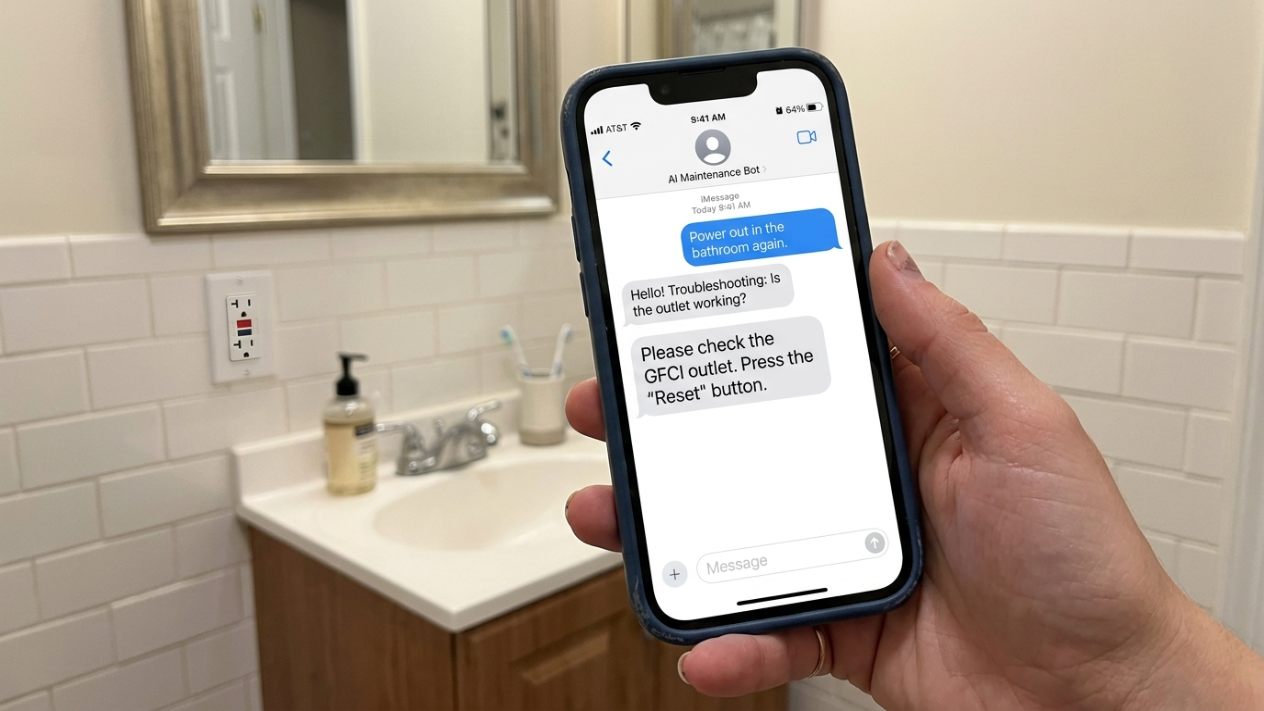
Sometimes, a tenant doesn’t need a technician, they just need a little guidance. An AI can provide simple troubleshooting guidance, walking a tenant through safe, easy steps. For example, it might ask, “Have you tried resetting the GFCI outlet in your bathroom?” This can resolve minor issues instantly, empowering tenants and preventing an unnecessary service call. One study found that about one in four service jobs require at least one repeat visit, a problem that smart troubleshooting helps solve.
From Triage to Action: Automating the Entire Workflow
A well designed triage workflow doesn’t just identify the problem, it kicks off the solution. This is where a true emergency maintenance triage AI shines, connecting every step of the process automatically.
Work Order Automation and CMMS/PMS Integration
Once an issue is triaged, the AI performs work order automation by instantly creating a detailed ticket in your property management software (PMS) or computerized maintenance management system (CMMS). This CMMS/PMS integration is crucial. It eliminates double entry and ensures that every request is logged and tracked in your system of record, like AppFolio or Yardi. Solutions like Haven’s Maintenance AI integrate seamlessly (see the Haven’s Maintenance AI triage and ROI guide), creating a perfect digital paper trail without any manual data entry from your team.
Automated Vendor Dispatch
For true emergencies, waiting for a manager to wake up and call a vendor is a huge bottleneck. With automated vendor dispatch, the AI contacts your pre approved contractors the moment an emergency is confirmed. The system can text your on call plumber with the address and issue details, all within seconds of the tenant’s call. This process has been shown to lead to faster response times (see AI property management statistics), minimizing property damage and getting help to your tenants sooner.
The Human Element: Blending AI with Your Team
Implementing an emergency maintenance triage AI doesn’t mean removing your team. It means empowering them to work smarter with AI workers in property management.
The Human AI Handoff and a Clear Escalation Path
Even the most advanced AI knows when to ask for help. A human AI handoff is designed for complex or sensitive situations. If a tenant is extremely upset or the AI encounters a rare issue, it follows a predefined escalation path to seamlessly transfer the call to a human manager. Your team gets looped in only when their judgment is truly needed. This refined process is so effective that some property managers have seen their after hours interruptions from non critical issues drop.
Keeping Tenants in the Loop with Great Communication
Tenant communication is one of the most critical, yet overlooked, aspects of maintenance. A shocking 32% of apartment renters cite dissatisfaction with property management as a reason for moving.
An AI system excels here by providing instant, automated updates. Tenants receive texts or emails confirming their request was received, when a vendor is dispatched, and to confirm the issue was resolved. This transparency builds trust and turns a stressful situation into a positive customer service experience. You can discover how an AI assistant improves tenant relations by keeping them informed every step of the way in this benefits and real-world ROI of AI in property management resource.
The Business Impact of an Emergency Maintenance Triage AI
Adopting an intelligent triage system delivers powerful, measurable results for your business.
Drastic Cost Reduction via Over Dispatch Prevention
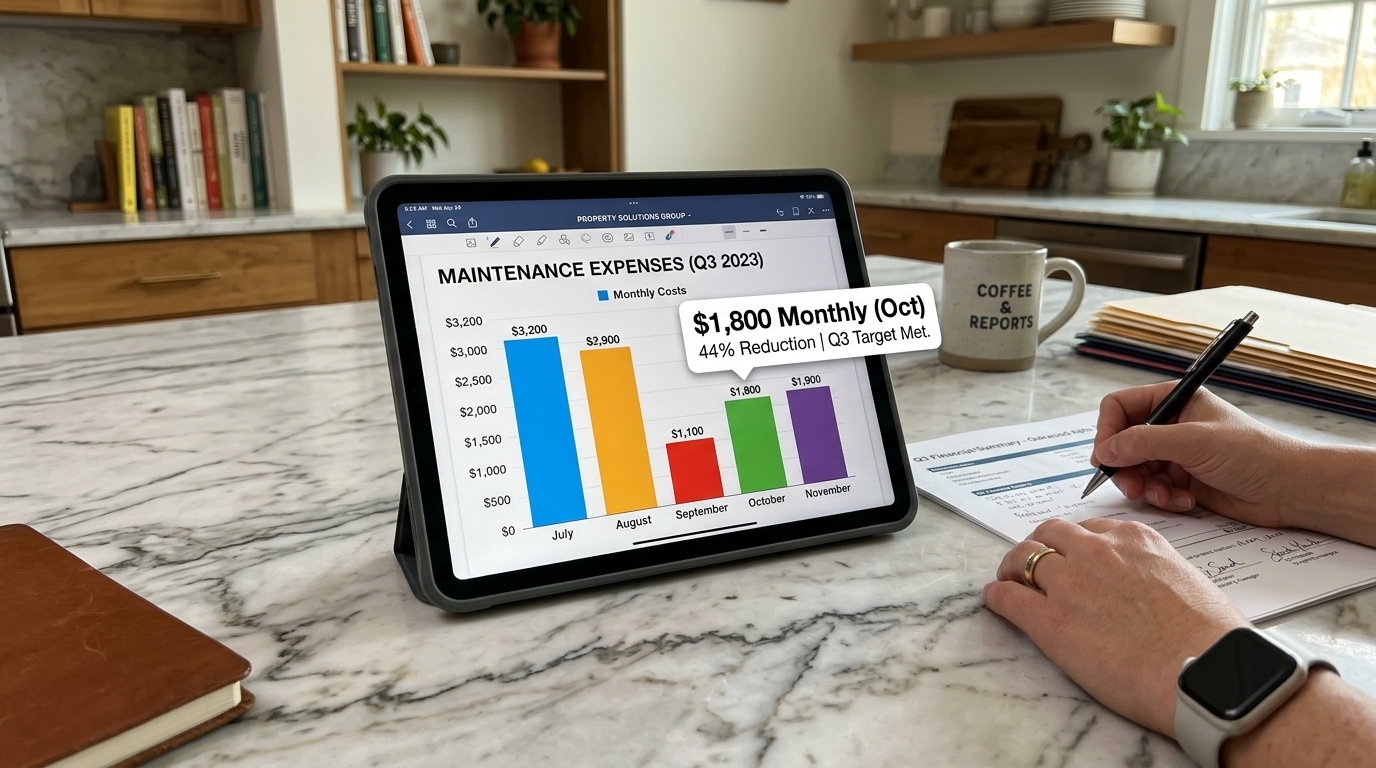
Emergency service calls are expensive. Over dispatch prevention saves money by ensuring you don’t send a pricey after hours contractor for a non urgent issue. By accurately classifying problems, AI ensures only true emergencies trigger an immediate dispatch. One company saw its monthly after hours maintenance costs plummet by 71% (from $6,200 to $1,800) by eliminating unnecessary call outs.
Serious Response Time Optimization
In an emergency, minutes matter. Response time optimization is about minimizing the delay from report to resolution. By automating the intake, triage, and dispatch process, emergency maintenance triage AI systems can dramatically shorten this window. Learn more in our property management automation software guide. Faster responses not only improve tenant satisfaction but also significantly reduce the potential for costly property damage.
Staying Compliant and In Control
Properly managing maintenance isn’t just good business, it’s a legal requirement. An emergency maintenance triage AI provides the tools you need to maintain control and ensure compliance. See the Fair Housing and compliance guide for property management AI.
Multi Channel Intake for Complete Coverage
Tenants report issues through various channels: phone calls, texts, emails, and resident portals. A multi channel intake strategy ensures every request, no matter the source, is funneled into the same unified workflow within your property management AI stack. This means nothing gets lost in an email inbox or on a sticky note.
Evidence Logging, Audit Trails, and Governance Reporting
In the event of a dispute, documentation is your best defense. An AI system provides a perfect evidence logging and audit trail, automatically recording every call, text, action, and timestamp. This creates a bulletproof digital record for compliance and governance reporting. You can easily prove you responded to a habitability issue within the legally required timeframe, protecting your business from fines and liability. Almost every landlord tenant dispute comes down to a lack of records, and an AI ensures your records are flawless.
Frequently Asked Questions about Emergency Maintenance Triage AI
What exactly is an emergency maintenance triage AI?
It is an artificial intelligence system designed for property management that answers tenant maintenance calls 24/7, uses a conversation to understand and classify the urgency of the issue, and then automatically takes the next step, like creating a work order or dispatching an emergency vendor.
How does the AI know what is a real emergency?
The emergency maintenance triage AI is programmed with clear, consistent rules based on property management best practices. It identifies keywords (like “fire,” “flood,” or “gas smell”) and asks specific follow up questions to assess the severity and potential for property damage or harm to the resident, allowing it to accurately separate true emergencies from routine requests.
Can an AI really dispatch my vendors for me?
Yes. Once a high severity emergency is confirmed, the AI can automatically contact vendors from your pre approved list via text or a phone call, providing them with all the necessary details to respond quickly. This is a core part of its triage workflow design.
Will an AI system replace my maintenance staff?
No, it empowers them. The AI handles the repetitive, time consuming intake and triage process, especially after hours. This frees up your human staff to focus on completing repairs, managing complex projects, and handling the situations that require human judgment, preventing burnout and improving efficiency.
How does this integrate with my current software like AppFolio?
Modern AI solutions are built to integrate directly with major Property Management Systems. For example, Haven’s AI connects to your PMS to automatically create detailed work orders, log communications, and access property information (including our Buildium partnership), ensuring all data stays synced in one place.
What kind of ROI can I realistically expect?
Property managers often see a significant return on investment from multiple areas: drastic reductions in after hours operational costs, lower vendor expenses from preventing over dispatch, reduced property damage due to faster response times, and improved tenant retention.