Maintenance AI Workflows: 2026 Guide for Property Managers
Learn how Maintenance AI Workflows streamline 24/7 intake, triage, PMS work orders, and dispatch to cut resolution times and costs. See ROI with the 2026 guide.

Property management can feel like a constant game of catch up, especially when it comes to maintenance. The endless cycle of phone calls, voicemails, manual data entry, and vendor coordination can lead to burnout for your team and frustration for your tenants. But what if there was a better way? The answer lies in building and optimizing maintenance AI workflows.
By leveraging artificial intelligence, property managers can transform their reactive, chaotic maintenance processes into a streamlined, automated, and efficient operation. This guide will walk you through every step of modern maintenance AI workflows, showing how technology can handle everything from the initial tenant call to the final work order summary, creating a better experience for everyone involved.
The Start of the Workflow: Smart Intake and Triage
Everything begins the moment a tenant has a problem. Modern maintenance AI workflows revolutionize this first step, ensuring no request is ever missed and every issue is understood correctly from the start.
Capturing Every Request, 24/7
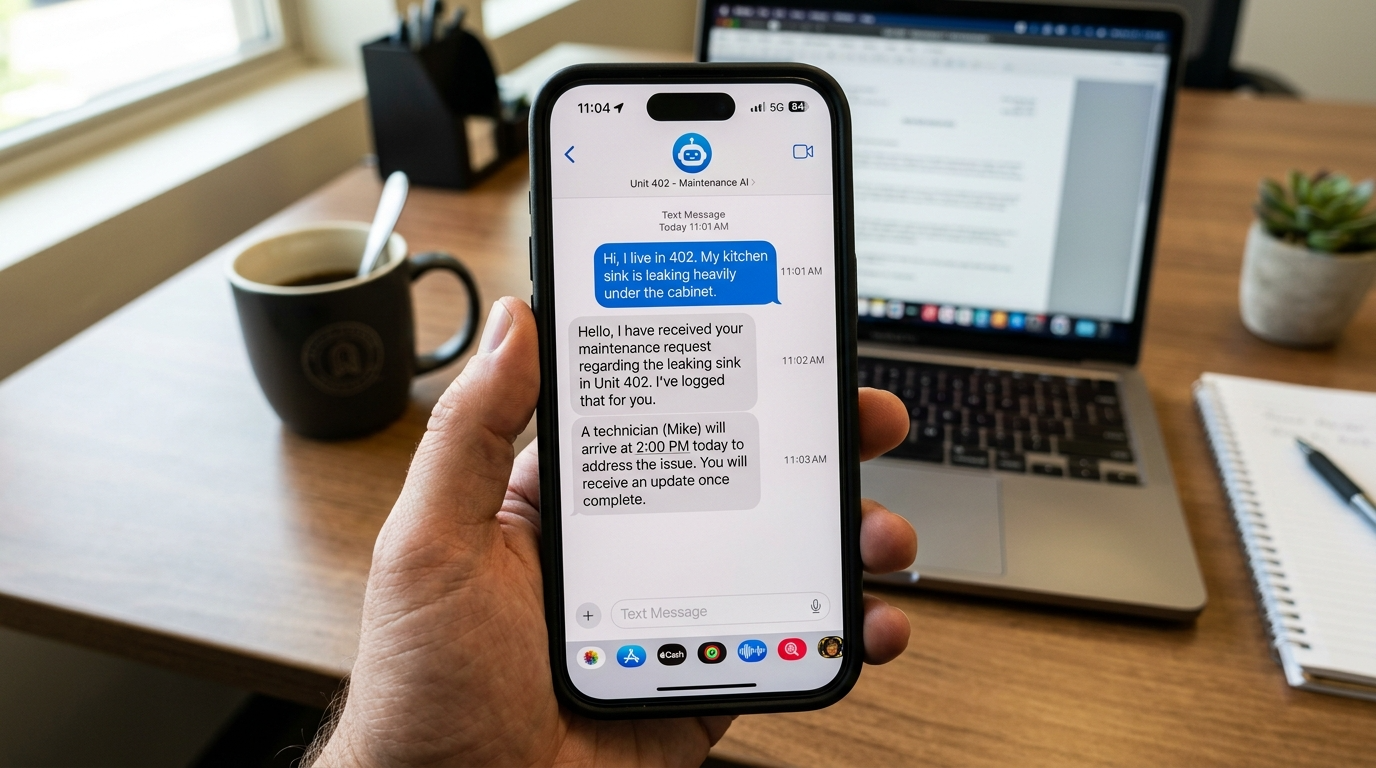
Instead of tenants leaving voicemails or waiting for office hours, they can get an immediate response anytime, day or night.
Maintenance Request Intake via Conversational AI: This involves using an AI powered agent to answer phone calls and text messages. A tenant can call at 2 AM with a leak and have a natural conversation with an AI that understands the problem, asks clarifying questions, and initiates the workflow instantly. AI can answer a call in under one second, while on call staff might reply by telephone to a page or call within 15 minutes while on-call.
Self Service Maintenance Request Portal: For tenants who prefer digital interaction, a portal or app allows them to submit requests, describe issues, and even upload photos or videos at their convenience. This structured intake improves diagnostic accuracy and helps technicians arrive prepared.
Verification and Diagnosis
Once contact is made, the AI workflow immediately gets to work.
Issue Troubleshooting and Diagnosis: The AI doesn’t just take notes, it actively diagnoses the problem. It asks targeted questions like “Is the water hot or cold?” or “Have you tried resetting the circuit breaker?”. This initial troubleshooting can sometimes resolve simple issues on the spot. For more complex problems, it gathers the critical details needed for a technician, which is vital since over 30% of work orders require multiple trips due to incomplete initial information.
Sorting and Prioritizing with Precision
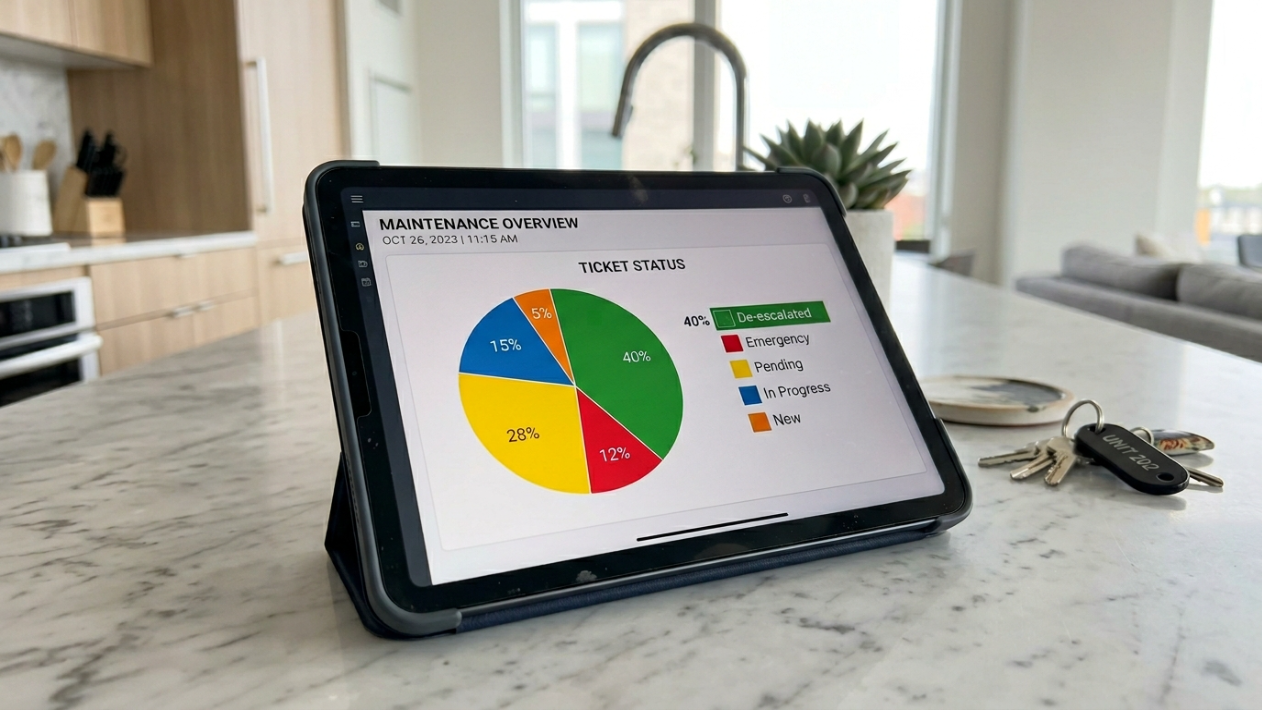
With the what, where, and who established, the next crucial step is prioritizing the request.
Maintenance Triage: This is the process of sorting requests by urgency. An AI uses predefined rules to categorize issues as emergencies, urgent matters, or routine tasks. This systematic approach ensures the most critical problems get immediate attention.
Urgency Prioritization Rule: These are the specific guidelines that define what constitutes an emergency (like a gas leak or major flood) versus a routine fix (like a loose cabinet hinge). Programming an AI with these rules ensures consistent and accurate prioritization every time.
After Hours Triage: This is where maintenance AI workflows truly shine. Since 30% to 40% of service calls happen after 5 PM, having an AI to triage these requests is a game changer. It can correctly identify that more than 40 percent of after-hours emergency calls can be de-escalated, allowing your on call team to rest while scheduling non critical issues for the next business day.
The Core of the Workflow: Action and Coordination
After a request is captured and triaged, the AI workflow seamlessly moves into the coordination phase, automating the administrative tasks that used to consume hours of staff time.
System Integration and Work Order Management
At the heart of the automated process is the connection to your core property management software.
Work Order Creation and Update: The AI automatically creates a detailed work order in your PMS the moment it finishes talking to the tenant. All the notes, photos, and priority levels are logged without any manual data entry.
PMS Integration: This is what makes the whole system work. By connecting directly to systems like AppFolio or Yardi, the AI has real time access to tenant and property data and can take direct action within the software you already use. This integration is a key reason that using a connected system can make maintenance resolution 35% faster.
Getting the Right Pro to the Right Place
Assigning the job is another area ripe for optimization.
Vendor Roster Management: Your AI workflow relies on a well managed list of your preferred, pre vetted vendors for plumbing, electrical, HVAC, and more.
Routing and Vendor Assignment: The system automatically matches the work order to the right professional from your roster based on the issue type, location, and availability.
Dispatch Optimization: AI can take this a step further by grouping jobs by location to reduce travel time or dispatching the closest available technician with the right skills. This efficiency boost has allowed some maintenance teams to handle 20% to 30% more units without adding staff.
Striving for One Visit Resolution
The ultimate goal is to fix the problem correctly on the first try.
First Time Fix Rate Improvement: By gathering detailed diagnostic information and photos upfront and assigning the correct specialist, maintenance AI workflows significantly increase the chances of a first time fix. Eliminating repeat visits is a huge cost saver, as a single technician visit can cost between $150 and $500.
Closing the Loop: Communication and Analysis
A job isn’t truly done until the tenant is satisfied and the data is captured. Modern maintenance AI workflows excel at managing these final, crucial steps.
Keeping Tenants Happy and Informed
Constant communication is key to tenant satisfaction. A lack of it is a top reason for dissatisfaction, with 32% of multifamily/large apartment renters, and 32% of renters in other home types such as condos and townhomes, cite dissatisfaction with property management as a reason for moving.
Automated Resident Communication: The AI sends automatic text or email updates to residents at each stage, from “We’ve received your request” to “A vendor has been dispatched” to “Your repair is complete.”
Status Update and Closure Summarization: This provides total transparency. Tenants can see the status of their request, and once it’s done, they receive a summary of the work performed. This simple act of closing the loop can lead to higher tenant satisfaction.
Learning and Improving from Data
Every maintenance request is a data point that can help you manage your properties more effectively.
Maintenance Data Capture and Documentation: The automated workflow ensures that every detail of every job is logged perfectly in your PMS. This creates a rich history for each unit, which is invaluable for legal compliance and operational analysis.
Response Time Reduction Strategy: With all this data, you can identify bottlenecks and implement strategies to speed up your response and resolution times. Companies that focus on this can achieve completion times of just 3.4 to 6.8 days, which is critical when you consider that there’s less than a 1% chance of receiving a positive review if a maintenance issue takes longer than 5.5 days to fix.
Predictive Maintenance: Over time, you can use this historical data to shift from a reactive to a proactive model. By analyzing trends, you can predict when an appliance is likely to fail and service it before it breaks. This approach can reduce overall maintenance costs by about 12% and extend the lifespan of your assets by 20%.
The Full Picture: Automation, ROI, and the Human Element
When all these pieces come together, you have a complete, end to end system that transforms your operations.
Maintenance Workflow Automation: This is the overarching concept of using software and AI to connect all the steps we’ve discussed. It’s about letting technology handle the repetitive tasks so your team can focus on what matters most. Automation has been shown to result in a 26.63% reduction in average resolution time (ART) with automated workflows.
Exception Handling and Human Handoff: Automation doesn’t mean eliminating people. A smart system knows when to escalate a complex or sensitive issue to a human manager. This ensures that your team’s expertise is used where it’s truly needed, while the AI handles the vast majority of routine requests.
ROI Measurement for Maintenance AI: Is it worth the investment? Absolutely. The return on investment comes from multiple areas: reduced labor costs, lower vendor expenses, preventing costly property damage, and improved tenant retention. Given that a single tenant turnover can cost around $2,500, the savings add up quickly.
Adopting comprehensive maintenance AI workflows is no longer a futuristic idea; it’s a practical step toward running a more profitable and scalable property management business. If you’re ready to see how these automated systems can be tailored to your portfolio, you can book a demo of Haven’s Maintenance AI to explore the possibilities.
Frequently Asked Questions
What are maintenance AI workflows?
Maintenance AI workflows are automated, end to end processes powered by artificial intelligence that manage property maintenance from the initial tenant request to the final resolution. They include steps like conversational intake, automated triage, work order creation in a PMS, intelligent vendor dispatch, and resident communication.
How can AI improve after hours maintenance?
AI can answer tenant calls and texts 24/7, instantly triaging issues to determine if they are true emergencies. For non critical issues, it can log the request and schedule it for the next business day, preventing unnecessary after hours callouts and reducing staff burnout.
Can maintenance AI integrate with my current PMS?
Yes, a core feature of modern maintenance AI workflows is deep integration with leading Property Management Systems (PMS) like AppFolio, Yardi, and Buildium. This allows the AI to read tenant data and automatically create and update work orders directly within your existing software.
What is the main benefit of automating maintenance workflows?
The primary benefit is a massive increase in operational efficiency. Automation reduces manual data entry, eliminates missed calls, speeds up response times, and frees up your staff to focus on high value tasks. This allows property managers to handle more units without increasing headcount.
How does an AI handle an emergency maintenance request?
Based on pre set urgency rules, an AI can identify keywords and context clues that signal an emergency (e.g., “flood,” “gas smell,” “sparking outlet”). Once an emergency is detected, the AI immediately escalates the issue by notifying the on call technician or property manager and dispatching the appropriate emergency vendor from your roster. For a deeper dive, see our emergency maintenance triage guide.
Does AI replace my maintenance coordinator?
No, AI is designed to augment your team, not replace them. It acts as a tireless assistant that handles the high volume, repetitive tasks of maintenance coordination. This allows your human coordinators to manage complex situations, oversee vendor relationships, and provide a higher level of customer service.
How do maintenance AI workflows improve the tenant experience?
They provide an instant response to every inquiry, 24/7. Tenants are kept informed with automatic status updates, which builds trust and reduces frustration. Faster resolution times and a higher first time fix rate mean less inconvenience, leading to higher overall satisfaction and better retention rates.
How do I get started with maintenance AI workflows?
The first step is to assess your current processes and identify the biggest pain points. Partnering with a specialized provider like Haven can help. They can demonstrate how an AI agent can integrate into your existing systems and tailor a workflow to fit the specific needs of your portfolio.