PMS Integration Property Management AI: 2026 Guide
Learn how PMS integration property management AI works—APIs, webhooks, bidirectional sync, compliance—and how to vet vendors. Read the 2026 guide.

TL;DR
PMS integration is what separates useful property management AI from another tool collecting dust. It means an AI system can read data from and write actions back into your property management system, your single source of truth. This glossary defines the key terms, explains how integrations actually work at a technical level, maps the major PMS platforms to their AI ecosystems, and gives you a practical framework for evaluating whether a vendor’s “integration” claim is real or marketing fluff.
Property managers already juggle an average of 10 to 14 disconnected software tools. Adding an AI system that can’t talk to your PMS just creates tool number 15. The entire value proposition of AI in property management collapses without tight integration into the system where your data actually lives.
This glossary covers the terms, concepts, and evaluation criteria you need to make smart decisions about PMS integration for property management AI. It’s written for US residential property managers, not hotel operators or vacation rental hosts.
What Is PMS Integration in Property Management AI?
PMS integration in property management AI is the ability of an AI system to directly connect with a property management system (PMS) so it can both read operational data (leases, tenants, units) and write actions back into the system (work orders, leads, updates, and communications) in real time. Without this bidirectional connection, AI tools function in isolation and require manual data entry, limiting efficiency gains.
Key takeaway: If the AI cannot update your PMS automatically, it is not truly integrated—it is just a reporting or chatbot tool.
What Is a PMS (Property Management System)?
A property management system is the central software platform where property managers handle leasing, rent collection, maintenance workflows, tenant communications, accounting, and reporting. Think of it as the operating system for your portfolio.
The dominant PMS platforms in US residential property management include AppFolio (serving over 7.7 million rental units), Yardi Voyager, Buildium, Rent Manager, Propertyware, Entrata, RealPage, and Rentvine. These systems hold your lease data, tenant records, vendor lists, financial ledgers, and work order histories. Everything flows through the PMS.
That’s why the PMS is called the system of record: it’s the authoritative, canonical source for your operational data.
Why PMS Integration Matters for AI Tools
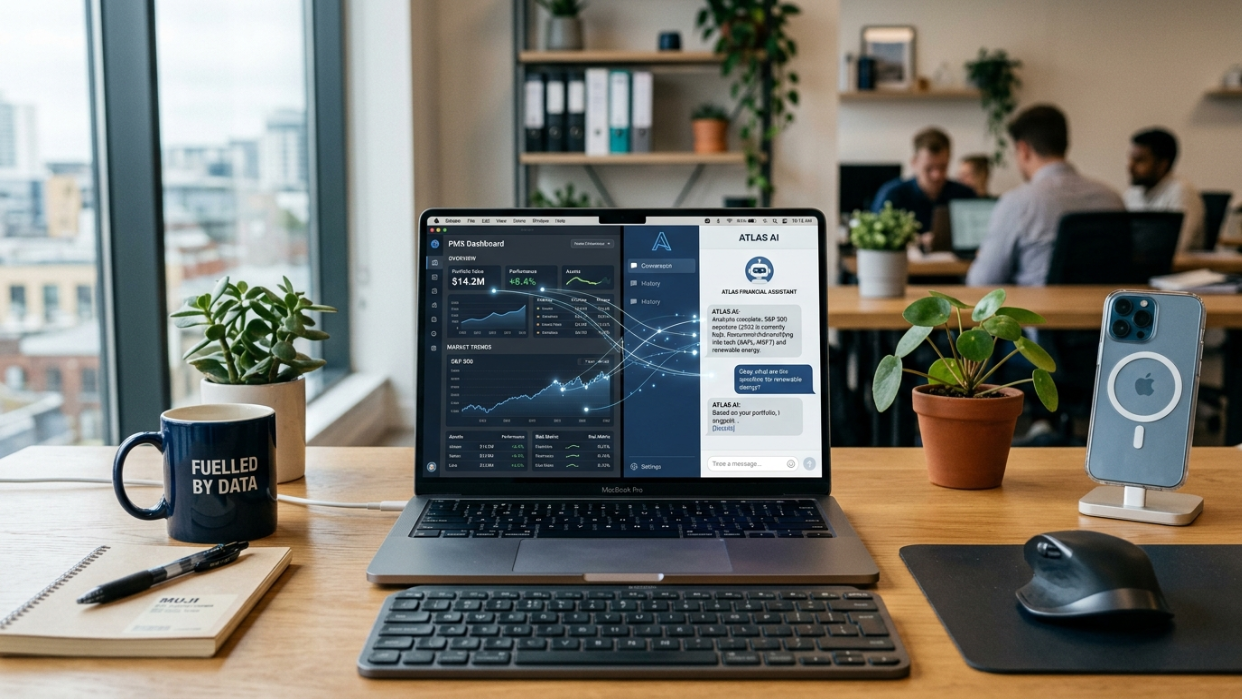
Without integration, AI creates more problems than it solves. As one vendor put it bluntly, “Adding another software to manage increases the workload instead of reducing it.”
Here’s the core issue: an AI leasing assistant that captures a lead but can’t push that lead into your PMS guest card creates double entry. An AI maintenance bot that triages a request but can’t create a work order means someone still has to log into AppFolio and type it in manually. You haven’t saved time. You’ve added a step.
PMS integration in the AI context means the AI tool can read data from and write actions back into your property management system. Data flows in, actions flow out. That bidirectional connection is what turns AI from a novelty into a productivity gain.
The numbers support this. A 2025 AppFolio benchmark report shows AI adoption among property managers jumped from 21% in 2023 to 34% in 2024. Early results from AppFolio’s Realm-X show users saving an average of 10 hours per week and achieving 73% higher lead-to-showing conversion rates. Those gains don’t come from AI alone. They come from AI that’s connected to the PMS.
For a deeper look at how AI tools fit together, see our property management AI stack guide.
Why PMS Integration Is Becoming Critical in 2026
Property management AI adoption is accelerating, but integration depth—not AI capability—is now the primary performance differentiator. In 2026, most operational gains come from systems that reduce manual data handling rather than tools that only generate insights.
Key drivers include:
Increased portfolio complexity (multi-platform ecosystems)
Rising labor shortages in property operations
Faster tenant response expectations (minutes, not hours)
Expansion of agentic AI workflows that require system-level access
Without PMS integration, AI tools create parallel workflows instead of eliminating them.
Key Terms Glossary
API (Application Programming Interface)
An API is the mechanism that lets two software systems communicate. When an AI tool integrates with your PMS, the API defines what data the AI can access, what actions it can take, and how authentication works. Most property management integrations use REST APIs, which send and receive data in a structured format (typically JSON) over the internet.
Webhook
A webhook is an event-driven notification. Instead of the AI tool constantly checking the PMS for updates (polling), the PMS sends a push notification when something changes. For example, EliseAI subscribes to AppFolio’s “leads” webhook topic so it receives new lead data the moment it appears, not minutes later.
Bidirectional Sync
Data flows both directions in real time. The AI reads from the PMS (pulling unit availability, lease terms, tenant history) and writes back to the PMS (creating work orders, logging notes, updating records). This is the gold standard for PMS integration in property management AI. One-way connections, where AI can read but not write, are significantly less useful.
Work Order Automation
AI captures a maintenance request from a tenant (via phone, text, or email), classifies it, and creates a work order directly inside the PMS with the correct property, unit, category, priority, and description. Some tools also update and close work orders as the job progresses. Learn more in our maintenance AI FAQ and glossary.
Lead Capture
AI answers a prospect’s inquiry (from Zillow, Apartments.com, phone, or your website), qualifies the lead, and pushes the prospect’s information into the PMS as a guest card. This eliminates the gap between first contact and your CRM record. Haven’s Leasing AI captures leads directly into your PMS across phone, SMS, and email channels.
Vendor Dispatch
AI assigns a work order to a vendor from your preferred vendor list stored in the PMS. The AI selects the right vendor based on trade category, property, and availability, then initiates the dispatch without human intervention.
Agentic AI

AI that takes autonomous actions rather than just generating text or answering questions. An agentic AI maintenance coordinator doesn’t just tell you “this sounds like a plumbing issue.” It creates the work order, dispatches the plumber, and follows up with the tenant after the job is done. The “agentic” distinction matters because most chatbots are passive. Agentic AI operates more like a staff member.
System of Record
The authoritative data source for your operations. In property management, the PMS is the system of record. Any AI tool that doesn’t write data back to the system of record creates a parallel data universe that will eventually drift out of sync. That drift causes missed follow-ups, duplicate work orders, and audit gaps.
Middleware / Orchestration Layer
Software that sits between your AI tools and your PMS, routing data between multiple systems. If your AI vendor connects to AppFolio, Buildium, and Rent Manager through a single middleware layer, that middleware handles the translation between each PMS’s unique API format.
OAuth 2.0
The security standard most PMS platforms use for API authentication. OAuth 2.0 lets an AI tool access your PMS data without storing your login credentials. Instead, it uses temporary access tokens that can be revoked at any time. If a vendor asks for your PMS username and password directly, that’s a red flag.
Data Mapping
The process of aligning field names and data structures between two systems. Your PMS might call it “unit number” while the AI tool calls it “asset_id.” Data mapping ensures these fields match so information lands in the right place. Poor data mapping is a common source of integration failures.
Native AI
AI built directly into the PMS itself, requiring no external connection. AppFolio’s Realm-X and Yardi’s Chat IQ are native AI tools. The advantage is tight integration by default. The tradeoff is that you’re limited to what that single vendor builds.
Emergency Triage
AI classification of maintenance requests by urgency. A burst pipe gets flagged as an emergency and triggers immediate vendor dispatch. A squeaky door gets classified as routine. Good triage reduces after-hours costs and protects against liability. For a detailed breakdown, see our emergency maintenance triage guide.
Fair Housing Compliance
The legal requirement that AI tools used in housing must not discriminate based on protected classes. This applies to leasing AI (lead qualification, tour scheduling, advertising) and maintenance AI (response prioritization). More on this in the compliance section below.
How AI Integrates with a PMS: The Technical Basics
At a practical level, AI-to-PMS integration happens through three mechanisms, often used in combination.
API calls are the foundation. The AI tool sends HTTP requests to the PMS’s API endpoints to retrieve data (GET requests) or create/update records (POST/PUT requests). These calls happen in real time or near-real time.
Webhooks complement API calls by pushing event notifications from the PMS to the AI tool. Rather than the AI polling for new leads every 30 seconds, the PMS fires a webhook the instant a new lead arrives.
Middleware handles cases where the PMS’s native API is limited or doesn’t expose the data the AI needs. For more on building a complete AI technology stack, our stack guide covers how these pieces fit together.
How PMS Integration Works in Real Property Operations
Example: Maintenance Request Automation Flow
Tenant submits maintenance request via SMS
AI classifies issue (e.g., plumbing emergency)
AI checks PMS for unit + tenant details
AI creates work order inside PMS
AI assigns vendor from approved list
Vendor receives dispatch notification
PMS updates status in real time
Tenant receives automated follow-up
Without PMS integration, steps 3–8 require manual staff intervention.
The Integration Depth Framework
Not all integrations are created equal. Here’s a four-level framework for evaluating how deeply an AI tool connects to your PMS.
Level 1: Read-Only. The AI can pull data from the PMS but can’t write anything back. You get reports and dashboards, but no automation. This is the most common form of “integration” among early-stage tools.
Level 2: One-Way Write. The AI can create new records (work orders, notes, guest cards) but can’t update or close them. Better than read-only, but you still need to manage records manually after creation.
Level 3: Bidirectional Sync. The AI reads and writes in real time. Updates flow both directions. When a vendor marks a job complete in the field, the AI updates the work order in the PMS and sends the tenant a follow-up. This is the standard mature integrations should meet.
Level 4: Native/Embedded. The AI is built into the PMS itself. No external connection needed. AppFolio’s Realm-X and Entrata’s ELI+ fall into this category. Maximum integration depth, but you’re locked into one vendor’s AI capabilities.
The most effective property management AI tools offer Level 3 or Level 4 integration. Anything below that and you’re still doing manual data entry somewhere.
Integration Depth vs Operational Impact
Integration Level | Capability | Operational Impact | Risk Level |
|---|---|---|---|
Level 1: Read-only | Data visibility only | Low efficiency gain | Low |
Level 2: One-way write | Creates records only | Moderate improvement | Medium |
Level 3: Bidirectional sync | Full read/write loop | High automation value | Medium |
Level 4: Native AI | Embedded in PMS | Maximum efficiency | Low–Medium (vendor lock-in) |
The API Access Problem
Here’s something vendor marketing pages won’t tell you: many PMS platforms have significant API restrictions. AppFolio, for example, provides only one-way data export via its REST API, limiting bidirectional integrations and real-time synchronization. Its AppFolio Stack program restricts certain categories like rent payments, tenant screening, and renters insurance from third-party access.
Practitioners on forums have noted that complex authentication layers (MFA, session management, rotating tokens) complicate automated access even when an API technically exists. Critical features and real-time data often live in a platform’s mobile apps or internal dashboards but aren’t exposed through any documented API. These aren’t bugs. They’re structural to how PMS vendors protect their ecosystems, and they create a real gap between what data exists in these systems and what data third-party AI tools can actually use.
For a focused look at AppFolio specifically, see our AppFolio AI integration glossary.
PMS AI Ecosystem Maturity Model
Property management systems vary significantly in how open they are to AI integration.
Level 1: Closed Ecosystem
Limited API access
Heavy vendor control
Example behavior: restricted third-party automation
Level 2: Controlled Marketplace
Approved integrations only
Partial API exposure
Balanced ecosystem control
Level 3: Open Integration Platform
Full API access
Strong third-party ecosystem
Faster AI innovation cycles
Common PMS Platforms and Their AI Integration Options
Here’s the current state of PMS integration for property management AI across the major US residential platforms.
PMS | Native AI | Third-Party AI Ecosystem | Integration Openness |
|---|---|---|---|
AppFolio | Realm-X (Messages, Assistant, Performers) | EliseAI, Haven, Vendoroo, Showdigs via AppFolio Stack | Moderate (Stack marketplace, but API restrictions exist) |
Yardi | Chat IQ | EliseAI, RealPage integration layer | Moderate (selective API access) |
Buildium | Lumina AI | STAN AI, Clyr, Haven via Buildium partnership, open API marketplace | More open |
Rent Manager | Limited native | Domos, Vendoroo | Moderate |
Rentvine | None native | Vendoroo (deep integration), open API | Most open |
Entrata | ELI+ (Leasing AI) | Open API for third-party integrations | Moderate to open |
RealPage | Revenue AI | EliseAI | More restricted |
The “closed vs. open” debate matters. Open platforms like Rentvine and Buildium welcome third-party AI tools. Closed platforms limit innovation to what one company builds. Your choice of PMS increasingly determines which AI tools you can use.
For a broader comparison, our best AI property management software guide covers more options.
What to Look for in a PMS-AI Integration
When evaluating whether an AI vendor’s PMS integration claim is genuine, ask these questions:
Does it write back to the PMS? If the AI only reads data and displays it in its own dashboard, that’s not integration. That’s reporting. Real integration creates work orders, logs notes, updates records, and captures leads inside your PMS.
Is it real-time or batch? Some integrations sync data once per hour or once per day. For leasing (where response speed matters) and maintenance (where emergencies need immediate triage), batch sync isn’t sufficient.
Which specific endpoints does it access? “We integrate with AppFolio” can mean many things. Ask exactly which data the AI reads and which actions it can take. Work orders? Lease records? Tenant communications? Vendor assignments?
What’s the security model? The AI tool should use OAuth 2.0, SSL encryption, and regular security audits. It should not require your PMS login credentials. Ask whether the vendor uses your data to train its models, which raises data ownership concerns.
What’s the implementation timeline? Typical implementations span 2 to 6 weeks depending on complexity. If a vendor promises same-day integration, ask what they’re skipping.
Red flags to watch for:
“Integration” that’s just CSV export or file upload
Read-only dashboards marketed as “AI-powered PMS integration”
No ability to create work orders or guest cards inside the PMS
Vague claims without specifying which PMS versions or endpoints are supported
For a broader view of automation capabilities, see our guide on property management automation software.
Compliance and Security Considerations
Fair Housing Act and AI
This is a blind spot in most discussions about PMS integration for property management AI, and it shouldn’t be. In 2024, HUD issued specific guidance stating that the Fair Housing Act’s rules “apply to tenant screening and the advertising of housing, including when artificial intelligence and algorithms are used.”
That means if your AI leasing tool qualifies leads differently based on patterns that correlate with protected classes, you’re liable. If your AI maintenance triage system consistently deprioritizes requests from certain properties or demographics, you’re liable. And as multiple legal sources have confirmed, “AI wrote it” is not a defense.
As more tenant interactions shift to AI-driven platforms, visibility can diminish. Communications that once happened in person or over the phone are now generated through automated systems running 24/7, often outside the day-to-day awareness of property management teams. Human oversight isn’t optional. It’s a compliance requirement. For a thorough treatment of this topic, our AI and Fair Housing compliance glossary covers the legal landscape in detail.
Data Privacy and Ownership
Property management systems contain sensitive information: Social Security numbers, bank accounts, lease terms, communication records. Giving third-party AI tools access to this data introduces risk if those systems aren’t properly secured.
Key questions to ask any AI vendor:
Do you store PMS data, or only process it in transit?
Do you use connected data to train your AI models?
Where is data stored, and who has access?
What happens to the data if we terminate the contract?
Security best practices mandate OAuth 2.0 authentication, SSL encryption, regular security audits, and compliance with data protection regulations. With 78% of firms reporting critical staffing shortages, the pressure to adopt AI is real, but cutting corners on security creates bigger problems than the ones AI solves.
Ready to see how PMS integration works in practice? Book a demo to see Haven’s AI agents creating work orders and capturing leads directly inside your PMS.
Frequently Asked Questions
What does PMS integration mean for property management AI?
PMS integration means an AI tool has a live connection to your property management system that allows it to both read data (unit availability, tenant records, vendor lists) and write actions back (work orders, guest cards, communication logs). Without this connection, the AI operates in a silo and requires manual data entry to be useful.
Which PMS platforms support AI integrations?
The major US residential platforms, including AppFolio, Yardi, Buildium, Rent Manager, Entrata, Rentvine, and RealPage, all support some level of AI integration. The depth and openness vary significantly. Rentvine and Buildium tend to be more open to third-party tools, while others maintain tighter control over their API access.
How long does it take to implement an AI-PMS integration?
Typical implementations take 2 to 6 weeks. Simple connections with well-documented APIs deploy faster. Enterprise implementations with custom data mapping, security reviews, and multi-property configurations take longer. Be skeptical of same-day integration promises.
What’s the difference between native AI and third-party AI in a PMS?
Native AI (like AppFolio’s Realm-X or Yardi’s Chat IQ) is built directly into the PMS. It has deep integration by default but limits you to that vendor’s AI capabilities. Third-party AI tools connect via APIs and may offer more specialized functionality, but integration depth varies. Both approaches have tradeoffs.
Does AI in property management need to comply with Fair Housing laws?
Yes. HUD’s 2024 guidance explicitly states that the Fair Housing Act applies when AI and algorithms are used in tenant screening and housing advertising. Property managers are responsible for ensuring their AI tools don’t discriminate, even unintentionally. Automated responses, lead qualification criteria, and maintenance prioritization all fall under scrutiny.
How can I tell if an AI vendor’s PMS integration is real?
Ask specific questions: Which endpoints does the integration access? Can it create and update work orders, or only read data? Is the sync real-time or batched? What security protocol does it use? If the vendor can’t answer these questions clearly, the integration may be more marketing than substance.
What are the biggest risks of connecting AI to my PMS?
The primary risks are data synchronization conflicts (records getting out of sync between systems), security vulnerabilities (especially if the vendor stores sensitive tenant data), and compliance exposure (AI making decisions that violate Fair Housing rules). All three are manageable with proper due diligence, but they require active attention, not passive trust.
Can AI reduce maintenance costs through PMS integration?
Industry estimates suggest predictive maintenance powered by AI can reduce maintenance costs by 20 to 30%. The key is that the AI needs bidirectional PMS integration to access historical work order data, dispatch vendors automatically, and follow up on completed jobs. Without that connection, you lose most of the efficiency gains.