How 24/7 Availability Tenant Retention Drives ROI in 2026
Learn how 24/7 Availability Tenant Retention boosts renewals, cuts turnover costs, and lifts satisfaction. Get ROI math, metrics, and steps.
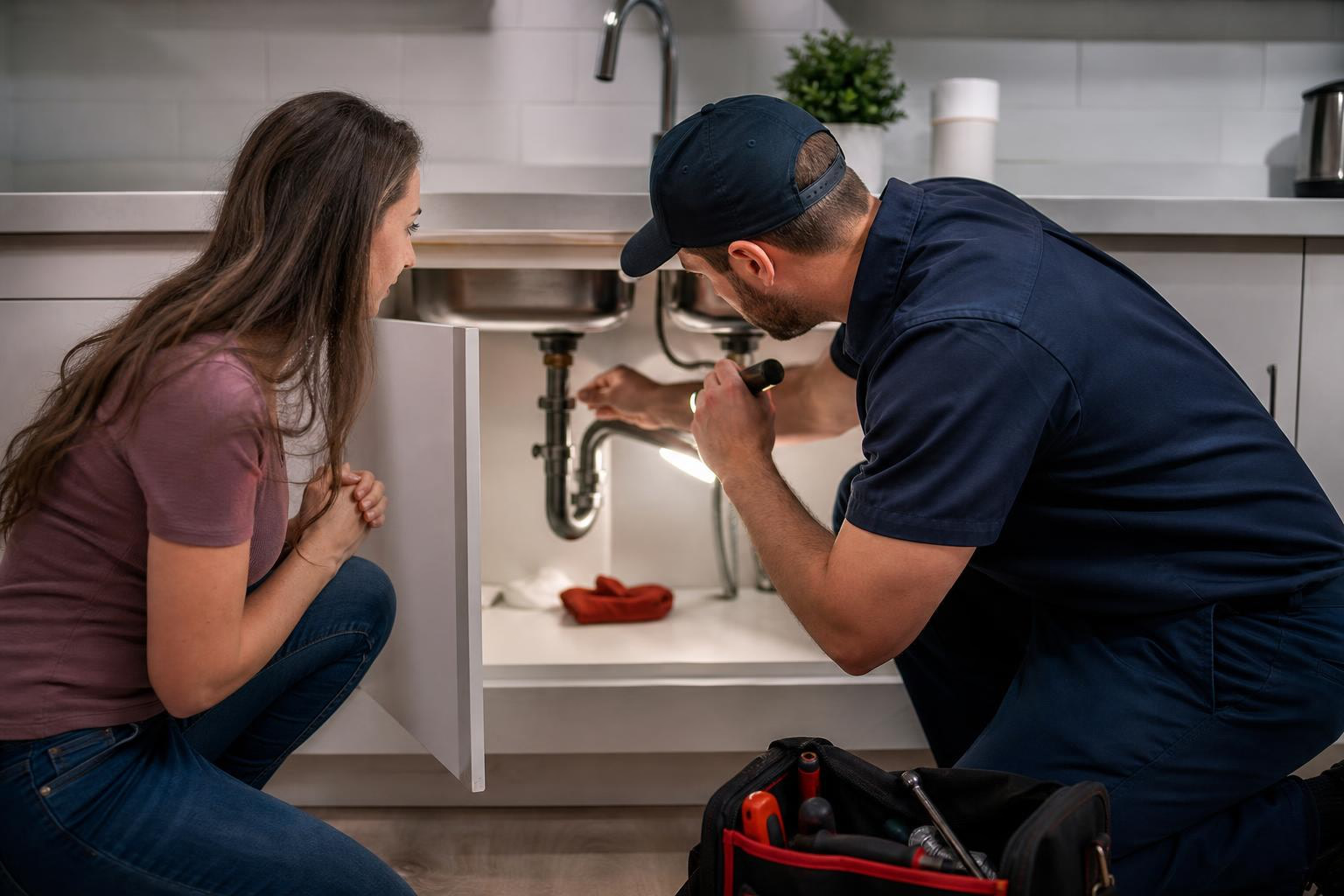
TL;DR
24/7 availability tenant retention is the strategy of providing tenants with round-the-clock access to maintenance support, emergency response, and communication as a way to increase lease renewals. Research shows maintenance responsiveness outranks rent and amenities as the top driver of renewal decisions. With average turnover costing roughly $4,000 per unit and national retention rates stuck around 57%, always-on availability is one of the highest-ROI investments a property manager can make.
Quick Answer
24/7 availability can improve tenant retention by making it easier for residents to report problems, receive confirmation, and get help when issues occur outside normal business hours. The strongest retention opportunity is maintenance: NAA research identifies poor maintenance response as a leading reason residents do not renew, while Zego's 2026 research puts average resident retention at 57% and estimates turnover costs at approximately $4,000 per unit.
The ROI comes from preventing avoidable turnover. Property managers can estimate the opportunity with a simple formula:
Annual retention savings = prevented move-outs × average turnover cost per unit
For example, preventing 10 avoidable move-outs at a $4,000 turnover cost would represent approximately $40,000 in avoided turnover expense, before accounting for vacancy loss or other revenue effects.
What “24/7 Availability Tenant Retention” Actually Means
Two concepts come together in this term. Understanding each one separately makes the combined strategy clearer.
24/7 availability in property management means tenants can reach their property manager or an authorized representative at any hour, including nights, weekends, and holidays, to report emergencies, submit maintenance requests, or ask lease-related questions. This can be achieved through on-call staff, traditional answering services, or AI-powered agents that handle 24/7 maintenance request intake.
Tenant retention is the ability of property owners or managers to keep current tenants renewing their leases rather than moving out. The formula is straightforward:
Retention Rate = (Lease Renewals ÷ Expiring Leases) × 100
Put them together and you get the operational strategy of offering always-on communication and support as a lever for increasing lease renewals and reducing turnover.
Where do things stand today? According to Zego’s 2026 Resident Experience Management Report (surveying 602 property managers and 1,037 renters), average resident retention sits at 57%. That means 43% of units require full turnover processing every year. A rate above 60% is generally considered good for residential properties, while 70% or higher is the target for commercial spaces.
The gap between 57% and 60% might look small. Financially, it’s enormous.
What Actually Causes Residents to Leave?
24/7 availability should not be treated as a standalone retention strategy. Residents leave for many reasons, including rent increases, life changes, relocation, homeownership, security concerns, and dissatisfaction with property management.
However, maintenance and communication are important because they are areas property managers can directly influence.
NAA research comparing operator assumptions with renter feedback found that renters identified rent being too expensive, poor maintenance response, and security issues among the top reasons they do not renew. Property managers, meanwhile, often overestimate the importance of external factors such as job changes and buying a home.
That distinction matters for ROI. A property manager cannot prevent every move-out, but the manager can improve the operational experiences that are within the property's control.
The controllable retention factors
Retention factor | Property manager's control | How 24/7 availability can help |
|---|---|---|
Maintenance response | High | Enables faster intake and escalation |
Communication | High | Provides immediate acknowledgment |
Emergency response | High | Routes urgent problems after hours |
Rent pricing | Medium | Availability does not directly solve affordability |
Security | Medium to high | Allows faster reporting and escalation |
Job relocation | Low | Usually outside the property's control |
Buying a home | Low | Usually outside the property's control |
The strategic takeaway is simple: 24/7 availability is most valuable when it improves the parts of the resident experience that property managers can actually control.
Why 24/7 Availability Drives Tenant Retention
24/7 availability does not automatically make residents renew. Its value comes from removing friction from the resident experience.
When a tenant reports a problem at 11 p.m., the difference between receiving an immediate acknowledgment and hearing nothing until the next morning can shape how the resident perceives the property manager's responsiveness.
The retention mechanism generally works through three steps:
1. Immediate acknowledgment reduces uncertainty
A resident does not always expect a technician to arrive immediately. They do, however, want to know that their request has been received and that someone is responsible for the next step.
An automated confirmation can provide:
Confirmation that the request was received
An initial urgency classification
Expected next steps
An estimated response or dispatch time
Instructions for genuine emergencies
2. Faster escalation reduces the impact of emergencies
A maintenance request received after business hours can sit untouched until the following morning unless the property has an escalation process.
A 24/7 system can identify potential emergencies and route them to the appropriate person, technician, vendor, or emergency service.
The goal is not to make every maintenance request an emergency. It is to ensure that a genuine emergency does not wait simply because it happened outside office hours.
3. Consistent communication builds trust
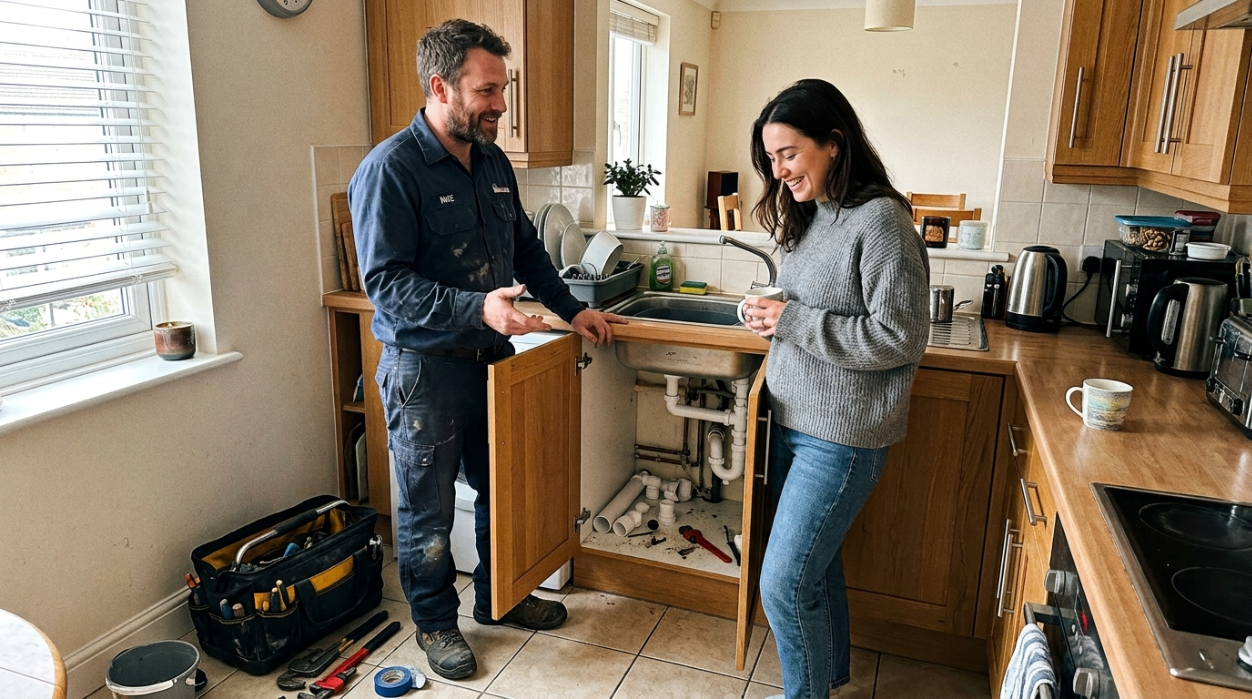
Residents evaluate the entire maintenance experience, not just whether a repair was eventually completed.
A useful workflow keeps residents informed from:
Request → acknowledgment → triage → dispatch → ETA → repair → follow-up
That communication loop is where 24/7 availability can become a retention strategy rather than simply an answering service.
Tenants don’t leave because the lobby could use a fresh coat of paint. They leave because nobody answered when their water heater burst at 11 p.m.
Research consistently shows that maintenance response experience is the primary driver of lease renewal decisions in U.S. multifamily housing, outranking rent level, amenities, and location in tenant satisfaction surveys. This finding surprises many property managers who assume competitive pricing keeps tenants in place.
The numbers tell a compelling story:
A 1-point increase in tenant satisfaction can raise the likelihood of lease renewal by 8.5%. Source
31% of residents who are undecided about renewing would stay if maintenance service improved. That’s nearly a third of at-risk tenants who could be retained simply by responding faster. Source
Residents who receive an automated ETA confirmation within 15 minutes of a maintenance request are 2.8x more likely to renew than those waiting 24+ hours for any communication. Source (NAA 2025 Survey)
Landlords who consistently acknowledge requests within 24 hours report 20–40% lower turnover in West Coast surveys. Source
That 2.8x stat deserves special attention. The difference isn’t between a fast repair and a slow one. It’s between any acknowledgment within 15 minutes versus silence for a full day. Tenants care about being heard almost as much as they care about the fix itself.
A San Diego duplex owner illustrates this perfectly. She received a 7 p.m. text about a gas smell and replied in 11 minutes. Her standby HVAC contractor arrived by 8:10 p.m. The tenants renewed for two more years and later cited “how fast you always answer” as their top reason for staying. She estimates that single renewal saved her roughly $5,600 in turnover costs.
For a deeper look at how after-hours responsiveness shapes renewal decisions, see this guide on after-hours tenant satisfaction.
The Cost of Getting It Wrong
Turnover is expensive, and getting more so. NAAHQ’s 2024 benchmarks show turnover costs rose 17.5% year-over-year. Here’s what property managers face when tenants walk.
Per-Unit Costs
The average apartment turnover costs between $1,000 and $5,000, with the national average around $4,000 per unit according to Harvard University housing studies. The 2026 U.S. average has climbed to roughly $4,100 when factoring in lost rent, make-ready work, marketing, and commissions.
Lost rent during vacancy is the single largest expense, typically accounting for 35–50% of the total cost per unit. And vacancies are getting longer: the average apartment sat empty for 34.4 days at the end of 2024, up from about 30 days in early 2020.
Portfolio-Level Math
For a 150-unit Class A building with a 43% turnover rate, the annual cost lands between $260,000 and $300,000. Cutting turnover by even five percentage points at that scale saves tens of thousands of dollars per year, easily enough to fund around-the-clock support infrastructure.
Here’s the ROI formula that most articles in this space skip:
(Units × Current Turnover Rate × Avg Cost Per Turn) – (Units × Projected Lower Turnover Rate × Avg Cost Per Turn) = Annual Savings
Compare those savings to the cost of 24/7 coverage, and the math almost always favors the investment. For more detail on the financial case, explore this breakdown of AI property management ROI.
How to Calculate the ROI of 24/7 Tenant Availability
The simplest way to evaluate 24/7 availability is to calculate how many move-outs the system needs to prevent before it pays for itself.
Use this formula:
Annual retention savings = prevented move-outs × average turnover cost
Then compare the result with the annual cost of your after-hours coverage.
Example
Assume a property has:
150 units
57% resident retention
Approximately 43% of leases coming up for renewal or otherwise requiring a retention decision under the property's measurement methodology
$4,000 estimated turnover cost per move-out
$30,000 annual cost for 24/7 coverage
If the system prevents 10 avoidable move-outs:
10 × $4,000 = $40,000 in avoided turnover costs
The gross savings would be approximately $40,000. After $30,000 in annual coverage costs, the estimated direct savings would be $10,000.
The break-even point is:
Annual 24/7 coverage cost ÷ average turnover cost = move-outs that must be prevented
At $30,000 in annual coverage cost and $4,000 per turnover:
$30,000 ÷ $4,000 = 7.5
The system would therefore need to prevent approximately 8 move-outs per year to cover the service cost using turnover savings alone.
This calculation should be customized using the property's actual renewal rate, vacancy period, make-ready expense, leasing cost, and service cost.
Legal Exposure
Beyond the financial argument, there’s a legal one. For emergencies like gas leaks, no running water, HVAC failure in extreme temperatures, or electrical hazards, most state habitability standards require a response within 24 hours and resolution within 72 hours. California, New York, Texas, and Illinois all have habitability statutes that allow tenants to withhold rent, pursue rent abatement, or terminate their lease without penalty when emergency failures go unaddressed.
Not having 24/7 availability doesn’t just hurt retention. It creates legal liability.
Haven’s AI maintenance coordinator is built to catch emergency requests at any hour and trigger the right response, helping property managers meet these obligations without manual monitoring.
What Should a 24/7 Tenant Support System Actually Do?
A useful 24/7 availability system should do more than answer a phone call. The goal is to move a resident request from initial contact to the appropriate next action.
At minimum, the workflow should support:
Request intake
Residents should be able to report maintenance problems through their preferred channel, such as phone, text, web, or a resident portal.
Emergency triage
The system should distinguish potential emergencies from routine maintenance and follow predefined escalation rules.
Work order creation
The resident's request should become a documented work order rather than remaining in an inbox or voicemail.
Vendor or staff escalation
When a request requires immediate attention, the system should route it to the appropriate on-call employee or approved vendor.
Resident updates
The tenant should receive confirmation and status updates so they know what happens next.
Follow-up
After completion, the system should confirm that the issue was resolved and collect resident feedback where appropriate.
The strongest 24/7 workflows therefore connect:
Resident → intake → triage → work order → dispatch → status updates → resolution → follow-up
That complete workflow is more valuable for retention than simply having someone answer the phone.
Three Levels of 24/7 Availability
Not all 24/7 coverage is created equal. The gap between “someone answered the phone” and “someone actually fixed the problem” determines whether always-on service improves tenant retention or just creates a more polished voicemail experience.
Level 1: Message-Taking
A traditional answering service logs the call, takes a name and phone number, and emails a summary to the property manager. Nothing happens until someone reads that email, often the next morning.
Practitioners on Reddit frequently cite vendor dispatch as the feature that justifies the cost of an answering service over basic message-taking. One property manager noted that before implementing automated dispatch, emergency calls would sit in a voicemail box until someone checked it the next morning, sometimes six or seven hours after a pipe burst. The difference between a “message-taker” and an “action-taker” is where real retention value lives.
Retention benefit: Minimal. Tenants still wait. The experience isn’t meaningfully different from leaving a voicemail.
Level 2: Digital Portal With Notifications
Tenants submit maintenance requests through an online portal at any time. Staff receive push notifications or alerts. This is a step up because it creates a timestamped record and the tenant gets immediate confirmation that their request was received.
Retention benefit: Moderate. The acknowledgment loop closes faster, but action still depends on a human seeing the notification and responding.
Level 3: AI-Powered Action-Taking
An AI agent answers the call (or text or email), creates a work order directly in the property management system, triages the issue for emergency severity, dispatches a vendor from the property’s preferred vendor list, and follows up with the tenant after the work is done.
This is the level that produces the 2.8x renewal boost from the NAA data. The tenant gets a real response, not just a receipt. For a closer look at how this works in practice, read the guide on after-hours maintenance AI.
Retention benefit: Highest. The experience feels seamless regardless of when the request comes in.
The threshold at which answering services become necessary rather than optional typically falls around 200 units. At that volume, the cost of missed calls exceeds service fees. But AI-powered solutions have changed the calculus for smaller portfolios too, because they can deliver Level 3 coverage at a fraction of traditional call center pricing.
Explore Haven’s after-hours answering service to see how AI agents handle the full maintenance workflow overnight.
24/7 Availability Is Not the Same as 24/7 Response
Property managers should distinguish between being reachable 24/7 and providing a 24/7 operational response.
A phone line that accepts messages at midnight technically provides availability. But if the message is not reviewed until 8 a.m., the property does not provide meaningful after-hours response.
Service model | Tenant can contact someone | Request acknowledged | Emergency escalated | Vendor dispatched |
|---|---|---|---|---|
Voicemail | Yes | No | No | No |
Message-taking service | Yes | Usually | Sometimes | Usually no |
Digital portal | Yes | Yes | Depends on workflow | Depends on workflow |
24/7 staffed support | Yes | Yes | Yes | Often |
AI maintenance workflow | Yes | Yes | Yes | Can be automated |
The important KPI is therefore not simply “Are we available 24/7?”
It is:
“What happens after a resident contacts us at 2 a.m.?”
That question exposes whether a property's after-hours system actually improves the resident experience.
The Burnout Factor

There’s a human cost to manual 24/7 availability that rarely gets discussed in retention articles. Even the most attentive property manager can’t be available around the clock. Late-night lockouts, emergency repairs, and lease questions don’t respect business hours. Without structured support, the manager burns out, and service quality drops across the board, not just after hours.
This is one of the key reasons property managers adopt technology for overnight coverage: it protects staff while protecting the tenant experience. For strategies on managing this, see the guide on property manager burnout.
Key Metrics to Track
You can’t improve what you don’t measure. These are the metrics that connect 24/7 availability to tenant retention outcomes.
Metric | What It Measures | Benchmark |
|---|---|---|
Retention Rate | Renewals ÷ expiring leases | 60%+ for residential |
Mean Time to Acknowledge (MTTA) | How fast the tenant gets a first response | Under 4 hours for non-emergency; under 15 minutes for emergency |
Mean Time to Resolve (MTTR) | Time from request to completed repair | Varies by issue type |
After-Hours Response Rate | % of after-hours requests that receive a response before next business day | 100% is the target |
Tenant Satisfaction Score | Post-maintenance survey rating | Track trend over time |
First-Time Fix Rate | % of issues resolved on the first visit | Higher = fewer follow-ups = happier tenants |
MTTA is the metric most directly influenced by 24/7 availability. The NAA data makes the case: 15-minute acknowledgment versus 24-hour silence is the difference between a tenant who renews and one who starts browsing listings. Tracking AI maintenance follow-up completion rates can further sharpen your understanding of where the experience breaks down.
For property managers looking at vendor-side performance, vendor dispatch automation tools offer a way to measure and improve the handoff from request to repair.
Putting It Into Practice
Improving 24/7 availability for tenant retention doesn’t require overhauling your entire operation overnight. Start with these steps:
Audit your current after-hours gap. Pull data on when maintenance requests come in versus when they get acknowledged. Most property managers are shocked by the overnight lag.
Categorize by urgency. Not every request needs immediate action. Establish a tiered response framework: emergencies (respond within 1 hour), urgent issues like appliance failures (respond within 24 hours), and routine repairs (schedule within 5–7 days).
Choose your coverage level. Decide whether Level 1, 2, or 3 coverage fits your portfolio size and budget. For portfolios above 200 units, Level 3 (AI-powered action-taking) typically pays for itself through reduced turnover alone.
Track the retention impact. Compare renewal rates before and after implementing always-on support. Give it two full lease cycles before drawing conclusions.
Close the loop. Follow up with tenants after every maintenance interaction. The follow-up is where satisfaction scores climb and where 24/7 availability tenant retention becomes a measurable outcome rather than just a concept.
See how Haven’s AI property management software connects these pieces into a single workflow.
Frequently Asked Questions
What is a good tenant retention rate?
For residential properties, a retention rate above 60% is generally considered good, while rates closer to 70% or higher are ideal. The current U.S. average sits at roughly 57%, meaning most properties have significant room to improve. Commercial and retail properties typically target 70% or above.
How much does tenant turnover cost?
The average cost ranges from $1,000 to $5,000 per unit, with the national average around $4,000 to $4,100. Lost rent accounts for 35–50% of that total. For a 150-unit building with typical turnover, annual costs can reach $260,000 to $300,000.
Does 24/7 availability really affect lease renewals?
Yes. 31% of undecided tenants say they would renew if maintenance service improved. Tenants who receive an automated ETA confirmation within 15 minutes of a request are 2.8 times more likely to renew their lease compared to those who wait 24+ hours for any communication. Maintenance responsiveness consistently outranks rent pricing as a renewal driver.
How can small property managers afford 24/7 coverage?
AI-powered agents have made round-the-clock coverage accessible to smaller portfolios. Unlike traditional call centers that charge per minute or per call, AI solutions can handle intake, triage, work order creation, and vendor dispatch at a predictable cost. The savings from even one or two prevented turnovers per year often exceed the cost of the service.
What maintenance response time do tenants expect?
For emergencies (gas leaks, flooding, no heat in winter), tenants expect a response within hours, and most state habitability laws require action within 24 hours. For urgent issues like a broken appliance, 24–48 hours is the standard. Routine repairs should be addressed within 5–7 business days.
What’s the difference between an answering service and an AI maintenance agent?
A traditional answering service takes messages and forwards them. An AI maintenance agent takes action: it can create work orders in your PMS, triage the issue for severity, dispatch a vendor, and follow up with the tenant after the repair. The retention impact of the latter is significantly higher because tenants get resolution, not just acknowledgment.