After-Hours Tenant Satisfaction AI: 2026 Faster Fixes Guide
Learn how After-Hours Tenant Satisfaction AI cuts wait times, boosts CSAT 15–25%, and automates 24/7 intake, triage, work orders. Get the 2026 guide.

TL;DR
After-hours tenant satisfaction AI refers to AI systems that handle tenant communications, maintenance requests, and emergencies outside business hours to improve satisfaction scores and retention. With 65% of property management calls arriving after hours and nearly half going unanswered, this technology closes the biggest gap in tenant experience. Properties using it report response times dropping from days to minutes, satisfaction scores improving 15 to 25%, and retention increasing by 15%.
After-hours tenant satisfaction AI improves resident satisfaction by answering maintenance requests, leasing inquiries, and emergencies 24/7. Instead of sending tenants to voicemail, AI instantly responds, classifies the issue, creates work orders, notifies vendors when necessary, and provides proactive updates until the request is resolved. Most property managers use it to reduce response times, increase lease renewals, lower turnover costs, and improve resident satisfaction scores.
At a Glance
Feature | Traditional After-Hours Process | After-Hours AI |
|---|---|---|
Response Time | Hours to next business day | Seconds |
Answers Every Call | No | Yes |
Creates Work Orders | Manual | Automatic |
Emergency Detection | Human review | AI triage |
Vendor Dispatch | Manual | Automatic |
Status Updates | Usually none | Automatic |
CSAT Collection | Manual | Automatic |
Languages | Limited | Multiple |
Available | Business hours | 24/7 |
What After-Hours Tenant Satisfaction AI Means
After-hours tenant satisfaction AI is a category of artificial intelligence tools built for property management that handle tenant interactions outside standard business hours, specifically to improve satisfaction outcomes. These systems answer calls, triage maintenance requests, create work orders, dispatch vendors, and follow up with tenants, all without a human property manager being awake or available.
The core components include:
24/7 availability across phone, SMS, and email
Automated intake of maintenance requests and general inquiries
Emergency triage that classifies issues by urgency
PMS integration for automatic work order creation and logging
Smart escalation that routes genuine emergencies to on-call staff
Proactive follow-up with status updates and completion confirmations
The “after-hours” distinction matters more than most property managers realize. According to Layer3Labs, 65% of property management calls arrive outside standard business hours. Studies also show that 49 to 60% of calls to multifamily properties go unanswered, and 85% of those callers never call back. That means the majority of tenant touchpoints happen when no one is there to answer, and most of those missed opportunities are permanent.
For a deeper look at how these systems work around the clock, see the guide on after-hours answering services for property management.
Explore Haven’s AI property management software →
Why Tenant Satisfaction Falls After Business Hours
Discuss that tenant expectations are now shaped by Amazon, Uber, food delivery apps, and banking apps that provide instant responses 24/7. Property management is one of the last industries where many customers still encounter voicemail after office hours. The gap between consumer expectations and property management responsiveness has become one of the largest drivers of dissatisfaction.
Why After-Hours Is the Satisfaction Battleground
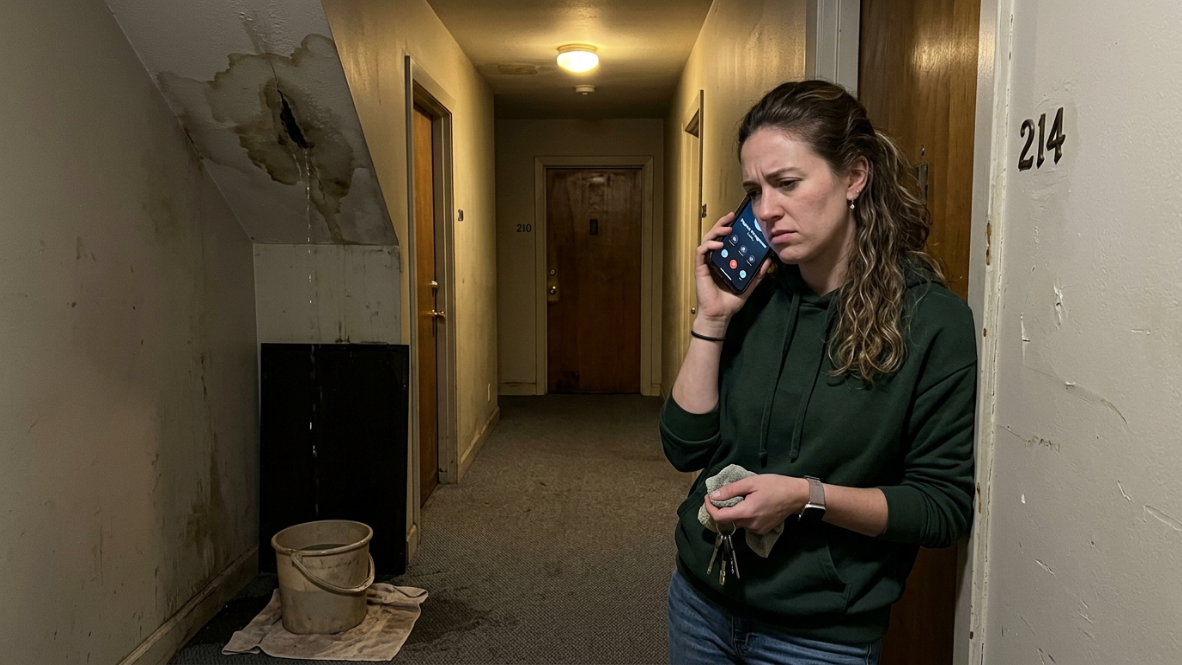
Property managers often focus satisfaction efforts on office-hours operations: faster email replies, friendlier leasing agents, better amenities. But the data points to a different problem. The gap between 5 PM and 9 AM is where satisfaction erodes.
The Wait Is the Problem, Not the Repair
Research consistently shows that 55% of repair complaints aren’t about the quality of the repair itself. They’re about the wait. When a tenant submits a maintenance request at 10 PM and hears nothing until the next business day (or later), frustration builds regardless of how well the issue eventually gets fixed.
This pattern explains why after-hours maintenance AI has become one of the fastest-growing adoption areas in property technology. It directly addresses the single largest source of maintenance dissatisfaction.
Missed Calls Create a Chain Reaction
The math is punishing. When a tenant calls after hours, gets no answer, and doesn’t call back (which happens 85% of the time), several things go wrong simultaneously. The maintenance issue goes unreported and potentially worsens. The tenant’s satisfaction drops. And the property manager loses visibility into a problem they don’t even know exists.
One in four tenants have completed maintenance work themselves that should have been reported to their landlord, according to a Unity Connect study. That’s a clear signal: when communication is slow or inaccessible, tenants stop trying to communicate at all.
The Financial Stakes
Turnover costs between $1,750 and $3,872 per unit when you account for vacancy loss, marketing, make-ready expenses, and administrative time. In 2025, the average apartment community held onto just 58% of its residents, against an industry target of 63%.
A study by MIT’s Center for Real Estate analyzed 104,586 survey responses and found that a one-point increase in overall tenant satisfaction (on a 1-to-5 scale) corresponded with an 8.6% higher likelihood of lease renewal and an 11.5% higher likelihood the tenant would recommend the building. Every unanswered after-hours call chips away at that score.
How After-Hours Tenant Satisfaction AI Works
The technology follows a consistent workflow, though implementations vary by vendor and property size.
Intake
When a tenant calls, texts, or emails after hours, the AI answers immediately. Voice AI handles phone calls conversationally, asking clarifying questions about the issue. SMS and email channels work similarly, with natural language processing interpreting the tenant’s message. The key is multichannel coverage, because tenants should be able to use whichever method feels natural.
For properties with diverse tenant populations, multi-language support matters. A tenant who speaks Spanish as their first language shouldn’t face a communication barrier at 2 AM when their water heater fails.
Triage and Urgency Classification
The AI analyzes the tenant’s words to categorize the request. “My apartment smells like gas” gets flagged as a high-priority emergency. “My closet door is squeaky” gets labeled as routine. This emergency maintenance triage step is critical because it determines what happens next.
Industry standards from OxMaint suggest emergencies should be acknowledged within 1 hour and attended on-site within 4 hours. Urgent issues like HVAC failures should be resolved within 24 hours. Routine requests should be acknowledged within 24 hours and resolved within 48 hours.
Action: Work Orders and Vendor Dispatch
Once classified, the AI creates a work order directly inside the property management system. No manual re-entry, no sticky notes, no morning-after transcription from voicemail. The work order includes the tenant’s description, urgency level, unit number, and any relevant history.
For emergencies, the system dispatches pre-approved vendors from preferred lists automatically. The tenant receives instant confirmation that help is on the way, along with an estimated timeframe.
The Communication Loop
This is where after-hours tenant satisfaction AI earns its name. The system doesn’t just log the request and go silent. It sends a confirmation that the request was received, provides a timeline for next steps, pushes proactive status updates as work progresses, and prompts for satisfaction feedback after completion.
KingsleyIndex data reveals an important nuance: tenants who feel a complaint was heard and addressed are more likely to renew than tenants whose concerns were handled but never acknowledged. The acknowledgement loop, not just triage speed, is what moves satisfaction. For more on this, see the guide to AI maintenance follow-up with tenants.
Self-Service Troubleshooting
Sometimes the quickest fix is one the tenant can do themselves. If a tenant calls about a partial power outage, the AI can walk them through safely resetting a circuit breaker. If a garbage disposal jams, it can provide step-by-step guidance. This resolves problems in minutes, saves the cost of an unnecessary technician visit, and leaves tenants feeling empowered rather than helpless. It’s an underrated satisfaction driver.
Example After-Hours AI Workflow
Time | Tenant Experience | AI Action |
|---|---|---|
10:37 PM | Tenant reports leaking water heater | Answers immediately |
10:38 PM | AI asks follow-up questions | Determines severity |
10:39 PM | Emergency confirmed | Creates PMS work order |
10:40 PM | Vendor notified | Dispatch begins |
10:41 PM | Tenant receives confirmation | ETA provided |
11:15 PM | Vendor arrives | Repair begins |
Next Morning | Property manager notified | Complete audit trail available |
Key Metrics and Benchmarks
Understanding what “good” looks like requires knowing the right metrics and where the industry sets the bar.
Tenant Satisfaction Score
An acceptable tenant satisfaction score ranges from 70% to 90%. Scores above 80% indicate strong retention health and correlate with higher lease renewal rates. SatisFacts National Resident Satisfaction award winners maintained a portfolio score of 4.25 or above (out of 5.0) in 2025.
CSAT (Customer Satisfaction Score)
CSAT measures satisfaction immediately after a specific interaction, usually maintenance completion. AI systems can automate CSAT collection by sending a brief survey after each resolved work order, generating continuous data rather than relying on annual surveys.
NPS (Net Promoter Score)
NPS measures tenant loyalty by asking how likely a tenant is to recommend the property to others. It’s a broader indicator than CSAT and tends to correlate with long-term retention trends.
One critical caveat from the Wordnerds and Housemark benchmark: “fairly satisfied” tenants score just 44 out of 100 on sentiment, closer to dissatisfied than satisfied. Property managers who see “fairly satisfied” responses and assume things are fine may be sitting on hidden churn risk. AI that proactively follows up can push these fence-sitters toward genuine satisfaction.
For broader data on how AI is shifting these metrics across the industry, see the AI property management statistics roundup.
See how Haven’s AI handles after-hours maintenance →
Measured Impact of AI on After-Hours Satisfaction

The numbers from early adopters are consistent enough to form a reliable picture.
Response Time
Average response time drops from 4.6 days to under 18 hours within 30 days of implementing automated systems, according to Layer3Labs. In one case study from Apollo Claw, a property owner’s average response time dropped from 6 hours to under 2 minutes, and their Google rating climbed from 3.8 to 4.7 stars with 11 new reviews in 90 days.
Satisfaction Scores
Properties using after-hours AI report satisfaction score improvements of 15 to 25%. Industry research from EliseAI indicates that AI adoption in property management increases tenant satisfaction by 5% on average and retention by 15%, while delivering a 3.7 to 5.2% average annual increase in portfolio returns.
Operational Efficiency
Zumper uses its virtual assistant to handle 70% of initial rental inquiries without human intervention. Livly’s AI assistant reduced after-hours maintenance calls by 35% for a 500-unit portfolio, according to Showdigs. Property managers spend roughly 40% of their time on tenant communications, so the time reclaimed is substantial.
Retention and Revenue
One urban apartment complex reported a 25% decrease in tenant turnover after implementing a proactive maintenance system, with addressing repair requests within 24 hours leading to a 30% decrease in maintenance-related complaints. Given that 70% of tenants are more likely to renew their lease if maintenance issues are resolved within 24 hours, the retention case is straightforward.
For a full breakdown of the ROI calculation, see the guide on AI property management benefits, use cases, and ROI.
Before and After AI Implementation
Metric | Before AI | After AI |
|---|---|---|
Response Time | Hours or days | Minutes |
Calls Answered | 40–60% | Nearly 100% |
Tenant Updates | Manual | Automated |
Maintenance Follow-Up | Inconsistent | Automatic |
CSAT Collection | Occasional | Every interaction |
Staff Workload | High | Reduced |
Tenant Retention | Lower | Higher |
Satisfaction Data Is Becoming a Valuation Input
Here’s a development most property managers haven’t caught up with yet. SVN International’s 2026 commercial real estate valuation analysis found that appraisers are beginning to incorporate tenant satisfaction and utilization metrics into underwriting assumptions. Properties with strong satisfaction data are being modeled with lower vacancy risk.
This shifts after-hours tenant satisfaction AI from a “nice-to-have operational tool” to something that can affect your property’s market value. The argument is no longer just about saving on turnover costs. It’s about building a measurable asset in the form of documented, consistently high satisfaction scores.
Common Misconceptions
“AI Replaces Human Property Managers”
It doesn’t. AI handles routine volume, the 70% of inquiries that follow predictable patterns, so humans can focus on complex issues, relationship-building, and judgment calls that require context no algorithm has. Think of it as handling the 2 AM “my toilet is running” call so your team is rested and sharp for the morning.
“Tenants Won’t Trust AI”
The evidence says otherwise. Tenants care about getting answers, not about who (or what) provides them. When the alternative is voicemail that goes unchecked until morning, an AI that immediately acknowledges the issue, creates a work order, and provides a timeline wins every time.
“It’s Only for Large Portfolios”
After-hours AI breaks even against a part-time human assistant at approximately 15 to 30 units. For small operators who can’t afford overnight staff or call center services, AI is often the only way to provide real 24/7 coverage.
“Speed Is All That Matters”
Quality of communication throughout the resolution process often matters more than speed alone. Tenants value proactive updates, clear timelines, and follow-through that confirms the issue was fully resolved. An AI that responds in 30 seconds but never follows up will underperform one that responds in 5 minutes but keeps the tenant informed throughout.
What to Look For in an After-Hours Satisfaction AI
Not all AI tools are built the same. When evaluating options, these capabilities separate effective systems from glorified voicemail.
PMS integration that takes real action. The AI should create work orders, update tickets, log notes, and assign tasks directly inside your property management system. If it just sends you an email summary, you still have manual work in the morning.
Emergency detection with human escalation. The system must identify genuine emergencies (flooding, gas leaks, fire, no heat) and immediately route them to on-call staff or dispatch pre-approved vendors. Non-emergencies get logged and queued.
Multichannel support. Tenants communicate differently. The system should handle phone calls, SMS, and email, meeting tenants where they are rather than forcing them into a single channel.
Multi-language capability. Properties with diverse tenant populations need AI that can communicate in the tenant’s preferred language, especially during stressful emergency situations.
Automated follow-up and satisfaction measurement. Post-resolution surveys, status updates during the repair process, and confirmation messages should all happen automatically.
Conversation memory. If a tenant calls back about the same issue, the AI should know the history. Repeating information is a top frustration driver.
For a broader comparison of tools, see the guide on AI tools for property managers.
Book a demo to see Haven’s AI agents in action →
AI Adoption Is Accelerating
AI adoption in property management nearly doubled from 21% in 2024 to 34% in 2025, according to Layer3Labs. Two-thirds of multifamily executives believe early adopters will hold a permanent competitive advantage.
That belief is grounded in a simple reality: once tenants experience instant after-hours responses at one property, they expect it everywhere. Properties that still rely on voicemail and next-day callbacks will increasingly feel the gap in their satisfaction scores, their retention numbers, and eventually their valuations.
The technology is no longer experimental. It’s operational, measurable, and accessible at portfolio sizes as small as 15 to 30 units. The question isn’t whether after-hours tenant satisfaction AI works. The question is how long properties can afford to leave their after-hours communication gap unaddressed.
Key Takeaways
After-hours communication is one of the biggest drivers of tenant satisfaction.
AI responds immediately instead of sending tenants to voicemail.
Faster responses improve CSAT, lease renewals, and online reviews.
AI automates work orders, emergency triage, and vendor dispatch.
Even portfolios with 15–30 units can often justify implementation.
Satisfaction metrics are increasingly influencing property valuation.
Frequently Asked Questions
What is after-hours tenant satisfaction AI?
It’s AI technology used in property management that handles tenant communications, maintenance requests, and emergencies outside standard business hours. The goal is specifically to improve tenant satisfaction scores, lease renewal rates, and operational efficiency by eliminating the communication dead zone that exists when offices are closed.
How much does after-hours tenant satisfaction AI improve response times?
Properties typically see average response times drop from 4.6 days to under 18 hours within the first 30 days. In some cases, response times fall from hours to under 2 minutes, since the AI answers immediately regardless of when the tenant reaches out.
What tenant satisfaction score should property managers target?
An acceptable score ranges from 70% to 90%. Scores above 80% indicate strong retention health. Award-winning management companies maintain portfolio scores of 4.25 or above on a 5.0 scale. A one-point increase on a 1-to-5 scale correlates with an 8.6% higher likelihood of lease renewal.
Can AI handle real maintenance emergencies?
Yes. AI systems use urgency classification to distinguish emergencies (gas leaks, flooding, no heat) from routine requests (squeaky doors, cosmetic issues). True emergencies trigger immediate escalation to on-call staff or automatic dispatch of pre-approved vendors. The tenant receives instant confirmation of next steps.
Is after-hours AI only practical for large portfolios?
No. The technology breaks even against a part-time human assistant at roughly 15 to 30 units. For small operators who can’t staff overnight coverage, AI is often the most cost-effective path to genuine 24/7 availability.
Do tenants actually want to interact with AI?
Tenants care about getting answers and feeling heard. When the alternative is voicemail that sits unchecked for 12 hours, an AI that immediately acknowledges the issue, creates a work order, and provides a timeline consistently outperforms in satisfaction metrics. The 15 to 25% satisfaction improvements reported across the industry confirm this.
How does after-hours AI affect property valuations?
Appraisers are beginning to incorporate tenant satisfaction metrics into underwriting assumptions. Properties with strong, documented satisfaction data are being modeled with lower vacancy risk, meaning high satisfaction scores can directly influence a property’s assessed market value.
What’s the difference between after-hours AI and a traditional answering service?
A traditional answering service takes messages. After-hours tenant satisfaction AI takes action: it triages issues, creates work orders in your PMS, dispatches vendors, sends status updates to tenants, and follows up after resolution. The difference is between a notepad and an operations system.