After-Hours Answering Service for Property Management (2026)
Learn how an after-hours answering service for property management handles 24/7 tenant calls, triage, work orders, and vendor dispatch to cut costs.

TL;DR
An after-hours answering service for property management handles tenant calls, maintenance emergencies, and leasing inquiries outside business hours through live agents, AI, or a hybrid of both. With 67% of maintenance emergencies occurring after hours and over 60% of property management calls going unanswered, these services protect revenue, reduce liability, and improve tenant retention. The category is rapidly shifting from simple message-taking to AI agents that triage emergencies, create work orders, and dispatch vendors automatically.
An after-hours answering service for property management answers tenant calls when your office is closed, including nights, weekends, and holidays. The best services do more than take messages—they classify maintenance emergencies, schedule leasing appointments, dispatch vendors, and integrate with property management software like AppFolio and Buildium.
For most portfolios:
Portfolio Size | Best Option |
|---|---|
Under 100 units | Live answering service or virtual receptionist |
100–300 units | Hybrid AI + live agents |
300+ units | AI answering service with PMS integration |
If maintenance emergencies, leasing inquiries, or tenant calls frequently go unanswered after business hours, an after-hours answering service usually pays for itself through higher tenant retention, improved leasing conversion, and reduced emergency repair costs.
What Is an After-Hours Answering Service in Property Management?
An after-hours answering service for property management is a communication solution that handles incoming calls, texts, and messages from tenants, prospective renters, vendors, and property owners when your office is closed. That means nights, weekends, holidays, and any other time your team isn’t available to pick up the phone.
In property management, “after hours” carries more weight than in most industries. Pipes burst at 2 a.m. Furnaces die on Christmas Eve. Prospective tenants browse listings after dinner and want to schedule a tour right then. The gap between when things happen and when your office opens creates real financial and legal exposure.
You’ll see these services called different things depending on the provider: tenant call service, property management call center, maintenance hotline, virtual receptionist, or 24/7 maintenance request intake. They all address the same core problem, but the way they solve it varies enormously.
The simplest versions take messages and forward them. The most advanced ones, typically AI-powered, triage emergencies, create work orders inside your property management software, and dispatch vendors from your preferred list without any human involvement.
How an After-Hours Property Management Answering Service Works
Most modern answering services follow a similar workflow:
A tenant, owner, or prospect calls after office hours.
The system identifies the caller and property.
The issue is categorized (emergency, urgent, or routine).
Emergency requests trigger immediate vendor dispatch or on-call staff notification.
Routine requests become work orders for the next business day.
Leasing inquiries are answered and tours may be scheduled automatically.
Every interaction is logged inside the property management software.
This workflow dramatically reduces missed emergencies while eliminating manual data entry.
Why After-Hours Coverage Matters
The numbers here are stark, and they get worse the longer you look at them.
Most Calls Go Unanswered
A Digible/Fiona analysis of 170,825 calls to multifamily properties found that 60.8% of calls go unanswered, with the problem worsening during peak inquiry times on weekday mornings and weekends. A separate study from 411 Locals found that only 37.8% of incoming calls are answered by a live person, and 85% of callers who reach voicemail never call back.
Up to 65% of incoming property management calls arrive outside standard business hours, according to research from Layer3Labs. That’s not a rounding error. It’s the majority of your call volume.
The Revenue Cost Is Severe
That same Digible research estimates that a single missed call could cost a property $15,000 to $30,000 in annual revenue when you factor in lost leasing opportunities. Small property management businesses lose over $21,000 annually from missed calls alone, according to data cited by Bland AI from Voctiv.
For a deeper look at how AI handles after-hours maintenance intake, triage, and dispatch, see this after-hours maintenance AI guide.
Consider the math on unit turnover. Industry estimates put the cost of turning a single unit at $1,500 to $5,000 when you include vacancy loss, marketing, showing time, screening, and make-ready expenses. Losing a tenant because they couldn’t reach anyone about a maintenance emergency is an expensive failure.
Tenant Retention Hinges on Responsiveness
According to Buildium’s Property Management Industry Report, 31% of renters who were on the fence about renewing said they’d stay if their property manager were more responsive to maintenance requests. That’s nearly a third of at-risk tenants whose decision comes down to something an after-hours answering service directly addresses.
On the leasing side, prospective tenants typically contact 3 to 5 properties during their search, and 78% of them rent from one of the first two properties to respond. If your office is closed and your competitor’s AI answers in three seconds, you lose that prospect.
Emergency Liability
67% of maintenance emergencies occur outside standard business hours. A single burst pipe averages about $4,000 in repairs when including remediation and displacement costs, according to Re-Leased. After-hours rates and rush parts can double normal costs, so a delayed response doesn’t just risk property damage, it inflates the repair bill.
Types of After-Hours Answering Services
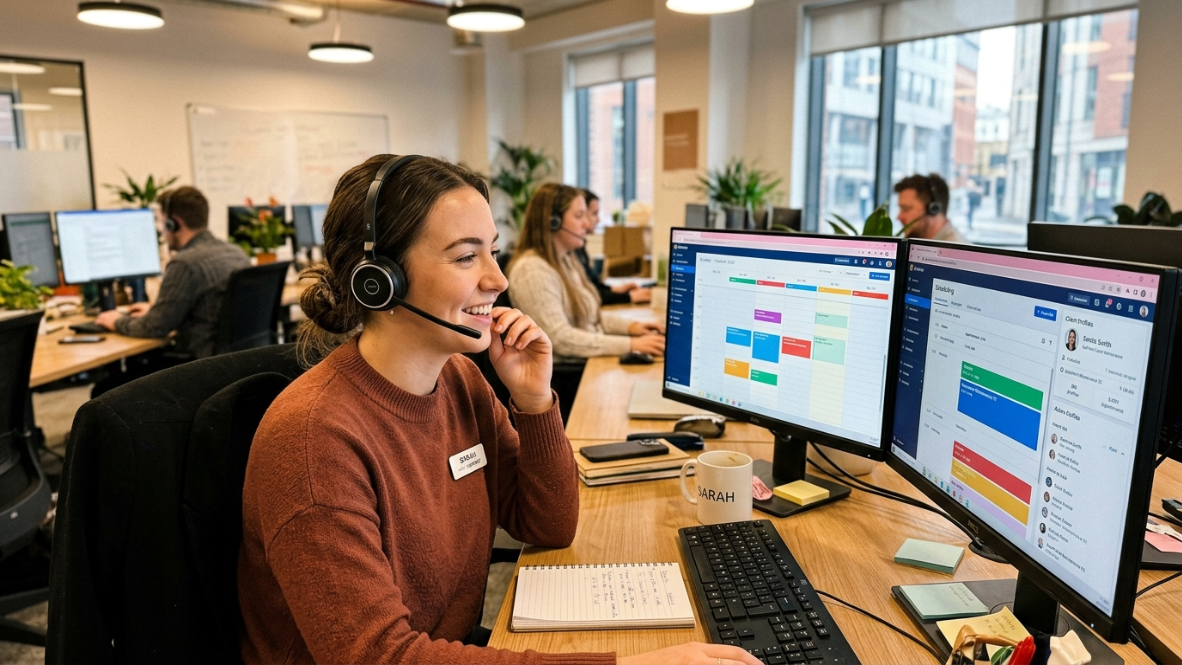
Not all services work the same way, and the differences matter more than most comparison articles acknowledge. Here are the four main categories.
Live Operator Services
Trained human receptionists answer tenant calls using custom scripts. They document maintenance requests, transfer urgent issues to on-call staff, and support basic leasing inquiries. Most providers offer bilingual support and CRM integrations for message logging.
Best for: Property managers who want a human touch and handle relatively low after-hours call volume.
Limitations: Cost scales linearly with call volume. Quality varies by agent. Coverage gaps during high-volume periods. Agents take messages but rarely take action inside your PMS.
AI Answering Services
Software systems using conversational AI (voice or text) to answer tenant and prospect calls around the clock. The best AI services go beyond answering: they handle maintenance intake, triage emergencies, schedule tours, and route complex issues to human staff. Some create work orders directly in your PMS and dispatch vendors automatically.
Want to hear what this sounds like in practice? Here’s an example of an AI maintenance call.
Best for: Portfolios at scale (200+ units) where call volume makes per-minute pricing expensive and where PMS integration matters.
Limitations: Less effective for highly nuanced or emotionally sensitive conversations. Quality varies significantly between generic AI tools and property-management-specific platforms.
Virtual Receptionist Services
These combine live call answering with light administrative support: appointment scheduling, message organization, basic FAQ handling. Think of it as a shared receptionist rather than a call center.
Best for: Smaller operations that need a professional phone presence but not full emergency triage capability.
Limitations: Limited scalability. Not typically trained in property management workflows.
Hybrid Models (AI + Human)
AI handles the initial interaction, triages the call, and resolves straightforward requests. Complex or sensitive situations escalate to a live agent. This approach captures the cost efficiency of AI with the flexibility of human backup.
Best for: Property managers who want automation but aren’t ready to go fully AI for emergency calls.
Quick Comparison
Feature | Live Operator | AI Service | Virtual Receptionist | Hybrid |
|---|---|---|---|---|
Monthly cost range | $100 to $600+ | $25 to $800 | $150 to $500 | $200 to $700 |
Channels | Phone (sometimes SMS) | Phone, SMS, email | Phone | Phone, SMS, email |
PMS integration depth | Message logging | Work order creation, vendor dispatch | Minimal | Varies |
Scalability | Limited by staffing | Near-unlimited | Limited | Good |
Emergency triage | Script-based | Automated classification | Basic | AI-first with human backup |
Which Type of After-Hours Answering Service Is Right for You?
Different portfolios benefit from different solutions.
If you... | Best Choice | Why |
|---|---|---|
Manage under 100 units | Live answering service | Lower call volume keeps costs manageable |
Manage 100–300 units | Hybrid solution | Balances automation and human support |
Manage over 300 units | AI answering service | Lowest cost per call with automation |
Receive many maintenance emergencies | AI | Immediate triage and vendor dispatch |
Receive mostly leasing calls | AI or Hybrid | Can schedule tours automatically |
Prioritize personal customer service | Live agents | Better for emotionally sensitive conversations |
Key Features to Evaluate
When comparing after-hours answering services for property management, the feature list on a sales page tells you less than you’d think. What matters is the depth of each capability.
Emergency Maintenance Triage
This is the single most important function. The service needs to distinguish between a burst pipe (dispatch now) and a dripping faucet (schedule for Monday). Good systems classify issues into tiers: life-safety emergencies requiring immediate vendor dispatch, urgent issues needing same-day attention, and routine requests that can wait for business hours.
When residents understand what qualifies as an emergency, they’re less likely to call the after-hours line for a running toilet and more likely to report a real problem right away. Your answering service should reinforce these boundaries, not just accept every call as urgent.
For a complete breakdown of how triage classification works, see this AI maintenance coordinator guide.
Vendor Dispatch from Preferred Lists
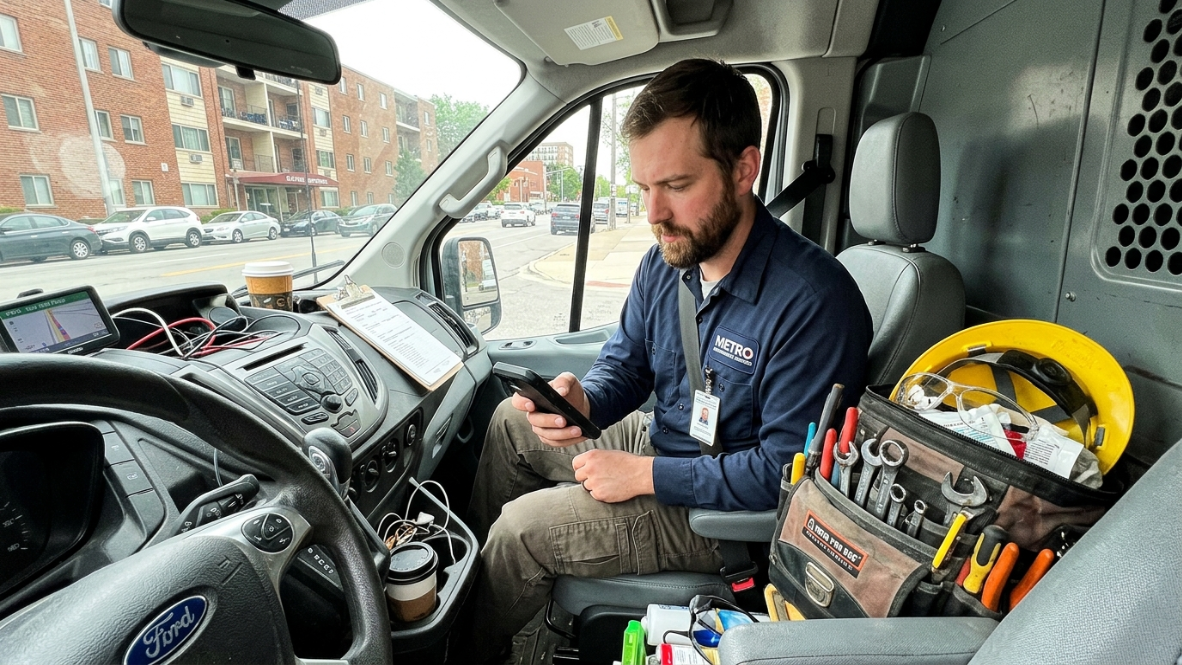
Nearly every provider mentions “emergency dispatch,” but the workflow behind that phrase varies wildly. The best systems maintain your preferred vendor list organized by issue type and location, automatically contact the right vendor, handle fallback routing if the first vendor doesn’t respond, and confirm receipt. This is the difference between an answering service that hands you a message at 7 a.m. and one that has a plumber en route by midnight.
Practitioners on Reddit frequently cite vendor dispatch as the feature that justifies the cost of an answering service. One property manager noted that before implementing automated dispatch, emergency calls would sit in a voicemail box until someone checked it the next morning, sometimes six or seven hours after a pipe burst.
PMS and CRM Integration
This is where the gap between “message-taker” and “action-taker” becomes obvious.
Level 1 (Message logging): The service emails or texts you a summary of the call. You manually create the work order in your PMS the next day. This is what most traditional answering services provide.
Level 2 (Data sync): Call details push into your CRM or PMS as a note or ticket, but someone still needs to review and act on it.
Level 3 (Action-taking): The service creates a work order directly in your PMS, assigns it to the correct vendor, pulls unit and tenant data during the call, and updates the record as the situation progresses. This is what AI work order creation in AppFolio looks like in practice.
Level 3 integration is the standard that matters in 2026. PMS integrations like Buildium are a good litmus test of whether a provider takes integration seriously.
Multi-Channel Support
Defining an after-hours answering service as phone-only is outdated. Tenants reach out via SMS, email, and portal messages after hours. A service that only covers phone calls leaves gaps in every other channel.
Bilingual and Multilingual Capability
For portfolios with diverse tenant populations, this isn’t optional. Live services typically offer Spanish as a second language. AI services can support multiple languages simultaneously without staffing changes.
Leasing Lead Capture and Tour Scheduling
After-hours calls aren’t just maintenance emergencies. Prospective tenants call after seeing a listing, and if no one answers, they move to the next property. An answering service that qualifies leads and schedules tours directly extends your leasing office’s hours without adding headcount. For more on this capability, see this guide on AI leasing assistants.
Fair Housing Compliance
Every caller must receive consistent treatment regardless of protected characteristics. Live agents, even well-trained ones, can introduce variability in how they handle calls based on accent, tone, or perceived demographics. AI systems apply the same script and decision logic to every interaction, which creates a more consistent compliance baseline.
That said, AI introduces its own compliance considerations. Any AI answering service should be auditable, with call recordings and transcripts that demonstrate consistent treatment. For a deeper dive, read this Fair Housing compliance guide.
Conversation Memory and Continuity
If a tenant calls about a leak on Tuesday and follows up Thursday, the service should know about the original call. This sounds basic, but most traditional answering services treat every call as a new interaction. AI platforms with conversation memory can reference previous requests, provide status updates on open work orders, and avoid making tenants repeat themselves.
Typical Pricing
Pricing for after-hours answering services in property management spans a wide range, and the cheapest option is rarely the best value.
Live Answering Services
Simple message-taking services with limited minutes start at $75 to $200 per month. Mid-range options cost $200 to $600 monthly and include more calls, extended hours, and features like call transfers. Per-minute pricing typically runs $0.90 to $1.25 per minute at specialist providers, while per-call pricing ranges from $1.25 to $2.75 per call.
Premium providers like Ruby start around $250 per month. AnswerConnect plans begin around $325 per month for 200 minutes. The important thing to understand: live services don’t compress costs as volume increases. If your call volume doubles, your bill roughly doubles.
AI Answering Services
Entry-level AI tools start at $25 to $60 per month, but these are generic and rarely handle property management workflows well. Property-management-specific AI voice agents typically cost $400 to $800 per month and include PMS integration, emergency triage, and vendor dispatch. Enterprise platforms are custom-priced, often around $300 to $600 per month per community.
The cost advantage of AI shows up at scale. A portfolio with 500 units might pay the same monthly fee whether it receives 100 after-hours calls or 1,000, something that would be prohibitively expensive with a per-minute live service.
When Does an Answering Service Pay for Itself?
The threshold at which an after-hours answering service becomes necessary rather than optional typically falls around 200 units. At this volume, the cost of missed calls exceeds service fees, and callers expect immediate, informed responses rather than basic call screening. For smaller portfolios, the math still works if you’re losing leasing leads or facing emergency liability, but the ROI is harder to measure.
Book a demo to see how AI after-hours answering works for your portfolio size.
Pros and Cons of After-Hours Answering Services
Advantages
Never miss tenant emergencies
Capture leasing leads 24/7
Improve tenant satisfaction
Reduce liability from delayed responses
Lower on-call staff workload
Improve response time metrics
Better documentation for maintenance issues
Disadvantages
Monthly subscription costs
Traditional services often require manual follow-up
AI quality varies significantly
Poor configuration can misclassify emergencies
Integrations differ between providers
Performance Benchmarks
Any provider you evaluate should be able to report on these metrics. If they can’t, that tells you something.
Benchmark | Target | Why It Matters |
|---|---|---|
Average speed to answer | 20 seconds or less | Callers hang up fast, especially in emergencies |
Abandon rate | Under 3% | Measures how many callers give up before reaching anyone |
First call resolution | 85% or higher | The percentage of calls resolved without a callback or transfer |
Emergency confirm-receipt rate | 95% or higher | Proves that true emergencies are acknowledged and acted on |
These benchmarks are industry standards referenced across call center management resources, but few property management answering services publish them proactively. Ask for them.
Emergency vs. Non-Emergency: Quick Reference
Clear definitions save money and reduce unnecessary after-hours dispatches.
True Emergencies (Require Immediate Response)
Burst pipes or major plumbing leaks
Sewer backups
No heat when outdoor temperatures are dangerous
Complete loss of electricity
Gas leaks or suspected gas leaks
Fire or fire damage
Flooding from any source
Security breaches (break-ins, broken exterior doors or windows)
Carbon monoxide alarm activation
Non-Emergencies (Can Wait Until Business Hours)
Running toilet
Minor dripping faucet
Cosmetic damage (chipped paint, dented appliance)
Appliance questions or minor malfunctions
Noise complaints (unless safety-related)
Parking disputes
Request for general maintenance scheduling
The answering service should be configured with your specific classification criteria. What counts as an emergency varies by property type, climate, and local regulations. A no-heat call in Minnesota in January is categorically different from the same call in Phoenix in October.
How the Category Is Evolving: From Message-Taker to Action-Taker
The most significant shift in property management answering services over the past two years is the move from passive coverage to active resolution.
Traditional answering services are, at their core, message-takers. A tenant calls, an agent writes down the problem, and someone on your team gets a message the next morning. The tenant waits. The property manager wakes up to a backlog.
AI answering services, particularly those built for property management, are becoming action-takers. They don’t just record a maintenance request; they classify it, create a work order in your PMS, dispatch the appropriate vendor from your preferred list, confirm the vendor’s response, and follow up with the tenant afterward.
The data reflects this shift. AI adoption in property management nearly doubled from 21% in 2024 to 34% in 2025, according to Layer3Labs. In 2025, AI-powered platforms fielded over 61 million after-hours messages for property management companies and autonomously de-escalated nearly 250,000 maintenance requests, per EliseAI’s reporting. Worcester Communities, for instance, saw 94% of all inbound calls handled autonomously, allowing them to terminate their external after-hours call center entirely.
Haven represents this action-taker approach. As a Y Combinator-backed AI platform recognized in Commercial Observer’s Top 50 AI Startups in Real Estate, Haven’s Maintenance AI handles 24/7 maintenance intake with emergency triage, automatic work order creation and updates in your PMS, vendor dispatch from preferred vendor lists, and post-completion follow-ups. Its Leasing AI handles phone, SMS, and email inquiries, qualifies leads, and schedules tours. Both agents integrate directly with PMS systems like AppFolio and work across phone, SMS, and email channels with multi-language voice capability.
The distinction matters because it changes the role of your on-call staff. Instead of being the first responder for every after-hours call, they become the escalation point for the small percentage of situations that genuinely require human judgment.
See how Haven’s AI agents work for your property management team.
Common Mistakes Property Managers Make
Many answering services fail because of poor implementation rather than poor technology.
Avoid these mistakes:
Treating every maintenance request as an emergency
Failing to define vendor escalation rules
Not integrating with your PMS
Using generic call center scripts
Never reviewing call recordings
Not measuring response times
Forgetting multilingual support
Choosing based only on monthly price
Frequently Asked Questions
What is an after-hours answering service in property management?
It’s a service that handles tenant calls, maintenance emergencies, and leasing inquiries when your office is closed, covering nights, weekends, and holidays. Options range from live human agents to AI-powered systems that can triage issues, create work orders, and dispatch vendors automatically.
How much does an after-hours answering service cost for property management?
Live services typically range from $100 to $600+ per month, often with additional per-minute or per-call fees. AI services built specifically for property management run $400 to $800 per month but often include PMS integration and unlimited call volume. Generic AI tools start lower ($25 to $60 per month) but lack property management workflows.
When should a property management company get an after-hours answering service?
The ROI becomes clear around 200 units, when missed call costs consistently exceed the service fee. Smaller portfolios benefit too if they’re losing leasing leads after hours or facing liability from delayed emergency responses. If 85% of your voicemail callers never call back, the cost of not having coverage is already accumulating.
What’s the difference between a live answering service and an AI answering service?
Live services use human agents who follow scripts to take messages and transfer urgent calls. AI services use conversational AI to handle calls autonomously, often integrating directly with your PMS to create work orders and dispatch vendors. The key difference: live services take messages, while advanced AI services take action.
Can an AI answering service handle real maintenance emergencies?
Yes. Property-management-specific AI platforms classify emergencies using predefined criteria (burst pipes, no heat, gas leaks) and can automatically dispatch your preferred vendor, confirm receipt, and follow up with the tenant. For a detailed look at how this works, see this emergency maintenance triage guide.
Do after-hours answering services integrate with property management software?
It depends on the service. Traditional live services typically email or text you a call summary. AI platforms increasingly integrate at a deeper level, creating work orders, pulling unit data, and updating records directly in systems like AppFolio and Buildium. Always ask what “integration” means in practice before signing up.
Are AI answering services compliant with Fair Housing requirements?
AI systems apply the same logic and scripts to every caller, which creates consistency that human agents sometimes lack. However, the AI’s training data and scripts must be reviewed for compliance, and all interactions should be recorded and auditable. No answering service, human or AI, is automatically compliant. Compliance is a function of configuration and oversight.
What happens if the AI can’t handle a call?
Hybrid models escalate to a live agent when the AI encounters something outside its capabilities. Even fully AI-powered services should have escalation protocols that route calls to your on-call staff for situations that require human judgment, such as threats to personal safety or complex disputes.