AI Maintenance Coordinator 2026: Automate Triage & Dispatch
Learn how an AI Maintenance Coordinator streamlines intake, triage, dispatch, vendor scheduling, and ROI tracking for property managers. See steps and tools.

Property management is a juggling act. Between leasing, accounting, and tenant relations, the constant stream of maintenance requests can feel overwhelming. A dripping faucet at noon, a broken AC in the evening, a burst pipe at 2 AM, it never stops. This is where an AI maintenance coordinator steps in, transforming chaotic, reactive workflows into a streamlined, automated, and efficient operation.
Think of an AI maintenance coordinator as a virtual team member, one of your AI workers in property management, who works 24/7 to handle every aspect of your maintenance process. From the moment a tenant calls to the final follow up after a repair, this AI-powered system manages the entire lifecycle of a work order, freeing up your team to focus on higher value tasks. Let’s break down how this technology is revolutionizing property maintenance.
Quick Takeaway: What is an AI Maintenance Coordinator?
An AI Maintenance Coordinator is an automated system that manages the end-to-end lifecycle of property repairs. It provides 24/7 intake, performs intelligent triage to distinguish emergencies from routine requests, and automatically dispatches vendors via integration with Property Management Systems (PMS). By automating these workflows, property managers can reduce emergency response times by nearly 45% and lower operational costs by up to 50%.
The First Point of Contact: Intake and Triage
Everything starts with a tenant reporting an issue. An effective AI maintenance coordinator excels at this crucial first step, ensuring no request gets missed and every issue is understood correctly, any time of day or night.
24/7 After Hours Intake
A huge number of tenant calls happen outside of typical business hours. An AI agent provides after hours intake, ensuring every single one of those calls is answered instantly. This is critical, as many true maintenance emergencies happen at night or on weekends, and a quick response can be the difference between a small fix and a catastrophe.
Intelligent Maintenance Triage
Once a call is answered, the AI begins the maintenance triage process. Like an experienced property manager, it asks clarifying questions to understand the problem’s nature and severity. It doesn’t just take a message; it diagnoses. This initial screening is fundamental to an efficient response. A system with intelligent triage can lead to faster response times for real emergencies because it cuts through the noise.
Emergency vs Routine Classification
A key part of triage is emergency vs routine classification. The AI is trained to distinguish a true emergency (like a gas leak or major flood) from a routine issue (like a running toilet). This is a game changer. An AI maintenance coordinator filters these out, dramatically reducing false alarms and saving on overtime costs.
Urgency Scoring and Conversational Troubleshooting
To refine its classification, the AI uses urgency scoring, assigning a priority level based on factors like safety risk and potential for property damage. It does this through conversational AI troubleshooting. The AI engages the tenant in a natural conversation, guiding them through simple diagnostic steps. For example, it might ask a tenant to check a circuit breaker for a dead outlet. This process can de-escalate or even resolve many issues without ever dispatching a technician, boosting first call resolution rates.
Tenant Identity Verification
For security and accuracy, the process begins with tenant identity verification and can be configured to follow Fair Housing compliance best practices. The AI can cross reference the caller’s phone number with your property management system (PMS) to confirm who is calling and from which unit, ensuring every work order is logged correctly and securely from the start.
Turning Requests into Actionable Workflows
With the issue understood and prioritized, the AI maintenance coordinator seamlessly moves into the action phase, managing the logistics of the repair itself.
Automated Work Order Creation and PMS Integration
Forget manual data entry. The AI instantly handles work order creation. All the details from the conversation, including a summary and tenant quotes, are automatically logged. This process is powered by deep PMS integration. An AI assistant like Haven can create and update work orders directly in systems like AppFolio, Yardi, or Buildium, ensuring your central database is always the single source of truth. This automation can result in after hours calls being properly documented.
Automated Dispatch and Vendor Management
Next comes automated dispatch. For urgent issues, the system automatically sends the work order to the appropriate technician or vendor without human intervention. This is where smart vendor management comes in. A good system maintains your list of preferred vendors, complete with their skills and service areas. The AI uses this data for vendor selection, ensuring the right professional is contacted. It’s recommended to have at least two vetted vendors for each major trade to ensure availability. If the primary vendor doesn’t respond, the system can automatically escalate to a backup.
Optimizing On the Ground Operations
An AI maintenance coordinator doesn’t just manage the office workflow; it makes your field team significantly more effective, saving time and money on every dispatch.
Scheduling, Assignment, and Routing
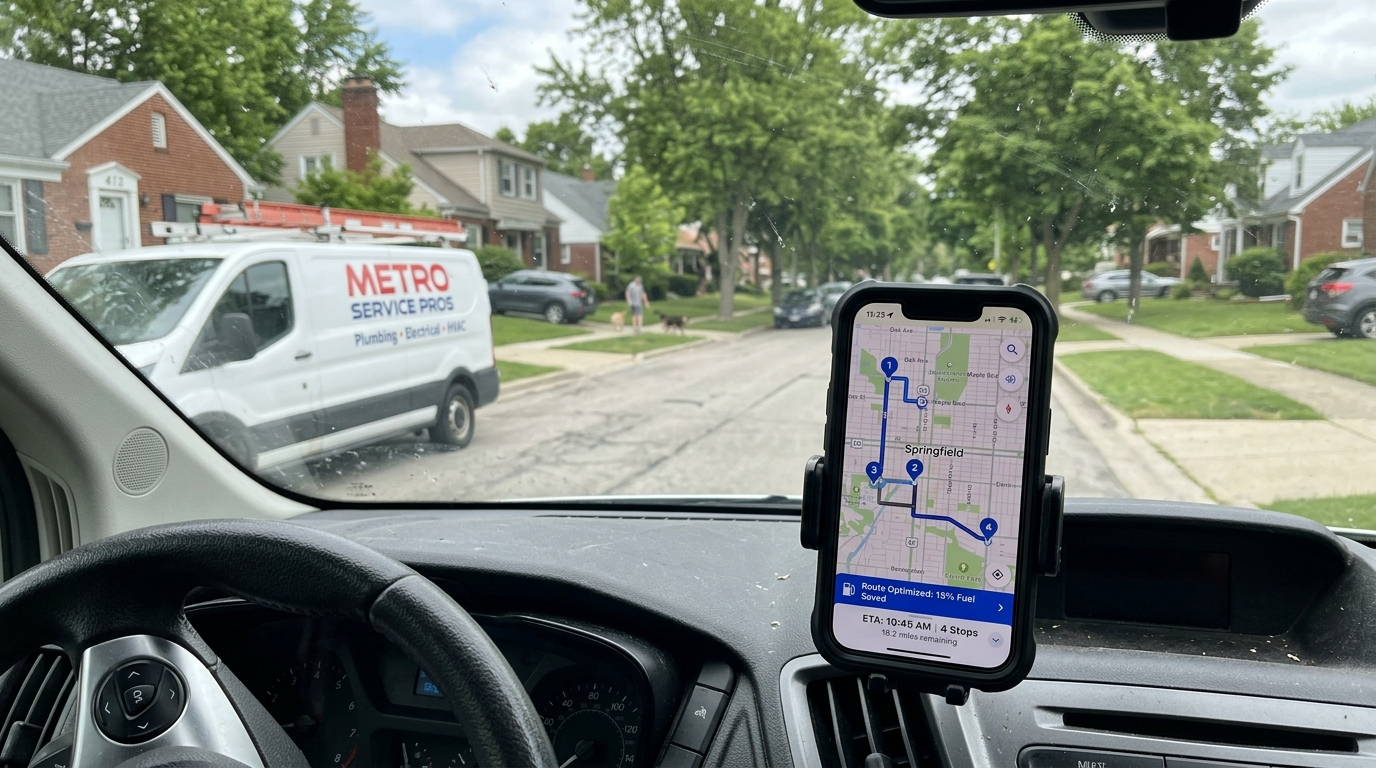
For non urgent tasks, the AI uses scheduling automation to find the optimal time for a repair, coordinating with both the tenant and the technician. It handles technician assignment, matching the job to the person with the right skills and location. A major cause of repeat visits (25% of them) is sending a technician without the proper experience. Smart assignment solves this.
Then, technician routing optimization kicks in. The system plans the most efficient routes for your team, especially for scattered-site portfolios, minimizing drive time and fuel costs. Studies show that optimized routing can reduce travel distances by about 15% and improve time efficiency by nearly 20%, allowing techs to complete more jobs per day.
Improving Key Performance Metrics
All of this optimization leads to measurable improvements in two key areas:
Response Time Reduction: Automation slashes the time from a tenant’s call to a technician’s arrival. One property manager cut their average emergency response time from 47 minutes down to just 26 minutes after implementing an AI driven dispatch system.
First Time Fix Improvement: By ensuring the right technician is sent with the right information, an AI maintenance coordinator boosts the first time fix rate. This is huge for both tenant satisfaction and your bottom line, as each repeat visit can cost anywhere from $150 to $1,000.
Closing the Loop: Communication, Data, and Proactive Care
The job isn’t done when the technician is dispatched. A truly effective AI maintenance coordinator manages the entire experience, from keeping tenants informed to leveraging data for future improvements.
Tenant Communication and Data Capture
Clear and consistent tenant communication is vital for satisfaction. The AI provides automated updates via text or email, confirming appointments and following up after the work is done. This simple act of keeping residents in the loop can boost satisfaction scores.
Simultaneously, the AI handles data capture and summarization. Every interaction is transcribed and summarized into clean, actionable notes in your PMS. This creates a perfect audit trail and eliminates errors from manual note taking.
How to Implement AI Maintenance Automation
Map Your Workflows: Document your current emergency vs. routine protocols.
Clean Your Vendor List: Ensure vendors are categorized by trade, service area, and priority.
Sync Your PMS: Connect the AI agent to your property management software for real-time data flow.
Define Escalation Paths: Set clear rules for when a human manager needs to intervene.
Notify Tenants: Introduce the new 24/7 system to residents to improve adoption and trust.
The Shift to Predictive Maintenance
With rich, structured data, you can move from reactive to proactive. Predictive maintenance uses historical data to anticipate when equipment might fail, allowing you to schedule repairs before an emergency occurs. For where this is heading, see the future of AI in property management. Properties with strong proactive maintenance programs have been shown to address an 8–12% retention gap across major repair categories. It’s about solving problems before your tenants even know they exist.
The Bottom Line: ROI Analysis for Maintenance Automation
Is investing in an AI maintenance coordinator worth it? A thorough ROI analysis almost always points to yes. The returns come from multiple areas:
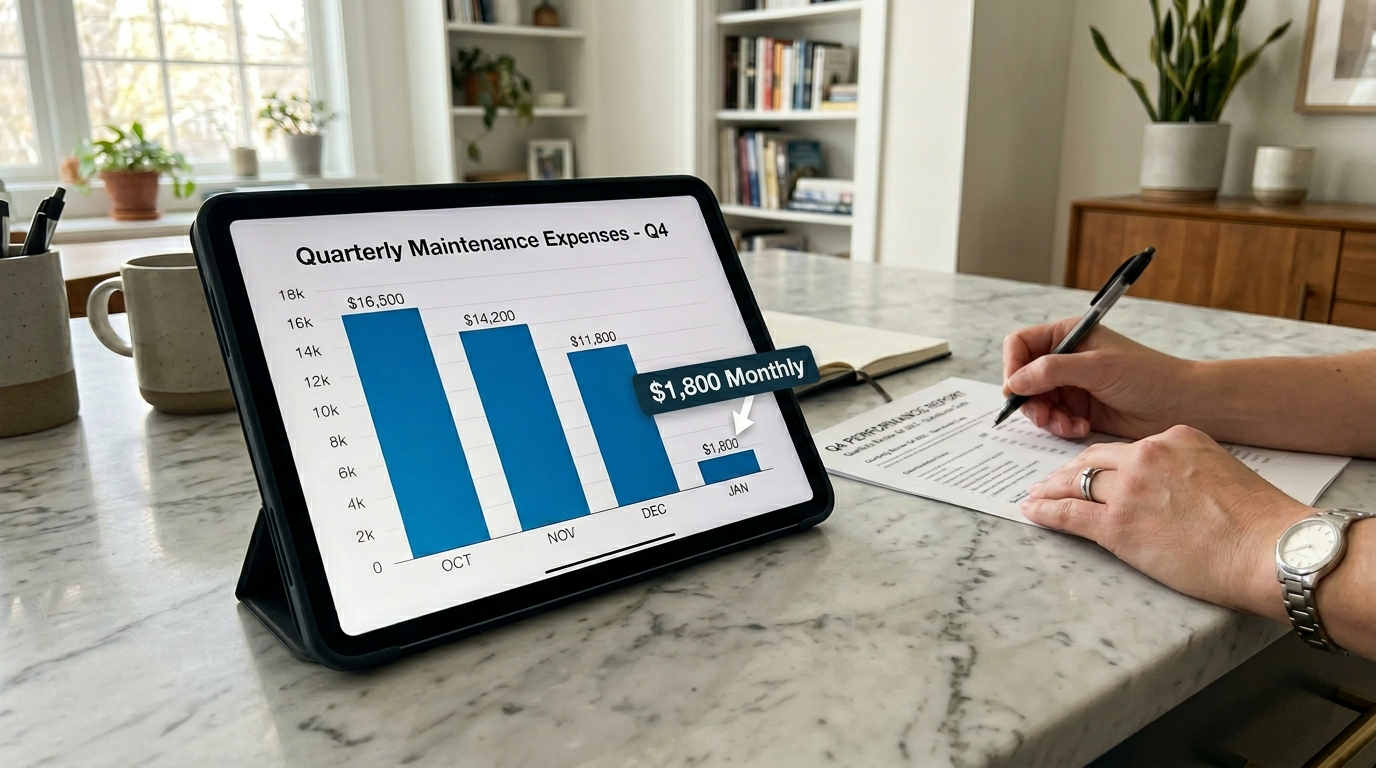
Lower Operational Costs: Managers report lower after hours operational costs after implementing AI triage and dispatch.
Reduced Repair Bills: Averting a single major water damage incident can save tens of thousands of dollars.
Decreased Tenant Turnover: Poor maintenance is a top reason tenants leave. Improving it is critical, as maintenance experience alone can shift churn rates by 13.6 percentage points, saving thousands per vacant unit.
Increased Staff Efficiency: Automating routine tasks means property managers report far less time spent on routine tasks — roughly half of what was reported in 2023, allowing them to manage larger portfolios without additional headcount.
When you add it all up, the financial and operational benefits are compelling. An AI maintenance coordinator isn’t an expense; it’s an investment in efficiency, tenant satisfaction, and profitability. Curious to see what the ROI could be for your portfolio? You can book a demo with Haven to get a tailored assessment based on your specific operational data.
Traditional vs. AI-Driven Maintenance Coordination
Feature | Traditional Call Center | AI Maintenance Coordinator |
Availability | Often limited or high-cost 24/7 | 24/7 Instant Response |
Data Entry | Manual/Prone to error | Automated PMS Sync |
Troubleshooting | Script-based only | Conversational Diagnostics |
Dispatch Speed | Minutes to Hours | Seconds (Instant) |
Integration | None/Phone-based | Direct AppFolio/Yardi/Buildium |
Frequently Asked Questions
What exactly is an AI maintenance coordinator?
An AI maintenance coordinator is a software system that uses artificial intelligence to automate the entire property maintenance workflow. It handles tasks like 24/7 call intake, issue diagnosis, emergency classification, work order creation in your PMS, vendor dispatch, scheduling, and tenant communication.
How does an AI maintenance coordinator handle emergencies?
It uses conversational AI to quickly identify signs of an emergency (like “flooding” or “gas smell”). It then performs triage, assigns the highest urgency score, and can automatically dispatch a pre-approved emergency vendor from your list within minutes, all while logging the event and keeping stakeholders informed.
Can an AI maintenance coordinator integrate with my existing software?
Yes, a key feature is PMS integration. Top tier solutions like Haven are built to connect directly with major property management systems such as AppFolio, Yardi, and others. This ensures all maintenance data flows seamlessly into your central system of record without manual entry.
How does this technology improve tenant satisfaction?
It provides instant, 24/7 responsiveness, so tenants are never left waiting. It offers clear communication with automated updates, faster resolution for urgent issues, and even helps tenants solve minor problems themselves. This reliability and transparency significantly boosts the resident experience.
What is the difference between an AI maintenance coordinator and a traditional call center?
A call center primarily takes messages and relays them. An AI maintenance coordinator is an active participant in the workflow. It diagnoses issues, creates work orders directly in your software, dispatches vendors, and automates communication, making it a much more powerful and efficient solution.
How does an AI coordinator help with vendor management?
It streamlines vendor management by using your pre-approved vendor lists for automated dispatch. It can select vendors based on trade, location, and availability. If a primary vendor is unresponsive, it can automatically escalate to a backup, ensuring no request is ever dropped.