AI Lead Follow-Up Leasing: 2026 Guide to Faster Conversions
Learn how AI Lead Follow-Up Leasing boosts speed-to-lead, qualifies renters, and books tours 24/7—while staying compliant. See steps and metrics.

TL;DR
AI lead follow-up in leasing uses artificial intelligence to automatically respond to, qualify, and nurture rental inquiries across phone, SMS, email, and chat. It solves a massive problem: nearly 50% of leasing office calls go unanswered, and the average response to a missed call takes 2.5 days. AI closes that gap by responding in seconds, following up multiple times, and scheduling tours without staff intervention. But deploying it well requires Fair Housing compliance planning, human escalation paths, and ongoing output audits.
What is AI lead follow-up in leasing? AI lead follow-up in leasing is an automated system using conversational artificial intelligence to engage rental prospects across SMS, email, voice, and chat. Unlike static chatbots, these AI agents qualify leads, schedule tours, and sync data directly with Property Management Systems (PMS). By 2026 standards, successful AI follow-up must provide a sub-2-minute response time, maintain a 5-touch nurture cadence, and ensure Fair Housing compliance through regular output audits.
What Is AI Lead Follow-Up in Leasing?
AI lead follow-up in leasing refers to the use of artificial intelligence agents that automatically respond to, qualify, and nurture rental leads from the moment a prospect inquires through to tour scheduling and lease conversion. These agents operate across multiple channels (phone, SMS, email, and web chat), connect to your property management software, and pull leads from listing sites like Zillow and Apartments.com.
This is different from a basic chatbot. A chatbot typically lives on your website and answers FAQs using scripted decision trees. It can’t pick up the phone, send a follow-up text three days later, or write a guest card into your PMS. An AI leasing assistant uses conversational AI to handle the full lifecycle of lead engagement, not just a single interaction on a single channel.
It’s also different from manual follow-up. A leasing agent juggling tours, move-ins, and renewals simply cannot respond to every inquiry within two minutes. AI can.
Why AI Lead Follow-Up Matters in Leasing
The case for AI lead follow-up in leasing comes down to three problems that are well documented and expensive.
The Speed Problem
According to Zillow’s research, responding within the first 1 to 2 minutes of receiving an inquiry gives you a 40% chance of prospect engagement. Wait 30 minutes and that likelihood drops to 10%. A Harvard Business Review study found that leads contacted within an hour are 7 times more likely to convert compared to those contacted later. LetHub reports that following up within 10 minutes increases conversion chances by 185%.
Every minute counts, and most leasing offices are losing this race.
The Missed-Call Crisis
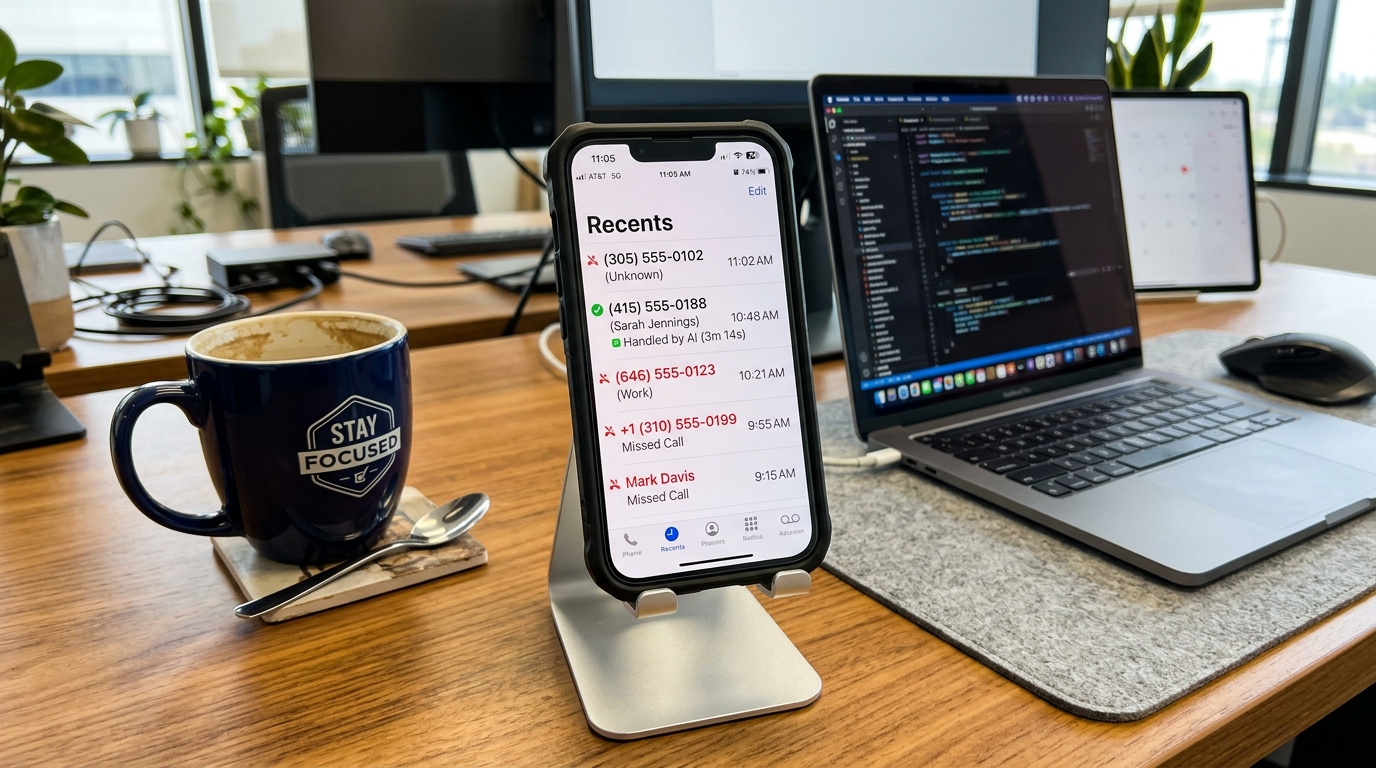
According to LeaseHawk data, almost 50% of all inbound calls to leasing offices go unanswered, and more than 80% of callers hang up without leaving a voicemail. Worse, the average leasing agent takes up to 2.5 days to respond to a missed call. Meanwhile, a Zillow study shows that 71% of renters expect a response within 24 hours.
The math is stark. Half your leads call and get no answer. Most of those callers never try again. The leads you paid to generate simply vanish.
The Follow-Up Problem
About 30% of property managers follow up with prospects just once after the initial contact, according to Zillow’s research. But their data shows that the most effective conversion approach involves following up five times within four days. That kind of cadence is nearly impossible for a busy leasing team to maintain manually, especially across dozens or hundreds of active leads.
This is where scaling with AI changes the equation. AI doesn’t forget to follow up. It doesn’t get busy with a walk-in and miss a callback window. It executes the cadence every time.
Metric | Industry Average (Manual) | AI-Enabled Benchmark (2026) | Impact on NOI |
First Response Time | 2.5 Days | < 90 Seconds | 40% higher engagement |
Lead-to-Tour Rate | 25% | 38% - 42% | More efficient staffing |
Follow-up Frequency | 1.2 Touches | 5.0 Touches | Capture long-term renters |
After-Hours Capture | 0% | 100% | Reclaims 4% of total leads |
How AI Lead Follow-Up Works: Step by Step
The typical AI lead follow-up workflow in leasing follows a clear sequence:
1. Lead Capture
The AI connects to ILS platforms (Zillow, Apartments.com), website inquiry forms, and phone lines. When a prospect reaches out through any of these channels, the system ingests the inquiry instantly.
2. Instant Response
Within seconds, the AI responds via the prospect’s preferred channel. If someone calls, it answers the phone. If someone submits a form on Apartments.com, it sends a text or email. The goal is to make contact while the prospect is still actively searching.
3. Qualification
The AI asks screening questions: move-in date, budget, bedroom count, pet situation. This filters serious prospects from casual browsers and gives your team the information they need before a tour ever happens.
4. Tour Scheduling
The AI accesses your property’s calendar and books showings directly. No back-and-forth emails. No “let me check and get back to you.” The prospect picks a time and it’s confirmed.
5. Guest Card Creation
Lead data flows automatically into your PMS or CRM. The AI writes the guest card, including conversation details, so nothing gets lost or manually re-entered. This property management automation saves significant administrative time.
6. Nurture Sequence
If the prospect doesn’t convert immediately, the AI sends follow-ups on a structured cadence. This is where AI lead follow-up leasing delivers its most underappreciated value. PERQ data shows that nearly 40% of renters look 3+ months before their planned move, with half of those looking 6 or more months ahead. Human agents will never have the bandwidth to nurture these early-stage leads. AI will.
7. Human Handoff
For complex situations or high-intent leads ready to negotiate terms, the AI escalates to a human agent with full conversation context. The prospect doesn’t have to repeat themselves.
Haven’s Leasing AI handles this full workflow across phone, SMS, and email, including lead capture from Zillow and Apartments.com, qualification, tour scheduling, and PMS integration.
Key Features to Look For
Not all AI lead follow-up tools are equal. When evaluating solutions, prioritize these capabilities:
ILS integration. The tool should pull leads directly from Zillow, Apartments.com, and other listing sites without manual intervention. If your leasing AI can’t capture leads where renters actually search, it’s solving the wrong problem.
PMS/CRM write-back. Guest cards, conversation notes, and lead status should flow into your property management software automatically. If your team still has to manually enter data, you’ve added a tool without removing a task.
Multichannel support, especially voice. Email and chat matter, but phone calls remain the highest-intent channel. If your AI can’t answer a phone call, you’re still missing the leads that matter most.
Conversation memory. The AI should remember past interactions. If a prospect texted last week about a two-bedroom and calls today about parking, the AI should know who they are and what they’ve already discussed.
Human escalation path. This is non-negotiable. Renters on Reddit have expressed consistent frustration about being forced to interact with AI without a clear way to reach a human. The complaint isn’t about AI existing. It’s about AI being the only option. Properties that use AI leasing assistants without preserving accessible human channels risk alienating the very prospects they’re trying to convert.
Multilingual support. Depending on your market, the ability to communicate in Spanish and other languages can meaningfully expand your prospect pool.
For a broader comparison of tools in this space, see this guide to the best AI property management software.
Metrics That Matter for AI Lead Follow-Up
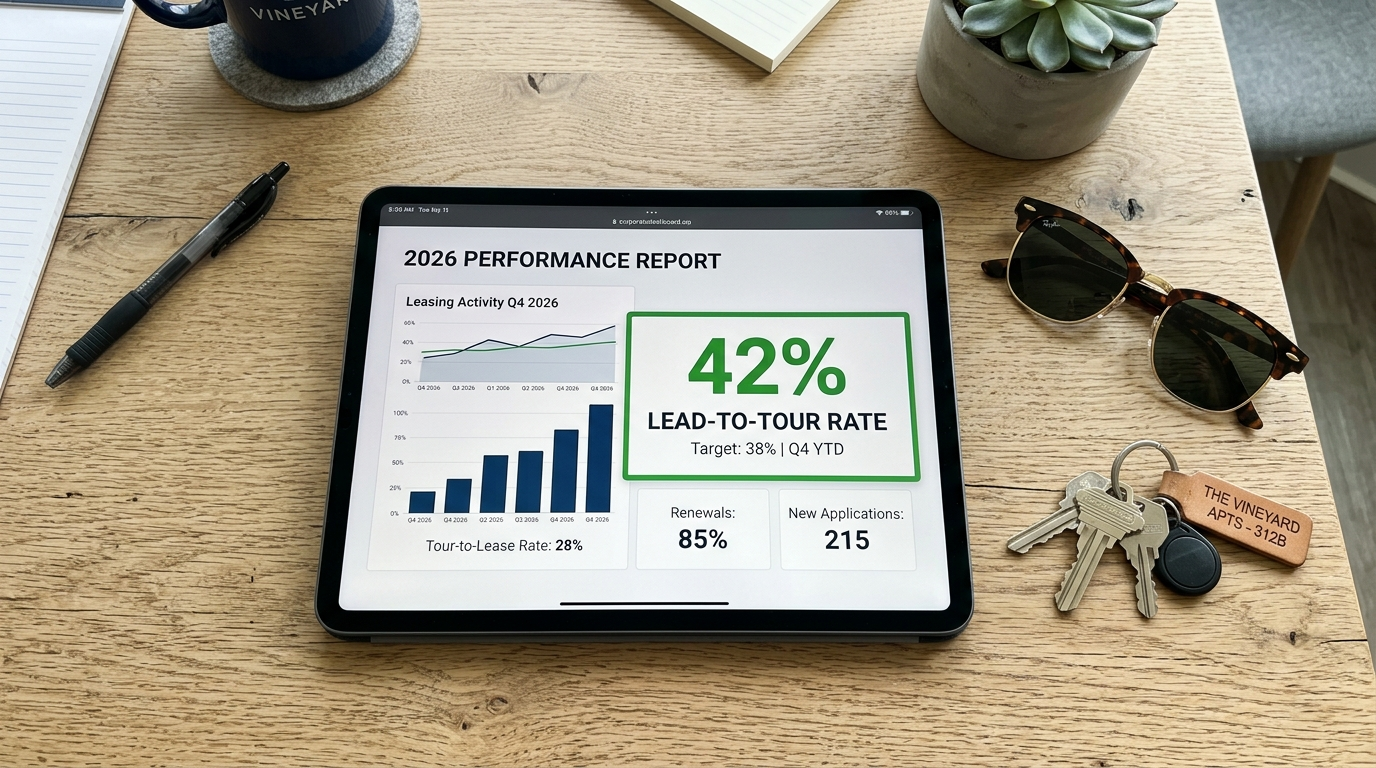
Tracking the right numbers is essential to understanding whether your AI lead follow-up leasing strategy is working.
Metric | What It Measures | Why It Matters |
|---|---|---|
Speed-to-lead | Time from inquiry to first response | The primary conversion lever. AI should reduce this to seconds. |
Lead-to-tour conversion | Percentage of inquiries that become scheduled tours | Measures qualification and scheduling effectiveness. BubbleGum BI notes that improving this from 25% to 35% means 40% more tours from the same lead volume. |
Tour-to-lease conversion | Percentage of tours that become signed leases | Shows lead quality and downstream follow-up effectiveness. |
Lead-to-lease conversion | End-to-end funnel performance | Fewer vacancy days, lower cost per acquisition, more revenue from existing marketing spend. |
Follow-up cadence | Number and timing of follow-up touches | Most PMs follow up once. Best-in-class systems do 5 touches in 4 days. |
After-hours capture rate | Percentage of off-hours inquiries answered | Nearly 4% of daily leasing call volume occurs after hours (7pm to 7am), per LeaseHawk. That’s revenue left on the table. |
One important nuance: there’s no single “right” lead-to-lease benchmark because there’s no single definition of a lead or a consistent operating model across properties. The teams that get this right don’t obsess over someone else’s number. They understand their own funnel, define their own metrics, and track performance against their own reality. For more data points, see this collection of AI property management statistics.
Fair Housing and Compliance: The Risk Most Vendors Don’t Talk About
This is the most important and most overlooked aspect of AI lead follow-up in leasing. The legal risk is real, documented, and growing.
Recent Cases
In 2023, a private fair housing nonprofit sued Harbor Group Management after its AI leasing chatbot was found to systematically screen out Housing Choice Voucher holders. In August 2024, the U.S. Department of Justice sued RealPage for antitrust violations related to its AI pricing algorithm. By January 2025, Greystar and five other major operators had been added as co-defendants.
In November 2024, a federal judge approved a $2.275 million settlement against SafeRent Solutions for producing discriminatory outcomes against Black, Hispanic, and Housing Choice Voucher applicants. SafeRent didn’t intend discrimination. Neither did the landlords who deployed its tool. The algorithm simply weighted certain data in ways that produced disparate outcomes at scale.
What This Means for You
The lesson from Multifamily Dive reporting is blunt: “Compliance is not a prompt, it’s architecture.” You can’t just tell the AI to be fair. You have to audit what it actually produces.
The practical steps:
Audit outputs, not system prompts. Run a systematic sample of protected-class-adjacent inquiries against your live AI system and document what it actually says.
Assume vendor accountability. Regulators and investigators will view AI vendors as extensions of the leasing function rather than independent actors. If your AI discriminates, you’re liable.
Document everything. Keep records of your AI’s responses, your audit methodology, and any corrections you make.
Review regularly. AI models can drift. What was compliant at launch might not be compliant six months later.
For a deeper dive into this topic, read the full Fair Housing compliance guide for AI in property management.
Common Mistakes When Deploying AI Lead Follow-Up
Deploying Without a Human Escalation Path
As mentioned above, this is the single most common source of renter frustration. Practitioners on Reddit frequently critique tools like AppFolio’s Lisa, describing experiences that feel like interacting with an “older-gen bot” that struggles with nuance. But the consistent theme across these discussions isn’t that the AI itself is bad. It’s that onboarding and internal workflow changes matter as much as the technology. Every AI lead follow-up system needs a clear, visible way for prospects to reach a real person.
Treating Follow-Up as One Touch
If your AI sends one response and stops, you’ve automated the wrong thing. The data is clear: five follow-ups in four days is the standard that drives conversion. Configure your nurture sequences accordingly.
Ignoring the Transparency Question
Per reporting from Yahoo Finance and Futurism on a New York Times story, tenants using EliseAI often couldn’t tell they were talking to a bot. “People come to the leasing office and ask for Elise by name,” CEO Minna Song said. Some tenants have texted the bot to meet for coffee and left gift cards for it. This is a transparency question that property managers should address proactively. Disclosure doesn’t hurt conversion, but a lack of disclosure can create trust problems when the truth comes out.
Not Auditing AI Outputs for Compliance
Setting up the system and walking away is a recipe for legal exposure. The gap between the instruction you give the AI and the output it actually produces is where your liability lives.
Overlooking Long-Term Lead Nurturing
Most teams think of AI lead follow-up as a speed play, which it is. But the real power is in the long game. With 40% of renters looking 3+ months before their move, AI’s ability to maintain contact over weeks or months turns prospects into residents that human teams would have lost entirely.
What It Looks Like in Practice
Funnel Leasing reports that AI leasing follow-up can deliver up to 86% higher lead-to-lease conversion rates and over 4.7 hours saved per property each week. EliseAI claims that with over 1.5 million customer interactions per year and 90% of prospect workflows automated, it has directly contributed to $14 million in payroll savings across its client base.
These numbers are vendor-reported and should be evaluated in context. But even conservative improvements in speed-to-lead and follow-up cadence produce meaningful gains. If you’re currently missing half your calls and following up once, the bar for improvement is low.
Want to see how AI lead follow-up leasing works with your properties? Book a demo with Haven to see lead capture, qualification, and tour scheduling in action.
FAQ
What is AI lead follow-up in leasing?
AI lead follow-up in leasing is the use of AI agents to automatically respond to rental inquiries, qualify prospects, schedule tours, and nurture leads across phone, SMS, email, and chat. It replaces or supplements the manual work leasing agents do when responding to and following up with prospective renters.
How is an AI leasing assistant different from a chatbot?
A chatbot typically lives on your website and handles basic FAQs using scripted decision trees. An AI leasing assistant operates across multiple channels (including voice), integrates with your PMS and listing sites, qualifies leads, schedules tours, and maintains follow-up sequences over days or weeks. It acts, not just answers.
Does AI lead follow-up actually improve leasing conversion rates?
Yes. The evidence is strong that speed-to-lead and follow-up cadence are the two biggest levers for conversion. Zillow’s research shows that a 1 to 2 minute response time yields a 40% engagement rate, while waiting 30 minutes drops it to 10%. Multiple vendors report significant improvements in lead-to-tour and lead-to-lease conversion when AI handles initial response and follow-up.
What are the Fair Housing risks of using AI in leasing?
AI systems can produce discriminatory outcomes even without discriminatory intent. The SafeRent Solutions settlement ($2.275 million) and the Harbor Group Management lawsuit both involved AI tools that screened out protected classes. Property managers should audit AI outputs regularly, document compliance processes, and treat vendors as extensions of their leasing function from a legal perspective.
Can renters tell they’re talking to AI?
Often, no. Reports indicate that some tenants have asked to meet AI agents in person, not realizing they were bots. This creates a transparency obligation. Best practice is to disclose that the prospect is interacting with an AI system while ensuring the experience remains helpful and efficient.
How many times should you follow up with a leasing lead?
Zillow’s research indicates that the optimal cadence is five follow-ups within four days of initial contact. Most property management teams follow up only once, which means there’s a significant conversion gap that AI can close automatically.
What should I look for when choosing an AI lead follow-up tool?
Prioritize ILS integration (Zillow, Apartments.com), PMS/CRM write-back, multichannel support (especially voice), conversation memory, human escalation paths, multilingual capabilities, and a clear compliance framework. See our guide on AI workers in property management for more context on how these tools fit into broader operations.
Does AI lead follow-up work for after-hours inquiries?
Yes, and this is one of its strongest use cases. Nearly 4% of daily leasing call volume happens between 7pm and 7am. Without AI, those calls go to voicemail, and the vast majority of callers hang up. AI answers instantly regardless of the time, capturing revenue that would otherwise be lost.