AppFolio Maintenance Automation: 2026 Guide & Glossary
A plain-English glossary of AppFolio maintenance automation in 2026—features, integrations, costs, gaps, ROI metrics, and vendor tips. Explore now.

TL;DR
AppFolio maintenance automation refers to the suite of AI-powered tools within AppFolio, including Smart Maintenance, Realm-X Performers, and the Lula Vendor Network, that automate maintenance request intake, triage, vendor dispatch, and work order management. While these native features save property managers significant time, they have notable gaps around voice-first intake, troubleshooting depth, and vendor context. This glossary defines every key term, explains how the automation actually works, and identifies where third-party tools fill the holes.
What is AppFolio Maintenance Automation?
AppFolio Maintenance Automation is a set of AI-powered tools inside AppFolio that automate the full maintenance workflow—tenant request intake, issue triage, work order creation, vendor dispatch, and completion tracking. It combines Smart Maintenance, Realm-X Maintenance Performer, and vendor integrations like the Lula Vendor Network to reduce manual coordination work for property managers.
In practice, it automates maintenance coordination but still requires human oversight for complex troubleshooting, vendor communication context, and exception handling.
What “AppFolio Maintenance Automation” Actually Means
If you manage rental properties on AppFolio, you’ve probably noticed the platform adding AI features at a rapid clip. The term “AppFolio maintenance automation” covers everything the platform offers to reduce manual work in the maintenance lifecycle: receiving tenant requests, triaging urgency, creating work orders, dispatching vendors, and closing the loop.
The challenge is that AppFolio uses a lot of its own terminology. Realm-X Performers, Smart Maintenance, Flows, the Lula Vendor Network, Stack Premium. These terms show up in product announcements and sales calls, but the practical distinctions between them aren’t always obvious.
This glossary breaks down each term with plain definitions and real operational context. It’s written for property managers who already use AppFolio (or are evaluating it) and want to understand exactly what each feature does, where it falls short, and what third-party tools can pick up the slack. For a broader overview of maintenance AI concepts beyond AppFolio, see this maintenance AI FAQ.
If you’re exploring how AI agents handle maintenance across different platforms, book a demo to see how purpose-built AI compares to native PMS automation.
How AppFolio Maintenance Automation Works (Step-by-Step)
Step 1: Tenant Submits Request
Requests come in via:
Resident portal
Phone (Contact Center)
Text messages
Mobile app
Step 2: AI Intake & Understanding
Realm-X Maintenance Performer:
Reads text or voice input
Analyzes uploaded images
Identifies issue type
Step 3: Triage & Prioritization
System assigns:
Emergency (immediate escalation)
High priority
Routine maintenance
Step 4: Work Order Creation
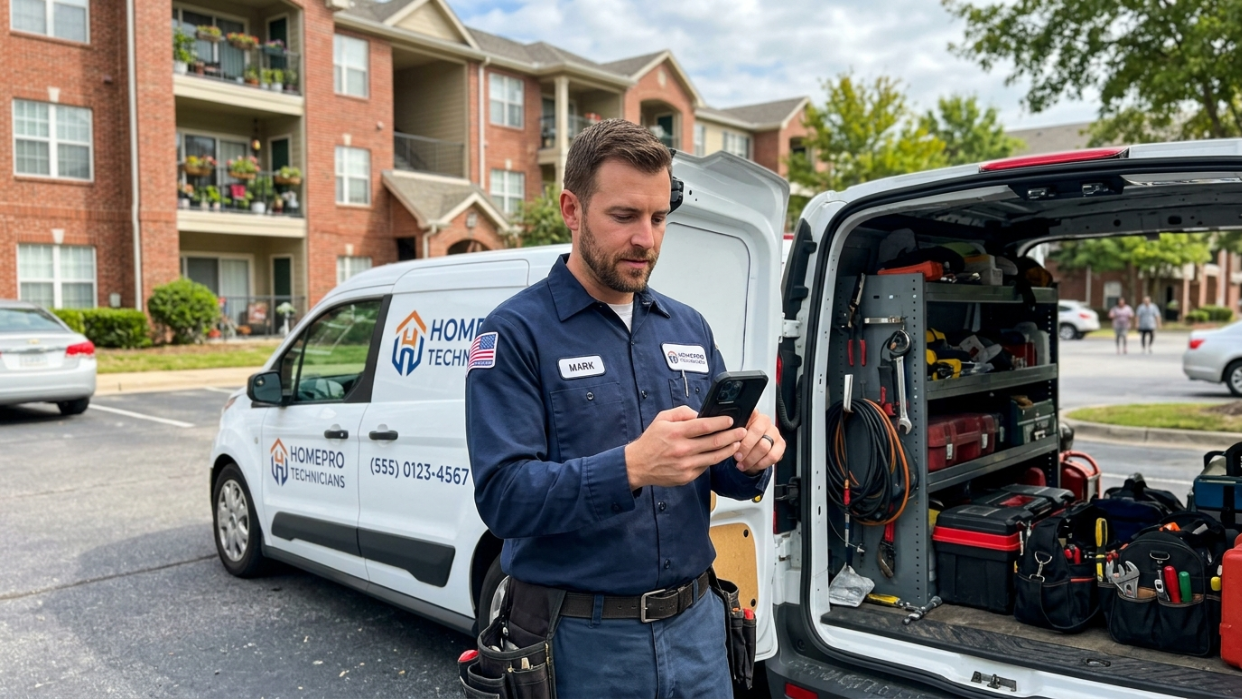
Automatically generates:
Issue category
Property/unit details
Suggested resolution path
Step 5: Vendor Dispatch
Routes to:
Preferred vendors
Lula Vendor Network
Internal maintenance teams
Step 6: Completion & Billing
Work order closed
Invoice generated
Owner billing synced
Core AppFolio Maintenance Automation Terms
These are the foundational features that make up AppFolio’s maintenance automation system. Understanding what each one does (and doesn’t do) is the starting point for optimizing your maintenance stack.
Smart Maintenance
Smart Maintenance is AppFolio’s AI-powered maintenance coordination system. It bundles automated scheduling, billing, image-based diagnosis, and vendor dispatch into a single product. Think of it as the umbrella term for AppFolio’s maintenance automation capabilities.
The system provides a 24/7 maintenance call service that logs tenant requests and automatically assigns vendors. According to AppFolio’s data presented at NAA Apartmentalize 2025, users save an average of 10 hours weekly on tasks when using its AI tools. A SelectHub analysis of 1,847 reviews found that 89% of users discussing maintenance management said they saved time with smart maintenance workflows.
In practice, Smart Maintenance is useful but not as hands-off as the marketing suggests. Practitioners on Reddit and review sites report that it works well for straightforward requests but struggles with complex, multi-system issues. More on those limitations below.
Realm-X Maintenance Performer
The Realm-X Maintenance Performer is AppFolio’s agentic AI for maintenance workflows. Unlike a simple chatbot, it’s designed to act as a self-sufficient coordinator. It can reply to residents, analyze submitted images, troubleshoot basic problems, prioritize emergencies, and dispatch work to the right technician.
What makes it different from the older Smart Maintenance system is its ability to communicate with residents in real time across multiple languages, ask follow-up questions based on photo analysis, and create prioritized work orders. AppFolio reports that over 96% of its 20,000+ customers have increased operational efficiency using at least one of the platform’s AI tools.
The key nuance: the Performer reimagines service intake and triage, but it still operates within the constraints of the data and photos tenants provide. If a tenant submits a blurry picture or a vague description, the output quality drops significantly.
Maintenance Contact Center
The Smart Maintenance Contact Center is the resident-facing communication layer. It uses AI to automate responses 24/7, handling text messages, phone calls, and resident portal submissions. When a request comes in, the resident gets an AI-aided response within minutes regardless of the time of day.
This matters because maintenance emergencies don’t follow business hours. For more on how AI handles after-hours maintenance, that guide covers the broader category in detail.
One important detail that AppFolio doesn’t emphasize in its marketing: the Contact Center is an add-on product with per-interaction pricing. Industry estimates put the cost at roughly $0.60 to $1.20 per contact, averaging around $0.80 per interaction. For a 300-unit portfolio generating 30 to 50 maintenance requests weekly, those costs add up quickly.
Realm-X Flows
Realm-X Flows is AppFolio’s workflow automation engine. It replaces static standard operating procedures with active automations that execute multi-step processes based on triggers you define. For example, you can set a Flow to escalate any maintenance request that hasn’t been addressed within 48 hours, or to automatically send pre-renewal notices.
Flows comes with pre-built templates and includes a visual designer tool for custom workflows. AppFolio’s task automations trigger based on predefined rules, making it possible to create fairly sophisticated maintenance escalation paths without coding.
The limitation: custom escalation rules and vendor routing logic often require engagement with AppFolio support rather than self-serve configuration. Property managers who want granular control over their workflows may find this frustrating.
Realm-X Assistant
The Realm-X Assistant is AppFolio’s on-demand copilot for quick tasks. Unlike the Maintenance Performer (which operates autonomously), the Assistant is designed for property managers to interact with directly, pulling up information, drafting communications, or generating reports. Think of the Performer as an autopilot and the Assistant as a co-pilot you call on when needed.
Unit Turn Board
The Unit Turn Board is AppFolio’s vacancy turnaround management tool. It gives maintenance teams a visual dashboard for tracking make-ready tasks across units, from move-out inspection through cleaning, repairs, and move-in readiness. AppFolio’s FUTURE Conference data showed 1.2-day faster unit turns for teams using their AI tools, which directly impacts vacancy loss.
AppFolio Maintenance Automation: Features vs Limitations
Feature | What It Does Well | Key Limitation |
|---|---|---|
Smart Maintenance | Automates intake & dispatch | Weak complex troubleshooting |
Realm-X Performer | AI triage & communication | Depends heavily on tenant input quality |
Contact Center | 24/7 intake support | Adds per-interaction cost |
Vendor Dispatch | Fast routing of jobs | Limited vendor context sharing |
Image Diagnosis | Photo-based issue detection | Misclassification risk |
Flows Automation | Workflow automation | Limited deep customization |
AppFolio Maintenance Automation Use Cases
Automates basic tenant requests
Reduces coordinator workload
Best for simple maintenance categories
Mid-Size Portfolios (300–1,000 units)
Significant time savings in triage
Vendor dispatch automation becomes critical
Requires workflow tuning
Large Portfolios (1,000+ units)
Heavy reliance on integrations
Needs third-party tools for:
Voice intake
Vendor coordination depth
SLA tracking
Vendor and Dispatch Automation Terms
Vendor coordination is where maintenance automation either saves you hours or creates new headaches. AppFolio has invested heavily in this area, particularly through its Lula partnership.
Lula Vendor Network
The Lula Vendor Network is now fully integrated with AppFolio Smart Maintenance. It automates vendor outsourcing, dispatch, and coordination. Because the integration lives within Smart Maintenance, you don’t need a separate login. You can enable it in under 24 hours, set Lula as your preferred vendor, define your budget, and automate dispatch.
Lula reports that 80% of jobs are resolved on the first trip with an average turnaround of 3.8 days. That first-trip resolution rate matters because repeat vendor visits are one of the biggest hidden costs in maintenance management. For a deeper look at vendor coordination with AI, see this guide on maintenance AI and vendor relations.
The trade-off: you’re relying on Lula’s vendor pool rather than your own relationships. Several property managers in online forums have noted that Lula vendors sometimes receive little context about the work orders assigned to them, which leads to job rejections or incomplete repairs.
Vendor Dispatch Automation
In AppFolio’s system, vendor dispatch automation means the platform automatically sends work orders to the appropriate vendor based on issue type, location, and budget rules you’ve configured. The Maintenance Performer handles the categorization, then the dispatch engine routes the job.
This works well for standard trades (plumbing, HVAC, electrical) with clear categorization. It breaks down when requests are ambiguous or when the AI misdiagnoses the issue type. More on that in the gaps section below.
AppFolio Stack and Stack Premium
The AppFolio Stack is a marketplace of third-party integrations that extend the platform’s capabilities. Partners include Zillow, Lula, Breezeway, and other proptech solutions. Stack Premium refers to deeper, more tightly integrated partnerships. For property managers, the Stack is where you go to add capabilities that AppFolio doesn’t build natively.
If you’re evaluating AppFolio within a broader property management AI stack, understanding which Stack partners fill which gaps is essential.
Preferred Vendor Lists
Preferred vendor lists in AppFolio let you pre-configure which vendors should receive work orders by trade, property, and budget threshold. When the Maintenance Performer creates a work order, it checks your preferred vendor configuration before routing.
The setup is straightforward for basic scenarios. Practitioners report that more complex routing logic (for example, routing based on vendor availability windows or performance ratings) requires manual configuration or support engagement.
Work Order Auto-Creation
Work order auto-creation is the trigger-based generation of work orders from tenant submissions. When a resident submits a request through any channel, the AI processes it and creates a work order with issue type, priority level, and a summary. This eliminates the manual data entry step that traditionally ate up coordinator time.
A typical 300-unit portfolio generates 30 to 50 maintenance requests per week. Without automation, that volume requires a full-time maintenance coordinator just for triage and dispatch. Auto-creation addresses the triage bottleneck directly.
AppFolio Maintenance Automation Pricing Breakdown
AppFolio maintenance automation costs vary based on usage and add-ons:
Smart Maintenance Contact Center: ~$0.60–$1.20 per interaction
Average estimated cost: ~$0.80 per request
Implementation/setup: $1,000–$5,000
Base AppFolio subscription: varies by portfolio size
Workflow and Integration Terms
Beyond the core features, AppFolio’s maintenance automation relies on several underlying processes and integration points that determine how well the system performs in practice.
Work Order Triage
Work order triage is how the AI categorizes incoming requests by urgency and type. The Maintenance Performer reads descriptions, analyzes attached images, and assigns a priority level. Emergency issues (water leaks, gas smells, no heat in winter) get flagged for immediate escalation. Routine requests like a dripping faucet are categorized, prioritized, and queued.
The quality of triage depends entirely on the input quality. Vague descriptions and poor photos produce unreliable categorizations. For a deeper understanding of how AI handles emergency situations, see this emergency maintenance triage guide.
Emergency Detection and Escalation
Emergency detection is the AI’s ability to identify safety-critical issues and escalate them immediately. In AppFolio, this means flagging specific keywords and image patterns (flooding, exposed wires, broken locks) and bypassing the normal queue to alert property managers and dispatch vendors.
AppFolio’s escalation rules can trigger based on predefined conditions. However, the customization of these rules is not fully self-serve. Adjusting thresholds or adding custom emergency categories typically requires working with AppFolio’s support team.
Image-Based Diagnosis
Image-based diagnosis is one of the Realm-X Maintenance Performer’s signature capabilities. The AI analyzes photos attached to maintenance requests to identify the issue type and severity. A photo of a water stain on a ceiling, for example, might trigger categorization as a plumbing leak rather than a cosmetic issue.
This feature works well for visually obvious problems. It struggles with issues that look similar but have different root causes, which is where misdiagnosis becomes a real concern.
Two-Way PMS Integration
Two-way PMS integration means data flows both directions between AppFolio and a connected third-party tool. Changes in AppFolio (like a work order status update) sync to the partner platform, and vice versa. This is critical because one-way syncs create data discrepancies that lead to missed follow-ups or duplicate work.
AppWork and AppFolio, for example, seamlessly sync property, unit, resident, work order, make-ready, and inspection data between platforms through a two-way integration. Teams can set up in minutes without duplicate data entry.
Aptly also integrates with AppFolio, installing a Work Order Board that lets you customize communication with vendors, owners, and tenants. One caveat worth knowing: Aptly syncs with AppFolio every 3 hours during the day and overnight, so it’s not real-time. For time-sensitive maintenance operations, that lag matters.
To see how Haven handles PMS integrations, including two-way syncing with AppFolio, that page covers the technical details.
Skywalk API
The Skywalk API provides JSON REST access to AppFolio data, including maintenance work orders. It allows property management companies to build custom integrations with vendor management systems, track completion programmatically, and automate maintenance workflows beyond what the native tools offer.
This is primarily relevant for larger operators or companies with development resources. Small and mid-size managers rarely interact with the API directly but benefit from it through third-party tools that use it under the hood.
Billing Automation
Billing automation in AppFolio’s maintenance context means auto-generating owner invoices from completed work orders. When a vendor marks a job complete and submits costs, the system can create the corresponding bill and associate it with the right property and owner. This closes the financial loop without manual bookkeeping for each work order.
RemoteLock Integration
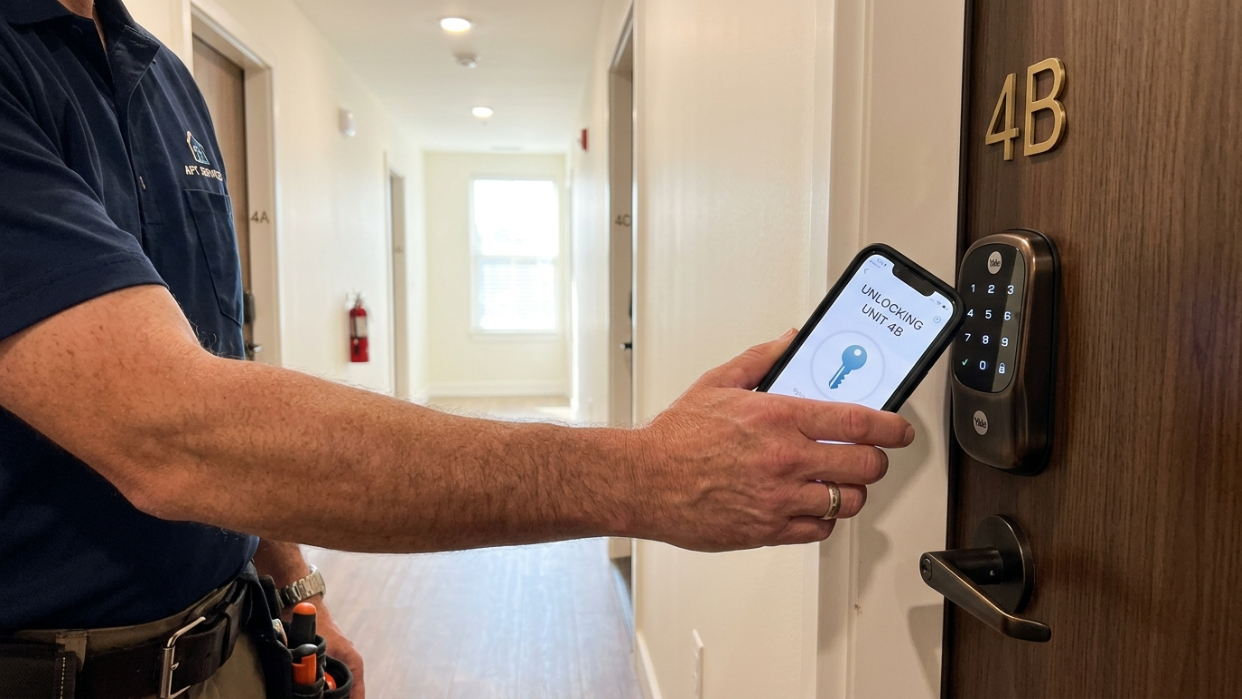
RemoteLock integrates with AppFolio to automate vendor property access. Data from work orders automatically syncs with RemoteLock, creating time-bound access codes for vendors that are automatically revoked when the service window expires. This eliminates the key coordination problem that plagues scattered-site portfolios. For more on this challenge, see this guide on scattered-site property management AI.
What AppFolio’s Native Maintenance Automation Doesn’t Cover
This is the section that AppFolio’s own content will never publish. It’s also the section that matters most for property managers trying to decide whether native automation is enough or whether they need third-party tools.
Misdiagnosis and Limited Troubleshooting
The most common complaint from practitioners: the AI creates work orders for the wrong issue type. A vendor gets assigned a water heater repair, shows up, and discovers the problem is actually with the property’s plumbing system. This happens because the system relies on automated troubleshooting that doesn’t probe deeply enough before escalating.
Capterra reviewers have been particularly vocal about the AI chatbot that handles maintenance requests, calling it “very difficult to use” and noting it “seems impossible to be heard when talking to the robot.” Unlike a human maintenance coordinator, the system does little to troubleshoot tenant issues before sending them to vendors. For more on how to avoid these pitfalls, see common maintenance AI mistakes.
Poor Vendor Context
Multiple property managers report that vendors receive minimal context about their assigned work orders. This leads to unprepared technicians, wasted trips, and frustrated residents. The automation handles the dispatch step but doesn’t always transfer the nuanced information that makes first-trip resolution possible.
The Voice-First Gap
Over 60% of property management inquiries still come via phone, yet AppFolio’s native automation is strongest in portal and text channels. The Maintenance Contact Center handles calls, but practitioners describe the phone experience as less polished than the text-based interactions. Voice-first AI from third-party tools fills this gap, handling phone calls with the same depth that AppFolio applies to written requests.
Ecosystem Lock-In
AppFolio’s automation is contained within the AppFolio ecosystem. If you ever switch PMS platforms, your Flows, Performer configurations, and vendor routing rules don’t come with you. External workflow triggers require third-party tools. This isn’t unusual for PMS platforms, but it’s worth factoring into long-term planning.
Cost at Scale
Some property managers expected Smart Maintenance to reduce maintenance costs, but several report it shifts the workload rather than eliminating it. With the Contact Center’s per-interaction pricing ($0.60 to $1.20 per contact), high-volume portfolios can see costs accumulate. Implementation costs run an estimated $1,000 to $5,000 including AI add-on configuration.
According to a NARPM 2025 survey, 68% of property management companies report that their primary platform’s maintenance features meet only “basic” or “partial” needs, with 41% supplementing with at least one additional automation tool.
When Native Automation Is Enough vs. When You Need More
Native AppFolio maintenance automation works well if you have straightforward maintenance operations, use the tenant portal as your primary intake channel, and manage under 500 units with standard trade categories.
You likely need third-party AI tools if you handle high call volumes, manage scattered-site portfolios requiring vendor access coordination, need deeper troubleshooting before dispatch, or want post-completion follow-ups and satisfaction tracking that go beyond what Flows offers.
For property managers who need voice-first intake, deeper troubleshooting, and preferred vendor list management that goes beyond native capabilities, Haven’s Maintenance AI is built specifically to fill those gaps alongside your existing PMS.
Key Metrics for Evaluating Maintenance Automation ROI
Whether you’re using AppFolio’s native tools, third-party solutions, or both, these are the numbers that tell you if your maintenance automation is actually working.
Hours Saved Per Week
This is the most cited metric. AppFolio’s FUTURE Conference data showed 12.5 hours per week saved using Realm-X for communications, reporting, and training. That’s roughly a third of a full-time coordinator’s week. Track your own hours by measuring time spent on intake, triage, dispatch, and follow-up before and after automation.
Work Order Resolution Time
How quickly does a work order go from submission to completion? Lula’s reported 3.8-day average turnaround gives you a benchmark for outsourced work. Your in-house team should beat that on routine issues. If they’re not, the bottleneck is likely in triage or dispatch, not execution.
Emergency Response Time
Separately track how fast emergencies get addressed. This is both a liability metric and a resident satisfaction driver. Automation should get emergency work orders dispatched within minutes, not hours.
First-Trip Resolution Rate
The percentage of vendor visits that resolve the issue without a return trip. Lula reports 80%. Anything below 70% suggests your triage and vendor context processes need work, because vendors are showing up without the right information or parts.
Cost Per Interaction
With per-interaction pricing models, divide your total maintenance AI spend by the number of requests handled. Compare this to what you’d pay a call center or coordinator for the same volume. AppFolio’s estimated $0.80 per interaction should be benchmarked against your current cost per maintenance touchpoint. AppFolio reports a 10-month ROI payback period, significantly faster than competitors.
Resident Satisfaction Impact
AppFolio’s own research found that residents satisfied with maintenance were 25% less likely to say they’re planning to move and three times more likely to recommend their property management company. Track your renewal rates and NPS scores alongside maintenance automation rollouts. For detailed guidance on which metrics matter most, see this maintenance AI KPIs guide.
Frequently Asked Questions
What is AppFolio Smart Maintenance?
Smart Maintenance is AppFolio’s AI-powered maintenance coordination system. It includes automated scheduling, image-based diagnosis, vendor dispatch through the Lula Vendor Network, and a 24/7 contact center that handles tenant requests via text, phone, and the resident portal.
How does the Realm-X Maintenance Performer differ from Smart Maintenance?
Smart Maintenance is the overall system. The Realm-X Maintenance Performer is the specific AI agent within that system that communicates with residents, analyzes photos, asks follow-up questions, prioritizes emergencies, and creates work orders. The Performer is the “brain” that powers much of Smart Maintenance’s automation.
How much does AppFolio’s maintenance AI cost?
The Smart Maintenance Contact Center is an add-on with per-interaction pricing estimated at $0.60 to $1.20 per contact (roughly $0.80 average). Implementation costs run $1,000 to $5,000 including configuration. These costs are separate from your base AppFolio subscription.
Can AppFolio automatically dispatch vendors?
Yes, through the integrated Lula Vendor Network. You set your preferred vendors, define budget thresholds, and the system dispatches automatically based on work order type and location. You can also configure dispatch to your in-house maintenance team for certain issue categories.
What are the biggest limitations of AppFolio’s native maintenance automation?
The most frequently reported issues are misdiagnosis of maintenance requests, limited troubleshooting before vendor dispatch, poor vendor context on work orders, ecosystem lock-in, and per-interaction costs that add up for high-volume portfolios. Additionally, voice-based interactions are less polished than text-based channels.
Does AppFolio integrate with third-party maintenance tools?
Yes, through the AppFolio Stack marketplace. Notable integrations include AppWork (two-way work order syncing), Aptly (work order boards with custom communication), RemoteLock (automated vendor access codes), and Skywalk API for custom integrations. Note that some integrations, like Aptly, don’t sync in real time.
What is Realm-X Flows and how does it relate to maintenance?
Realm-X Flows is AppFolio’s workflow automation engine. For maintenance, it lets you create trigger-based automations like escalating unaddressed requests after 48 hours or sending follow-up messages after work order completion. It includes pre-built templates and a visual designer for custom workflows.
Is AppFolio’s maintenance automation enough, or do I need third-party tools?
It depends on your portfolio size, communication channels, and complexity. For straightforward operations under 500 units using mostly portal and text intake, native tools may suffice. Larger portfolios, phone-heavy operations, or managers needing deeper pre-dispatch troubleshooting typically supplement with third-party AI tools. The NARPM 2025 survey found that 41% of property management companies use at least one additional automation tool beyond their PMS.