Maintenance AI KPIs: 2026 Benchmarks for Property Managers
Explore 15 maintenance AI KPIs for 2026 with formulas, pre-AI baselines, post-AI benchmarks, and clear targets. Improve MTTR, cut costs, lift renewals.

TL;DR
Generic maintenance KPIs fall short once AI handles intake, triage, and dispatch. This guide covers 15 maintenance AI KPIs organized into three tiers: AI-native metrics (like triage accuracy and containment rate), AI-transformed metrics (like first response time and vendor dispatch speed), and business-outcome metrics (like cost per unit and tenant retention). Each KPI includes a formula, pre-AI baseline, post-AI benchmark, and guidance on what good looks like.
What are the most critical Maintenance AI KPIs for 2026?
To measure the ROI of AI in property management, focus on three primary benchmarks:
1. Triage Accuracy (90%+): Ensures the AI correctly identifies issues without human intervention.
2. Containment Rate (15–25%): The percentage of routine issues resolved via AI-guided troubleshooting without a vendor dispatch.
3. First Response Time (<60 seconds): The benchmark for AI-driven tenant acknowledgment, compared to the 24-48 hour industry average for manual systems.
Companies hitting these benchmarks typically see a 25-30% reduction in maintenance costs and a 12% increase in lease renewals.
Why Maintenance AI Needs Its Own KPI Framework
Most property management companies track some version of the usual maintenance metrics: work order volume, time to repair, maybe cost per unit. Those metrics still matter. But the moment you introduce AI into maintenance workflows, two things happen. First, entirely new metrics appear that didn’t exist before, things like triage accuracy and containment rate. Second, the baselines on traditional metrics shift so dramatically that your old benchmarks become meaningless.
McKinsey ranked real estate among the top five industries adopting AI for operational efficiency in 2024, estimating a 25 to 30% reduction in maintenance costs and a 15% boost in NOI for firms implementing data-driven systems. But those gains only materialize if you measure the right things.
Here’s the problem: 92% of commercial real estate teams have piloted AI, but only 5% have deployed it systematically with KPI tracking. Most AI implementations don’t fail because the AI doesn’t work. They fail because nobody measures whether it’s working.
This guide provides the measurement framework. If you’re still evaluating whether an AI maintenance coordinator makes sense for your portfolio, these KPIs will tell you exactly what success looks like before you buy.
At-a-Glance: All 15 Maintenance AI KPIs
# | KPI | Category | Formula | Pre-AI Benchmark | Post-AI Benchmark |
|---|---|---|---|---|---|
1 | Triage Accuracy Rate | AI-Native | Correct classifications ÷ Total requests | N/A | 90%+ |
2 | Containment Rate | AI-Native | Resolved without dispatch ÷ Total routine | N/A | 15–25% |
3 | Work Order Auto-Creation Rate | AI-Native | Auto-created WOs ÷ Total WOs | 0% | 73%+ |
4 | Emergency Detection Precision | AI-Native | True emergencies ÷ Flagged emergencies | ~60% | 95%+ |
5 | After-Hours Answer Rate | AI-Native | Answered ÷ Total after-hours contacts | 72% | 99% |
1 | First Response Time | AI-Transformed | Avg time to first reply | Hours to days | Under 60 seconds |
2 | Mean Time to Repair (MTTR) | AI-Transformed | Submission to confirmed fix | 5+ days | 2.7 days |
3 | Vendor Dispatch Time | AI-Transformed | Triage to vendor assigned | 5–15 min | Under 60 seconds |
4 | First-Time Fix Rate | AI-Transformed | Fixed on first visit ÷ Total dispatches | 65–70% | 80%+ |
5 | Follow-Up Completion Rate | AI-Transformed | Follow-ups sent ÷ Completed WOs | 30–40% | ~100% |
1 | Maintenance Cost per Unit | Business Outcome | Total maintenance spend ÷ Units | Rising 12–14%/yr | 25–30% reduction |
2 | Tenant Satisfaction (CSAT) | Business Outcome | Avg post-resolution score | 3.5–3.8/5 | 4.2+/5 |
3 | Lease Renewal Rate | Business Outcome | Renewals ÷ Expiring leases | Industry avg | 12% above avg |
4 | Preventive-to-Reactive Ratio | Business Outcome | PM work orders ÷ Total WOs | 20:80 | 80:20 |
5 | Staff Productivity | Business Outcome | WOs processed per staff member | Baseline | 3x improvement |
Now let’s break down each metric in detail.
Task | Manual Time (Est.) | AI Time (Est.) | Efficiency Gain |
Data Entry (PMS) | 8 Minutes | < 1 Second | 99.8% |
Vendor Phone Tag | 15 Minutes | 0 Minutes (Auto-SMS) | 100% |
Tenant Status Updates | 5 Minutes | 0 Minutes (Real-time) | 100% |
Part 1: AI-Native KPIs
These are maintenance AI KPIs that simply didn’t exist before AI entered the workflow. You can’t measure them with a traditional CMMS or call center setup because the capabilities they track are unique to AI.
1. Triage Accuracy Rate
Best for: Validating that your AI correctly interprets and categorizes incoming maintenance requests.
Why it matters: Traditional property management systems are, as one integration practitioner at Syntora put it, “systems of record, not systems of intelligence.” They store structured data but can’t interpret the unstructured, often panicked text of a tenant’s email or voicemail. AI fills that gap, and triage accuracy measures how well it does so.
Formula: (Correctly classified requests ÷ Total requests triaged) × 100
Benchmark: Target 90%+ accuracy. Below 85% and you’re creating more confusion than clarity, because staff still need to re-review every request.
How to measure it: Sample 50 to 100 AI-triaged requests weekly. Compare the AI’s assigned category and urgency level against what a human coordinator would assign. Track accuracy by issue type (plumbing, HVAC, electrical, pest) since AI tends to be stronger in some categories than others.
For a deeper look at how AI triage works in practice, see the emergency maintenance triage guide.
2. Containment Rate
Best for: Measuring how often AI resolves routine issues without dispatching a vendor.
Why it matters: Not every maintenance request needs a truck roll. A tripped breaker, a jammed garbage disposal, a thermostat in the wrong mode. These are problems a tenant can often fix with clear guidance. AI that provides safe, step-by-step troubleshooting instructions can resolve a surprising percentage of routine requests on the spot.
Formula: (Requests resolved through AI guidance without dispatch ÷ Total routine requests) × 100
Benchmark: 15 to 25% for routine requests. Case study data from Go Answer shows routine containment reaching 22% as tenants receive guidance for breaker resets, garbage disposal jams, and thermostat checks.
Critical pairing: Always track containment rate alongside tenant satisfaction. Practitioners at Go Answer found that post-call helpfulness scores rose from 3.8 to 4.6 when containment was done well. High containment with low satisfaction means the AI is deflecting, not helping. That’s a warning sign, not a win.
3. Work Order Auto-Creation Rate
Best for: Quantifying how much manual data entry AI eliminates from your workflow.
Why it matters: Manual work order creation is one of the biggest time sinks in property management. A coordinator has to read the request, open the PMS, type in the details, categorize the issue, assign priority, and save. According to OxMaint, manual assignment takes 5 to 15 minutes per work order. AI that parses tenant messages and creates work orders automatically (with the right fields populated) compresses this to seconds.
Formula: (AI-auto-created work orders ÷ Total work orders) × 100
Benchmark: 73%+ of routine work orders assigned and dispatched with zero supervisor involvement, per OxMaint’s data on AI-enabled workflows. The remaining 27% are complex or ambiguous cases that appropriately route to a human.
What to watch: Auto-creation rate only counts if the work orders are accurate. Pair this KPI with a quality audit, spot-checking that auto-created orders have the right property, unit, category, urgency, and description.
4. Emergency Detection Precision
Best for: Ensuring AI correctly identifies true emergencies and filters out false alarms.
Why it matters: This might be the single most valuable maintenance AI KPI for your bottom line. Property Meld’s data estimates a 40% false emergency rate as a baseline, meaning four out of every ten after-hours “emergency” dispatches are for issues that aren’t actually emergencies. Each false dispatch costs money (emergency vendor rates, coordinator overtime) and burns out on-call staff.
Formula: (True emergencies ÷ Total AI-flagged emergencies) × 100
Benchmark: Target 95%+ precision. An AI system that accurately reclassifies non-emergency issues before an after-hours vendor call goes out doesn’t just save money on that one dispatch. It changes the economics of your entire after-hours operation.
The staff retention angle: Property Meld’s research also highlights that on-call rotations pulling coordinators out of bed for non-emergencies are a documented driver of burnout and turnover. When AI filters those false alarms before they reach your staff, it becomes a retention play for your own team, not just a cost-saving measure.
5. After-Hours Answer Rate
Best for: Measuring 24/7 availability, the most immediate tenant-facing improvement AI delivers.
Why it matters: Tenants don’t schedule their emergencies for business hours. A Go Answer case study found that a 1,200-unit multifamily operator saw its answer rate jump from 72% to 99% within 60 days of piloting AI reception after hours, with emergency first response dropping to 45 seconds.
Formula: (After-hours contacts answered ÷ Total after-hours contacts) × 100
Benchmark: 99%+ is achievable with AI. If your current answer rate is below 80%, this is likely the first KPI where you’ll see dramatic improvement.
Related metric: Track after-hours abandonment rate (callers who hang up before reaching help) as the inverse measure. If you’re comparing AI against a traditional answering service, this article on AI vs. call center economics breaks down the full cost picture.
Part 2: AI-Transformed KPIs
These are traditional maintenance metrics that existed long before AI, but where AI adoption shifts the benchmarks so dramatically that your old targets need recalibrating.
1. First Response Time (FRT)

Best for: Tracking how quickly tenants get an initial acknowledgment after submitting a request.
Why it matters: Speed of first response is the strongest predictor of tenant satisfaction with the maintenance experience. Not speed of repair (that comes later), but speed of acknowledgment. Tenants want to know someone heard them. AI provides this instantly, 24 hours a day.
Formula: Average time from tenant submission to first response (automated or human)
Pre-AI benchmark: Hours to days, depending on staffing and time of submission.
Post-AI benchmark: Under 60 seconds. OxMaint’s data shows AI setting priority in under 2 seconds, with full acknowledgment (including estimated next steps) going out within a minute.
Why it’s transformative: AI-powered maintenance triage can reduce response times by 60%, and that’s a conservative estimate for first response specifically. One case study from AI Agent X showed maintenance response time dropping from 48 hours to 4 hours end-to-end, with initial response happening in seconds.
2. Mean Time to Repair (MTTR)
Best for: Measuring the full lifecycle from request submission to confirmed resolution.
Why it matters: MTTR is the North Star metric for maintenance operations. It captures everything: triage speed, vendor dispatch, parts availability, repair quality, and follow-up. Property Meld’s analysis of 9.3 million+ work orders shows that world-class speed of repair is 2.7 days. Anything over 5.5 days gives you close to zero chance of getting a positive review from the tenant.
Formula: Average time from tenant submission to work order closure (invoiced and confirmed complete)
Pre-AI benchmark: 5+ days is common across the industry.
Post-AI benchmark: 2.7 days or under. Organizations with MTTR under 4 hours for critical assets achieve 28% higher asset availability and 35 to 45% lower total maintenance costs.
The overlooked gap: Property Meld’s team highlights that the most overlooked metric is speed to schedule, not speed to respond. AI can respond instantly, but if the vendor isn’t scheduled until three days later, tenants don’t feel the improvement. Track the gap between acknowledgment and actual appointment separately.
3. Vendor Dispatch Time
Best for: Measuring how fast the right vendor gets assigned after triage is complete.
Why it matters: This is where manual coordination creates the biggest bottleneck. A human coordinator must review the request, identify an available technician with the right skills, contact them, and confirm. That process takes 5 to 15 minutes per work order on the good days, and much longer when the coordinator is handling a queue.
Formula: Average time from triage completion to vendor assignment confirmation
Pre-AI benchmark: 5 to 15 minutes per work order during business hours. After hours, it can stretch to the next business day.
Post-AI benchmark: Under 60 seconds. Syntora’s implementation data shows AI parsing tenant messages and dispatching vendors in under 60 seconds using preferred vendor lists.
Why it compounds: Shaving 10 minutes off dispatch time doesn’t sound dramatic until you multiply it across hundreds of monthly work orders. At 200 work orders per month with 10 minutes saved each, that’s 33 hours of coordinator time freed up every month. For more on how AI agents handle vendor coordination, see the maintenance AI product overview.
4. First-Time Fix Rate
Best for: Tracking whether the right vendor shows up with the right information on the first visit.
Why it matters: Every return visit doubles your cost and frustrates your tenant. A first-time fix rate below 70% signals that vendors aren’t prepared or work orders lack sufficient detail. AI improves this by enriching work orders with structured information (photos, descriptions, troubleshooting results) that vendors actually read before arriving.
Formula: (Issues resolved on first vendor visit ÷ Total dispatched issues) × 100
Pre-AI benchmark: 65 to 70% is typical.
Post-AI benchmark: 80%+ is excellent and achievable when AI provides detailed, structured work order information.
What drives improvement: The gain here isn’t the AI fixing anything physically. It’s the AI collecting better information upfront. When the AI walks a tenant through troubleshooting steps and documents the results, the vendor arrives knowing the disposal reset didn’t work, the unit is a second-floor walk-up, and the tenant is available between 2 and 5 PM. That context changes outcomes.
5. Follow-Up Completion Rate
Best for: Ensuring every completed work order gets a tenant satisfaction check.
Why it matters: Follow-ups are the metric most property managers know they should track but consistently drop. It’s understandable. Once the repair is done, the team is already onto the next emergency. But follow-ups catch incomplete repairs, identify recurring issues, and generate the satisfaction data you need for other KPIs.
Formula: (Follow-up messages sent ÷ Completed work orders) × 100
Pre-AI benchmark: 30 to 40% at best. Most teams follow up sporadically or only when tenants complain.
Post-AI benchmark: Near 100%. AI sends follow-ups automatically at a set interval after work order completion, with zero coordinator effort.
Revenue connection: Properties that resolved over 90% of maintenance requests within 48 hours saw renewal rates 12% above average, according to Leasey.AI. Follow-ups are how you confirm resolution actually happened, and the automated tenant follow-up guide walks through the full workflow.
Part 3: Business-Outcome KPIs
These maintenance AI KPIs connect your operational improvements to the numbers your owners and investors care about. They’re the metrics that justify the AI investment in boardroom conversations.
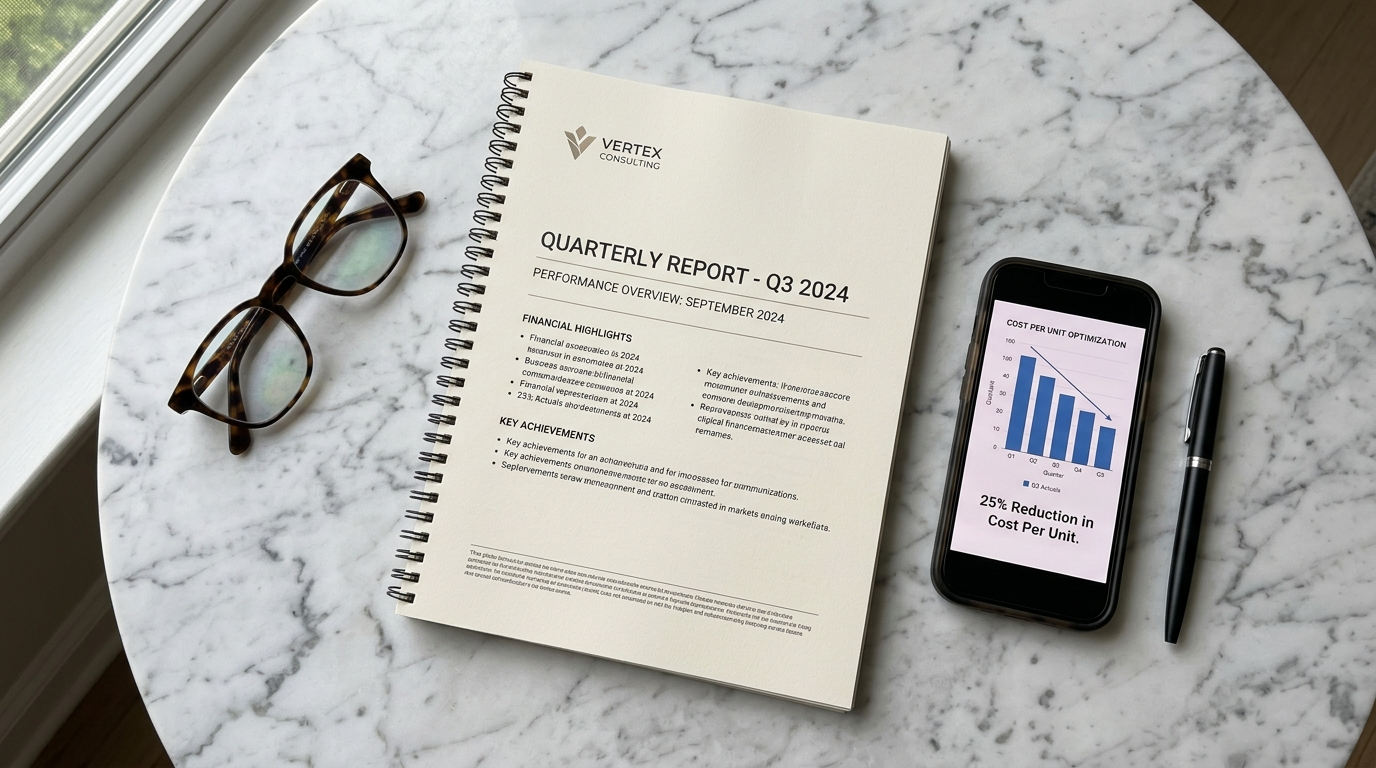
1. Maintenance Cost per Unit
Best for: Measuring the direct financial impact of AI on maintenance spend.
Why it matters: Maintenance costs rose 14.2% year-over-year according to Yardi Matrix, and the average cost of property maintenance increased 12% in 2024. That’s the headwind you’re running into. AI-driven platforms can cut maintenance costs by 14% while boosting rental income by up to 9%, according to All About AI’s analysis of industry data.
Formula: Total maintenance spend ÷ Total units managed
Pre-AI benchmark: Costs rising 12 to 14% annually.
Post-AI benchmark: McKinsey estimates 25 to 30% cost reduction for firms implementing data-driven maintenance systems. Separately, practitioners report AI-driven maintenance coordination generating more than $12 in savings per door through optimized scheduling, vendor management, and communication automation.
Where the savings come from: Fewer false emergency dispatches, reduced coordinator overtime, higher first-time fix rates, better vendor allocation, and contained routine issues that never become work orders. For a full breakdown, the maintenance AI ROI guide maps costs to savings category by category.
Savings Lever | Impact on Cost per Unit |
Reduced False Emergencies | 8–10% reduction in after-hours spend |
Increased Containment | 5–7% reduction in unnecessary truck rolls |
Vendor Optimization | 4–6% reduction via automated bidding/dispatch |
Labor Efficiency | 10% reduction in administrative overhead |
2. Tenant Satisfaction Score (CSAT)
Best for: Quantifying the tenant experience improvement from faster, more consistent maintenance.
Why it matters: 78% of prospective residents said a property management company’s online reviews were the number one factor in choosing where to live, according to Property Meld’s research. The primary driver of negative reviews? Maintenance issues. Your CSAT score is a leading indicator of your online reputation.
Formula: Average post-resolution satisfaction score (typically 1 to 5 scale)
Pre-AI benchmark: 3.5 to 3.8 out of 5.
Post-AI benchmark: 4.2+ out of 5. The AI Agent X case study showed client satisfaction rising from 76% to 94% after AI implementation.
The threshold that matters: Property Meld’s data shows that anything over 5.5 days to resolution gives you close to zero chance of a positive review. AI’s biggest CSAT impact comes from compressing response and repair times below that threshold, not from the AI interaction itself.
3. Lease Renewal Rate
Best for: Connecting maintenance performance to your most important revenue metric.
Why it matters: 46% of residents cite maintenance as a key reason for renewing their lease. On the flip side, 36% of residents who leave cite maintenance issues as the reason. With tenant turnover costing approximately $1,750 on average (and up to $4,000 per unit when you include lost rent and concessions, per NAA research), every percentage point of renewal rate improvement drops straight to the bottom line.
Formula: (Lease renewals ÷ Expiring leases) × 100
Pre-AI benchmark: Varies by market and property class.
Post-AI benchmark: Properties resolving 90%+ of requests within 48 hours see renewal rates 12% above average, per Leasey.AI data.
Leading indicators: Don’t wait for lease expiration to measure this. Track emergency frequency per unit as a leading indicator of churn. A unit that generates three emergency calls in a quarter is a retention risk regardless of whether each individual issue was resolved.
4. Preventive-to-Reactive Maintenance Ratio
Best for: Measuring the shift from firefighting to planned maintenance.
Why it matters: High-performing facilities maintain a reactive-to-preventive ratio of 20:80 or better. A ratio above 50:50 signals a program that needs structural rebalancing. The problem is that most facilities create rigorous preventive maintenance schedules but then allow day-to-day reactive demands to crowd out planned work.
Formula: (Preventive maintenance work orders ÷ Total work orders) × 100
Pre-AI benchmark: Most portfolios run at 20:80 (inverted), with reactive work dominating.
Post-AI benchmark: 80:20 preventive-to-reactive. Deloitte’s research shows that predictive maintenance increases productivity by 25%, reduces breakdowns by 70%, and lowers costs by 25%.
How AI shifts this: When AI handles reactive intake and triage automatically, coordinators get time back for scheduling and managing preventive work. The ratio improves not because you do less reactive maintenance, but because you finally have capacity for the preventive work that was always getting deprioritized.
5. Staff Productivity
Best for: Measuring operational scale without proportional headcount growth.
Why it matters: This is the maintenance AI KPI that makes the case for scaling. If AI allows each coordinator to handle 3x the work order volume, you can grow your portfolio without growing your team at the same rate. The AI Agent X case study showed manager productivity jumping 70%, and properties filling 40% faster after implementation.
Formula: Work orders processed per staff member per month
Pre-AI benchmark: Establish your current ratio before AI adoption. This becomes your comparison baseline.
Post-AI benchmark: 2 to 3x improvement in work orders processed per coordinator, based on available case study data.
What not to do: Don’t use productivity gains as justification for cutting staff. Use them to take on more doors with your existing team, improving revenue per employee rather than reducing headcount. For more on how this scaling math works, see the guide to scaling property management operations with AI.
How to Build a Maintenance AI Dashboard
Tracking 15 KPIs sounds overwhelming. It doesn’t have to be. Here’s how to structure your monitoring without drowning in data.
Start with 6 to 8 core metrics, not all 15. The quickest proof points when you first deploy AI are first response time, containment rate, and triage accuracy. These show results within days, not months. Add after-hours answer rate and vendor dispatch time for a complete operational picture.
Set review cadences by tier. Review AI-native and AI-transformed KPIs weekly. They’re operational metrics that help you tune the system. Review business-outcome KPIs monthly or quarterly. Cost per unit and renewal rates need time to reflect changes.
Always pair automation metrics with satisfaction metrics. This is the single most important dashboard design principle. If your auto-creation rate is 80% but tenant satisfaction is dropping, something is wrong. Every efficiency metric needs a quality check sitting next to it. Facilio’s team frames this well: tracking KPIs tells you what happened, but the gap between a signal and a resolved outcome is what actually matters.
Compare pre-AI and post-AI baselines. Before you turn on AI, capture 30 to 60 days of baseline data for every KPI you plan to track. Without a before number, you can’t quantify improvement, and you can’t justify the investment to owners.
Ensure your PMS integration supports the data flow. Most of these KPIs depend on timestamped events across the work order lifecycle (creation, assignment, dispatch, arrival, completion, closure). Your AI system needs to be integrated with your PMS to capture these timestamps automatically. Manual data entry defeats the purpose.
FAQ
What are maintenance AI KPIs?
Maintenance AI KPIs are specific, measurable metrics that track how effectively AI performs within property maintenance workflows. They include AI-native metrics (like triage accuracy and containment rate) that only exist because of AI, as well as traditional maintenance metrics (like MTTR and first response time) where AI dramatically shifts the expected benchmarks.
Which maintenance AI KPIs should I track first?
Start with three: first response time, containment rate, and triage accuracy. These show measurable results within the first week or two of AI deployment. They’re also the easiest to explain to stakeholders who want early proof that the system is working.
How do I measure triage accuracy if I don’t have historical data?
Sample-based auditing. Have a coordinator review 50 to 100 AI-triaged requests each week and compare the AI’s classification against their own judgment. Track accuracy by issue category. Over time, this builds the dataset you need for ongoing monitoring. Most teams find AI is stronger on common issues (plumbing, HVAC) and weaker on ambiguous or multi-issue requests.
What is a good containment rate for maintenance AI?
15 to 25% for routine requests. This means the AI successfully walks tenants through resolving one in five routine issues (breaker resets, thermostat adjustments, garbage disposal fixes) without dispatching a vendor. Always pair containment rate with tenant satisfaction scores to make sure tenants feel helped, not deflected.
How does maintenance AI reduce false emergency dispatches?
AI analyzes the details of each reported issue against trained classification models to distinguish true emergencies (gas leak, flooding, no heat in winter) from issues that feel urgent to the tenant but don’t require immediate after-hours dispatch. Industry data from Property Meld suggests roughly 40% of reported emergencies aren’t true emergencies. AI that correctly reclassifies even half of those saves significant vendor costs and reduces staff burnout from unnecessary on-call activations.
How quickly should I expect to see ROI from maintenance AI KPIs?
Operational KPIs (first response time, answer rate, auto-creation rate) improve within days. Business-outcome KPIs (cost per unit, tenant retention) take 60 to 90 days to show meaningful trends. The Go Answer case study showed a 1,200-unit operator reaching 99% answer rate and 45-second emergency response within 60 days.
Do I need a separate dashboard for maintenance AI KPIs, or can I use my PMS?
It depends on your PMS. Most property management systems track basic work order metrics but lack AI-specific fields like triage accuracy, containment rate, or emergency detection precision. You’ll likely need either a supplemental dashboard or an AI platform that reports these metrics natively. The key requirement is timestamped data across the full work order lifecycle.
How do maintenance AI KPIs differ from regular maintenance KPIs?
Regular maintenance KPIs measure what your team does (response time, repair speed, costs). Maintenance AI KPIs add a layer that measures what the AI does (classification accuracy, automated resolution, intelligent routing) and how AI changes the baselines on those traditional metrics. The three-tier framework (AI-native, AI-transformed, business outcome) captures both dimensions.
The difference between “we have AI” and “AI is actually working” comes down to measurement. These 15 maintenance AI KPIs give you the framework to prove it, from the first triage decision to the lease renewal conversation months later. If you want to see how these metrics look in practice with a system built specifically for property maintenance, book a demo with Haven and walk through the KPIs with your own portfolio data.