Collections AI Roadmap 2026: A Property Manager's Guide
Discover how a Collections AI Roadmap streamlines rent recovery with 4 phases, compliance must-knows, and KPIs for property managers. Get the guide.

TL;DR
Collections AI uses generative artificial intelligence to recover unpaid rent through adaptive, multi-channel communication, not just scheduled reminders. With multifamily delinquency hitting 1.37% in Q3 2025 (the highest since the post-GFC era), adoption urgency is at a decade high. A realistic collections AI roadmap moves through four phases: assessment, pilot, phased rollout, and optimization. This glossary defines every key term, metric, and compliance concept property managers need to understand before evaluating or implementing the technology.
Quick Answer
A Collections AI roadmap is a step-by-step implementation plan that helps property managers use artificial intelligence to recover unpaid rent more efficiently while maintaining compliance with housing and debt collection regulations. Most successful implementations follow four stages: assess existing collection processes, run a controlled pilot, expand across the portfolio, and continuously optimize using performance data. Unlike automated payment reminders, Collections AI adapts communication based on resident behavior, automates payment plan discussions, improves collection rates, shortens payment cycles, and reduces staff workload while maintaining consistent compliance.
Stage | Primary Goal | Typical Duration | Success Metric |
|---|---|---|---|
Assessment | Evaluate current collections process | 2-4 weeks | Baseline KPIs established |
Pilot | Validate AI performance | 60-90 days | Higher cure rate and faster collections |
Rollout | Expand across portfolio | 2-6 months | Staff adoption and portfolio coverage |
Optimization | Improve workflows continuously | Ongoing | CEI, ACP and delinquency improvements |
Why a Collections AI Roadmap Matters Right Now
Multifamily delinquency rates stayed between 0.23% and 0.39% during the low-interest-rate years from 2017 to mid-2022. That stability ended when the Federal Reserve began raising rates. Delinquency climbed to 0.4% by Q3 2023, reached 0.97% by Q3 2024, and jumped to 1.37% by Q3 2025, a 3.4-fold increase in two years. According to the National Multifamily Housing Council, roughly 20% of residents are expected to make late payments in a given month.
The gap between a due date and collected rent is largely a communication problem. Inconsistent follow-up, single-channel outreach, and manual escalation decisions let recoverable dollars slip into bad debt. A collections AI roadmap gives property managers a structured path to close that gap using technology designed for the task.
This glossary covers the core concepts, the technology stack, the compliance terms, the implementation phases, and the benchmarks that matter. It’s written for operations leaders at mid-market property management companies (roughly 350 to 5,000 units) who are evaluating whether to adopt collections AI and need a shared vocabulary to make that decision.
If you’re already exploring how AI fits into your property operations, Haven’s AI platform provides a starting point for understanding what’s possible across maintenance, leasing, and (soon) collections.
Who Should Use Collections AI?
Collections AI is best suited for organizations that manage recurring rental payments at scale. It delivers the greatest value when manual follow-up is becoming difficult to maintain or delinquency trends are increasing.
Organizations that benefit include:
Multifamily property managers
Apartment management companies
Build-to-rent operators
Student housing providers
Senior housing operators
Mixed-use residential portfolios
Affordable housing organizations
Property management firms managing 300+ units
Even smaller portfolios can benefit from automation, although enterprise-grade Collections AI currently targets mid-market and institutional operators.
Core Definitions
Collections AI
Collections AI refers to artificial intelligence systems that automate and optimize the recovery of unpaid rent from delinquent residents. The critical distinction: this is not the same as automated payment reminders.
True Collections AI uses generative models to run adaptive-tone outreach across multiple channels (phone, text, email), adjust message severity and timing based on each resident’s payment history, negotiate payment plans within predefined rules, and flag accounts trending toward eviction risk. It handles multi-turn conversations, meaning it can respond to questions about balances, dispute details, or repayment options in real time.
Practitioners on Reddit and property management forums consistently point out that most tools marketed as “AI rent collection” for smaller landlords are really scheduled reminders with auto-late-fee triggers. That’s automation, not AI. The distinction matters because only generative AI delivers the adaptive, personalized communication that moves the needle on collection rates.
Delinquency Management
The operational discipline of tracking, communicating about, and recovering unpaid rent. In property management, delinquency management is first-party collections: the management company collects on behalf of the property owner, not as a third-party debt collector. This distinction shapes both strategy and compliance obligations (more on that below).
Predictive Delinquency Scoring
AI-based analysis of payment patterns, lease data, and behavioral signals to identify which residents are likely to miss upcoming payments. The system assigns risk scores and can trigger proactive outreach before a payment is actually missed. Think of it as a credit-risk model applied at the individual resident level within your portfolio.
For predictive scoring to work, the underlying data must be clean and current. This is why PMS data quality is treated as a prerequisite, not an afterthought, in any collections AI roadmap.
Adaptive-Tone Outreach
The ability of a Collections AI system to adjust the language, urgency, and emotional register of its messages based on context. A first-time late payer with a five-year tenancy gets a friendly nudge. A chronically delinquent account with no communication history gets a firmer, more direct message. EliseAI, for example, automates rent collection through tailored communication that shifts between friendly and firm depending on past behavior.
Collections Effectiveness Index (CEI)
The benchmark metric for measuring how much of your collectible receivables were actually recovered in a given period. CEI is calculated by dividing total collections by total collectible receivables and expressing it as a percentage. A CEI above 80% is generally considered good; elite operations push above 90%.
Average Collection Period (ACP)
The average number of days it takes to convert a rent charge into collected cash. Lower is better. One Brookfield Multifamily pilot with EliseAI sped up payments by an average of 14 days, illustrating what’s possible.
Cure Rate
The percentage of delinquent accounts that return to current status without requiring eviction or legal action. A high cure rate signals that your collections process is recovering money while preserving the resident relationship.
The Technology Stack
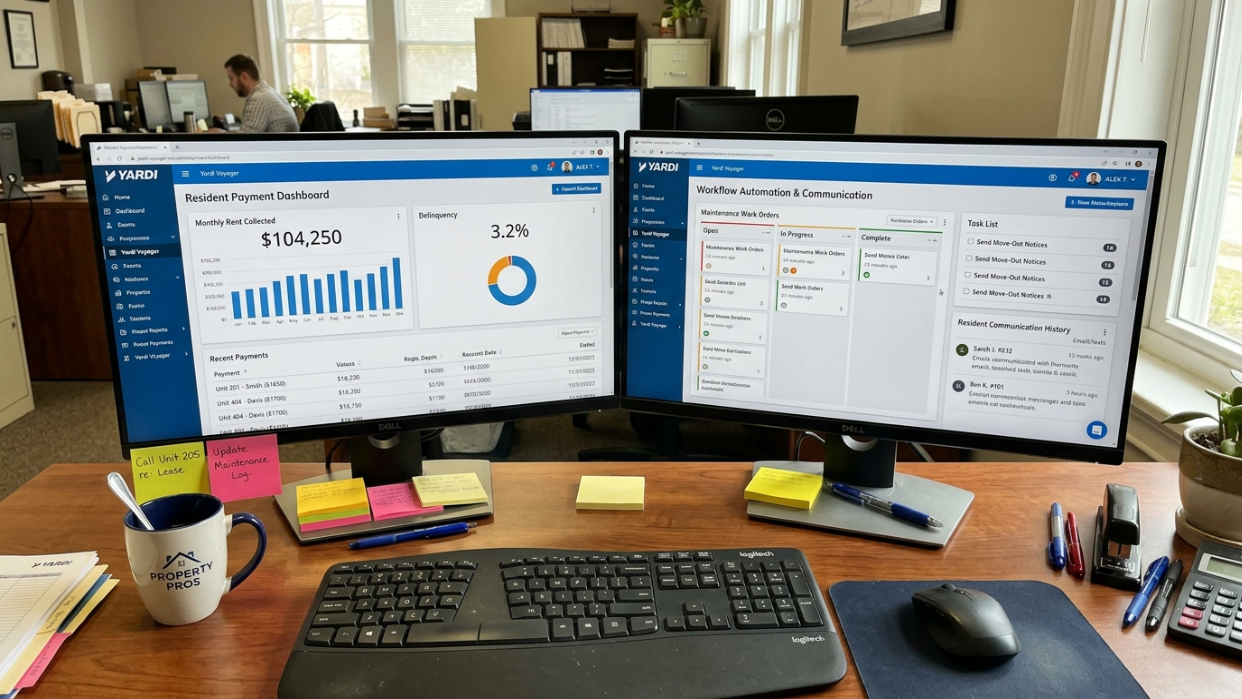
Building a collections AI roadmap requires understanding the key technology components that make these systems work.
Multi-Channel Engagement
Collections AI communicates with residents across voice calls, SMS, and email. The system determines which channel and what time of day is most likely to get a response from each individual resident. This matters because missed rent payments are often a reachability problem: one channel isn’t enough.
For more context on how AI-driven communication works around the clock, see this guide on 24/7 tenant communication tools.
PMS Integration
Collections AI must read from and write back to your property management system. It pulls ledger balances, payment histories, and lease terms. It pushes back communication logs, payment plan details, and status updates. Without tight PMS integration, the AI operates in a silo and your team doubles their data entry work.
Haven’s existing products (Maintenance AI, Leasing AI) already integrate directly with PMS systems like AppFolio to create work orders, assign tickets, and log notes. This integration depth is foundational for any future collections capability.
Payment Plan Automation
When a resident can’t pay the full balance, Collections AI can negotiate and structure a repayment plan within rules set by the property manager. The system arranges terms, sends confirmation, manages automatic reminders for each installment, and alerts staff if a plan falls off track.
Demand Notice Generation
Large portfolios may need to generate over 1,000 demand notices per month. Collections AI automates the creation of these legal documents, allowing staff to review, sign, and print batches in minutes rather than hours. This is one of the highest-ROI automation points in the collections workflow.
Escalation Rules
Every collections AI roadmap must define when the AI hands off to a human or triggers a legal process. Escalation rules determine the thresholds: after a certain number of days delinquent, after a certain dollar amount, or after a certain number of failed contact attempts, the system notifies property managers and suggests next steps (such as initiating eviction proceedings or engaging legal counsel).
Understanding how AI escalation rules work in practice, including the human-in-the-loop model, is essential before deployment.
Audit Trail
Every AI-generated communication must be logged. The system saves each interaction (what was sent, when, through which channel, and the resident’s response) to create a complete audit trail. This record is critical for compliance, dispute resolution, and eviction proceedings.
Benefits vs Challenges of Collections AI
Benefits | Challenges |
|---|---|
Faster rent collection | Initial implementation effort |
More consistent resident communication | Data quality requirements |
Reduced manual follow-up | Staff training |
Better payment plan management | Vendor integration complexity |
Lower bad debt | Compliance oversight |
Improved reporting | Change management |
Compliance Terms Every Collections AI Roadmap Must Address
Collections AI operates in one of the most heavily regulated corners of property management. Any roadmap that skips compliance is incomplete.
FDCPA (Fair Debt Collection Practices Act)
The federal baseline for collections communication. Under 15 U.S.C. § 1692e, all communications must be clear and not misleading. Dynamic or automated messaging increases the risk of inconsistency, which means the AI’s language models must be constrained to produce only compliant output. The FDCPA also prohibits contact outside the 8 a.m. to 9 p.m. window in the resident’s time zone.
TCPA (Telephone Consumer Protection Act)
Governs consent requirements for automated outreach. Under 47 U.S.C. § 227, AI may trigger outreach based on risk signals, but it must comply with consent requirements for automated calls and texts. Proper opt-in documentation is not optional.
Regulation F
The CFPB’s rule implementing the FDCPA, which sets specific limits on contact frequency and channel usage. Collections AI must track cumulative contact attempts and respect the caps.
First-Party vs. Third-Party Collections
This distinction is critical and often overlooked. Property management collections is first-party: the management company is collecting on behalf of the property owner, not purchasing or reselling debt. The first 90 days of delinquency are where outcomes get shaped, and strategies during this window differ significantly from third-party collection tactics. Some FDCPA provisions apply differently (or not at all) to first-party collectors, but state laws vary widely.
For a deeper treatment of how AI compliance intersects with Fair Housing, see this compliance and Fair Housing guide.
Why Compliance Must Be Embedded, Not Bolted On
The best collections AI platforms incorporate FDCPA, TCPA, Reg F, and Fair Housing constraints directly into system logic. Compliance rules are hardcoded into workflows rather than left to individual agent discretion. This is a structural advantage of AI over manual collections: the system never forgets a rule, never calls at 9:15 p.m., never sends a misleading message because it’s been a long day.
Roadmap Phases: From Assessment to Optimization
A realistic collections AI roadmap follows four phases. Rushing past any of them creates risk.
Phase 1: Assessment
Audit your current collection cadence. Map every touchpoint: when do reminders go out, through which channels, who follows up, and at what threshold does someone escalate? Identify process gaps, especially where communication falls through the cracks.
Benchmark your current delinquency rate and collection velocity against institutional standards. Quantify the NOI impact of closing the performance gap. This financial case is what gets budget approval.
Data readiness matters here. Collections AI depends on accurate ledger data from your PMS. If balances are wrong, payment histories are incomplete, or resident contact information is stale, the AI will underperform. Assess data quality before selecting a vendor.
For a structured approach to this assessment, the AI implementation timeline guide lays out prerequisites and realistic scheduling.
Phase 2: Pilot
Test on a subset of properties. Choose properties that represent your portfolio’s diversity (different unit counts, resident demographics, delinquency rates). Run the AI alongside your existing process for a defined period, typically 60 to 90 days, and measure against a control group.
Key metrics to track during the pilot: cure rate change, ACP change, CEI change, resident satisfaction scores, and staff time saved. Document every compliance question that arises.
Phase 3: Phased Rollout
Expand the system across the portfolio with governance, training, and monitoring in place. Don’t flip the switch for every property on the same day. Roll out in waves, using each wave’s results to refine configuration before the next.
Training is the part that most collections AI roadmap documents underestimate. Staff need to understand what the AI is doing, when it will escalate to them, and how to handle the handoff. Operators who already use AI for scaling operations report that the human-AI handoff is where most early friction occurs.
Phase 4: Optimization
Use the AI’s own analytics to refine escalation thresholds, communication cadence, tone settings, and channel preferences. This phase never truly ends. Delinquency patterns shift with economic conditions, and the system should adapt continuously.
Real-time dashboards should surface the KPIs that matter: CEI, ACP, delinquency bucket roll rates, cure rates, and cash flow forecasts.
Common Collections AI Implementation Mistakes
Organizations frequently struggle with Collections AI because they overlook operational readiness rather than the technology itself.
Common mistakes include:
Deploying AI before cleaning PMS data
Measuring only collection rate instead of payment velocity
Skipping staff training
Poor escalation rules
Ignoring Fair Housing considerations
Over-automating sensitive resident situations
Running pilots without baseline metrics
Choosing reminder software instead of true AI
KPIs and Benchmarks
What does “good” look like? Here are the benchmarks from real-world collections AI deployments.
On-time payment improvement: Asset Living communities using EliseAI’s delinquency product saw a 600 basis point increase in on-time rent payments in Q2 2025, sending over 130,000 personalized payment reminder messages.
Collection rate improvement: One apartment operator reported a 40% improvement in collections across its portfolio after implementing AI collections. Colleen AI’s platform (now part of Entrata ELI+) reported reducing unpaid rent by 40% and increasing collection success rates by 20%.
Payment velocity: Brookfield Multifamily’s pilot boosted collections by 2% and sped up payments by an average of 14 days.
Late payment reduction: Across the industry, AI-driven collections cut late payments by 15% to 25% through more personalized communication.
Delinquency rate reduction: At one major US firm, delinquency rates dropped by approximately 100 basis points, and the time to reach 95% collection fell by seven days.
Staff time savings: Operators report saving up to 80% of the time their teams previously spent on manual collection calls and follow-ups.
For a broader look at how these metrics connect to overall AI ROI in property management, that guide covers the financial framework.
Collections AI vs Traditional Rent Collection
Feature | Traditional Collection | Collections AI |
|---|---|---|
Outreach | Manual | Automated and adaptive |
Communication | One channel | SMS, voice, email |
Personalization | Limited | AI-driven |
Payment plans | Manual negotiation | Automated within policy |
Compliance | Staff dependent | Rules-based |
Documentation | Manual | Automatic |
Reporting | Limited | Real-time dashboards |
Scalability | Staff limited | Portfolio-wide |
The Current Vendor Landscape (2026)

The collections AI market has consolidated significantly. Only two platforms run genuine generative AI on collections today:
EliseAI DelinquencyAI is the market leader in enterprise collections AI, used by firms like Brookfield, Asset Living, and Cardinal Group. It handles adaptive-tone communication, payment plan negotiation, demand notice generation, and escalation management. Pricing is quote-only and geared toward large portfolios.
Entrata ELI+ acquired Colleen AI in June 2024 and folded its collections engine into Entrata’s broader AI layer. Like EliseAI, this is an enterprise product with no published pricing.
The consolidation tells a clear story. Both genuine collections AI products got absorbed upmarket into enterprise suites. Mid-market operators, those managing roughly 350 to 5,000 units, are left choosing between enterprise products built for much larger portfolios or basic automation tools that call themselves AI but aren’t.
Haven lists Collections AI as a coming-soon product on its roadmap, alongside Vendor AI. Haven already operates AI agents for maintenance and leasing that integrate with PMS systems and take real operational actions. Its existing product architecture, including voice-first communication, PMS write-back, and multi-channel capabilities, maps directly to the requirements of collections AI. For mid-market operators watching the collections AI space, comparing current vendors is worth the time.
An Underappreciated Benefit: Bias Reduction
Cardinal Group reported that Collections AI removed bias from the collections process and took the stress off apartment managers. This deserves more attention than it typically gets.
Manual collections involves uncomfortable conversations, and human collectors inevitably bring inconsistencies. They might follow up more aggressively with certain residents, use different tones with different demographics, or simply avoid making calls because the conversations are unpleasant. AI standardizes every interaction. Every resident gets the same rules-based treatment regardless of who they are. That’s a Fair Housing argument as much as an efficiency argument, and it reduces a real source of team burnout.
Related Terms and Concepts
NOI (Net Operating Income): The financial metric most directly impacted by collections performance. Every dollar of uncollected rent flows straight through to NOI. A 2% improvement in collection rates on a 500-unit portfolio can represent hundreds of thousands of dollars annually.
Bad Debt Write-Off: What happens when collections fails completely. The uncollected balance is removed from receivables and recorded as an expense. Collections AI aims to minimize this number by intervening earlier and more persistently.
Payment Velocity: The speed at which rent moves from due to collected. Faster payment velocity improves cash flow predictability and reduces the need for operating reserves or credit facilities.
Human-in-the-Loop: The hybrid model where AI handles routine communications and escalates complex situations to human staff. No collections AI roadmap should propose fully autonomous operation. Eviction decisions, legal notice approvals, and hardship exceptions all require human judgment.
For guidance on how AI reduces the volume of manual calls your team handles (freeing them for the high-judgment work), see this piece on AI call volume reduction.
Frequently Asked Questions
How is Collections AI different from the automated reminders in my PMS?
Automated reminders send the same message to every resident on a fixed schedule. Collections AI uses generative models to adapt tone, timing, and channel based on each resident’s payment history. It handles multi-turn conversations, negotiates payment plans, and makes escalation decisions. The difference is between a timer and an agent.
What delinquency rate should trigger a Collections AI evaluation?
There’s no single threshold, but the math is straightforward. If your delinquency rate is above institutional benchmarks (currently around 1.37% for multifamily CMBS) and your manual collections process can’t keep up, the ROI case is strong. Most operators begin evaluating when they see delinquency climbing for two or more consecutive quarters.
Does Collections AI replace my collections staff?
No. It replaces the repetitive outreach, follow-up, and documentation work that consumes most of a collector’s day. Staff shift to handling escalations, approving payment plans, making judgment calls on hardship cases, and managing eviction proceedings. The AI handles volume; humans handle complexity.
What compliance risks should I watch for?
FDCPA message accuracy, TCPA consent for automated calls and texts, Reg F contact frequency limits, and Fair Housing consistency are the big four. The best platforms embed these rules into system logic so compliance isn’t dependent on individual judgment. Make sure any vendor you evaluate can demonstrate how their system enforces these constraints.
How long does a typical Collections AI pilot take?
Most pilots run 60 to 90 days across a subset of properties. You need enough time to observe full delinquency cycles and generate statistically meaningful comparisons against a control group. Plan for two to four weeks of setup and configuration before the pilot clock starts.
What data do I need before implementing Collections AI?
At minimum: accurate resident contact information, current ledger balances, payment history, and lease terms in your PMS. If your PMS data is incomplete or frequently out of date, fix that first. Collections AI trained on bad data will produce bad results.
Are mid-market operators being left behind in the Collections AI space?
Currently, yes. The two genuine collections AI platforms (EliseAI and Entrata ELI+) are enterprise products with pricing and implementation models designed for large institutional portfolios. Mid-market operators managing 350 to 5,000 units are underserved. This is exactly the gap that newer entrants like Haven are positioning to fill.
What ROI can I realistically expect?
Published benchmarks range from a 2% boost in collections (Brookfield pilot) to a 40% reduction in unpaid rent (Colleen AI/Entrata). Most operators should plan conservatively for a 15% to 25% reduction in late payments and a 7 to 14 day improvement in payment velocity. Run the numbers against your portfolio’s current bad debt to build the business case.
If you’re building a business case for collections AI or evaluating where AI fits into your property management operations today, book a demo with Haven to see how its existing AI agents work across maintenance and leasing, and learn about its upcoming collections product.