AI Implementation Timeline PMS: 2026 Property Manager Guide
AI Implementation Timeline PMS explained: 2–6 weeks for AI agents, 8–24 weeks for migrations. See phases, pitfalls, and ROI. Get the 2026 playbook.

TL;DR
An AI implementation timeline for a PMS typically ranges from 2 to 12 weeks when adding an AI agent on top of your existing property management system, and 2 to 6 months when migrating to an entirely new AI-native platform. The biggest delays come from dirty data, not software setup. Property managers should track three separate timelines: technical go-live, team adoption, and ROI payback.
AI Implementation Timeline PMS: Direct Answer
For most property managers, implementing AI into an existing property management system takes 2 to 6 weeks when adding an AI layer through API integrations. Full replacement of a legacy PMS with an AI-native platform generally requires 2 to 6 months, depending on portfolio size, data quality, integrations, and staff training.
Typical implementation timeline:
Stage | Typical Duration |
|---|---|
Vendor Selection | 3–10 days |
Data Audit | 1–2 weeks |
PMS Integration | 1–3 weeks |
Testing | 1–2 weeks |
Staff Training | 2–4 weeks |
Optimization | 30–90 days |
Most delays come from poor data quality rather than software installation.
What “AI Implementation Timeline PMS” Actually Means
The AI implementation timeline for a PMS refers to the total elapsed time from vendor selection through full operational deployment of an artificial intelligence tool connected to your property management system. It covers everything: data auditing, API integration, configuration, testing, staff training, and the period after go-live when the AI learns your portfolio’s patterns.
Here’s the number most property managers are looking for: 2 to 6 weeks for purpose-built AI agents that layer on top of an existing PMS. Platform migrations take longer, typically 60 to 90+ days.
That range matters because the timeline directly affects your budget, your staffing plan, and when you can promise your owners that the new technology is working. Getting it wrong, in either direction, creates problems. Underestimate and you rush through training. Overestimate and your team loses momentum.
Explore how AI agents integrate with property management systems before diving into the timeline details.
Quick-Reference Timeline Table
Implementation Type | Typical Timeline | What Determines Speed |
|---|---|---|
AI agent add-on (leasing assistant, maintenance coordinator, tenant chatbot) | 2–6 weeks | Data cleanliness, PMS API access, team availability for training |
AI-native PMS migration (moving from legacy system to a new platform) | 8–24 weeks | Portfolio size, data migration complexity, number of integrations |
Enterprise-wide custom deployment (custom models touching accounting, maintenance, leasing) | 6–12 months | Custom development, compliance review, multi-system integration |
Most property managers searching for AI implementation timeline guidance fall into the first category. They already have a PMS they’re comfortable with and want to add AI capabilities without ripping out their existing workflows.
The Three Timelines Property Managers Should Track
This is where most vendor conversations go sideways. When a salesperson says “you’ll be live in two weeks,” they usually mean the software will be technically functional. That’s only one of three timelines you should care about.
1. Technical Go-Live
This is when the AI answers its first call, creates its first work order, or responds to its first leasing inquiry. For pre-built SaaS tools, technical go-live happens in 1 to 4 weeks. The AI is connected to your PMS, data is flowing, and the system is operational.
But operational is not the same as useful.
2. Team Adoption
This is when your staff actually trusts and uses the system reliably, when your maintenance coordinator stops double-checking every AI-generated work order and your leasing team forwards calls to the AI instead of picking up the phone themselves. Team adoption typically takes 4 to 8 weeks after go-live.
The gap between tech investment and training is significant. A Deloitte survey found that 70% of real estate firms increased their technology spending post-pandemic, but only 28% had a formal tech training program in place. That mismatch explains why so many “implementation failures” are really adoption failures.
3. ROI Payback
Most properties see initial time savings within 30 to 60 days, but full AI capability utilization typically takes about 90 days as the system learns your specific patterns, vendor preferences, and tenant behavior. Financial ROI, including reduced errors, protected revenue, and faster decisions, usually becomes clear within 3 to 12 months.
For a deeper look at the financial benchmarks, read about AI property management ROI and how firms are measuring returns.
Traditional Software vs AI Implementation
Traditional PMS Upgrade | AI Layer Deployment |
|---|---|
Often requires migration | Usually no migration |
Months of retraining | Minimal retraining |
New workflows | Existing workflows remain |
Higher disruption | Lower disruption |
Longer ROI | Faster ROI |
Phase-by-Phase Breakdown
Here’s what a realistic AI implementation timeline looks like for a property manager adding an AI agent to their existing PMS. The phases overlap, and the total duration depends on your data readiness and team capacity.
Phase 1: Discovery and Data Audit (Week 1–2)
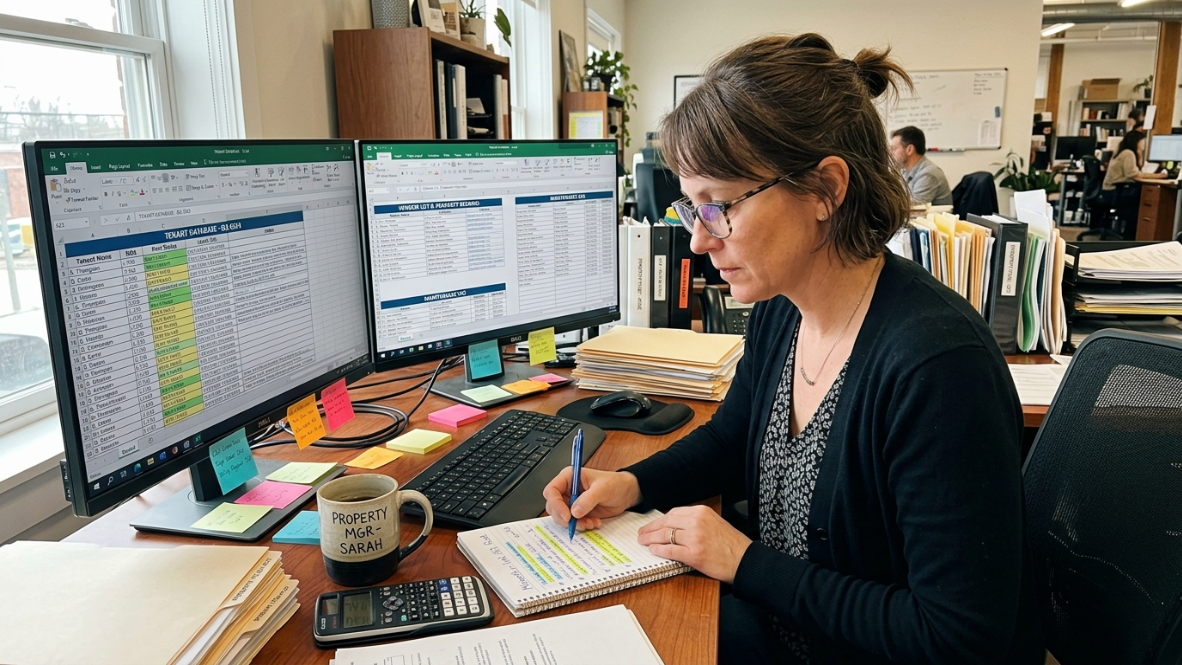
Before any software gets configured, you need to understand what you’re working with. This phase includes a system assessment, data mapping, and integration planning. The vendor reviews your PMS setup, identifies which APIs or middleware connections are needed, and flags any data quality issues.
This is where you discover whether your vendor lists are consistent, whether your unit data has gaps, and whether you have duplicate tenant records that will confuse the AI. Practitioners on Reddit frequently report that this discovery phase is where they first realize how messy their PMS data actually is.
Phase 2: PMS Integration and Configuration (Week 2–4)
The vendor connects to your PMS through API or middleware, configures workflows, and maps your data fields. For tools connecting to systems like AppFolio, this involves setting up read-write API access, enabling work order creation, and configuring tenant communication channels.
AppFolio-specific implementations typically take 2 to 4 weeks from signup to fully operational, with an assigned onboarding specialist who walks through property setup, bank account connections, and team training.
Phase 3: Testing and QA (Week 3–5)
This overlaps with integration work. You’re validating that the AI creates work orders correctly, routes maintenance requests to the right vendors, and responds to leasing inquiries with accurate property information. Testing should include edge cases: emergency maintenance triage, after-hours calls, and inquiries about units that are mid-turnover.
Organizations that use phased rollouts report 35% fewer critical issues during implementation compared to those attempting portfolio-wide deployment all at once. Starting with a single high-friction workflow, like maintenance request intake, builds internal confidence before scaling.
Phase 4: Staff Training and Soft Launch (Week 4–6)
Training is where the timeline investment pays off or falls apart. You need your team to understand what the AI does, what it doesn’t do, when to intervene, and how to review its outputs. Allocate 20 to 30% of the total implementation timeline to this phase.
A common mistake is treating training as a single session. It works better as a rolling process: initial training during soft launch, then weekly check-ins for the first month, then monthly reviews. For guidance on avoiding training-related pitfalls, see common maintenance AI mistakes and how to fix them.
Phase 5: Full Deployment and Monitoring (Week 5+)
The AI handles live interactions across your full portfolio. You’re monitoring performance, adjusting automation rules, and refining vendor dispatch preferences. Most AI systems need 30 to 60 days of learning on real data before they reach peak accuracy.
Book a demo with Haven to see how this phased approach works for maintenance and leasing AI specifically.
Typical AI Implementation Costs
Implementation time directly affects implementation cost. While pricing varies by vendor, most property managers can expect the following ranges.
Deployment Type | Typical Timeline | Typical Implementation Cost |
|---|---|---|
AI Leasing Assistant | 2–4 weeks | Low |
AI Maintenance Coordinator | 2–6 weeks | Low to Medium |
AI Layer Across PMS | 3–8 weeks | Medium |
AI Native PMS Migration | 2–6 months | High |
Enterprise Custom AI | 6–12 months | Very High |
What Slows Implementation Down (and How to Avoid It)
Across every source and practitioner account, the same bottlenecks appear. The software setup is almost never the problem. Here’s what actually delays things.
Dirty PMS Data
This is the number one delay. Data migration and integration consume the largest share of the timeline, and no vendor can shortcut around it. AppFolio explicitly states that AI depends on clean and reliable data, and that all core business processes need to be digitized and standardized within a single system of record before AI implementation.
Concrete examples of “dirty data” that cause delays: inconsistent vendor names (is it “ABC Plumbing,” “ABC Plumbing LLC,” or “ABC Plumb”?), missing unit numbers, duplicate tenant records, and maintenance categories that don’t match across properties.
How to avoid it: Run a data audit before you sign with any vendor. Clean up vendor lists, standardize unit naming conventions, and merge duplicate records. Two weeks of data cleanup upfront can save a month of troubleshooting later.
No Internal Champion
Someone on your team needs to own this project. Without a designated point person who coordinates between your staff, your PMS admin, and the AI vendor, decisions stall. Emails go unanswered. Configuration questions sit in limbo.
Skipping the Training Plan
This is the 70/28 problem mentioned earlier: firms spend on technology but not on teaching people how to use it. If you don’t schedule training time, your team will work around the AI instead of with it. Build training into the timeline as a required phase, not an afterthought.
Compliance Review Bottleneck
If your AI will handle tenant screening, communications, or leasing decisions, Fair Housing compliance review is non-negotiable. HUD’s May 2024 guidance confirms that the Fair Housing Act’s disparate-impact standard applies to algorithmic and AI-driven tenant screening. The 2024 SafeRent settlement of $2.275 million shows the real financial exposure.
Plan for a compliance review phase, especially for leasing AI. Read the full Fair Housing compliance guide for details on what to audit.
Common AI Implementation Mistakes
Many implementation delays are preventable.
The most common mistakes include:
Trying to automate every workflow at once
Migrating data without cleaning it first
Skipping staff training
No executive sponsor
Poor communication with onsite teams
Ignoring Fair Housing compliance
Measuring go-live instead of business outcomes
Not defining KPIs before implementation
Avoiding these mistakes can shorten implementation by several weeks.
“AI Layer” vs. “Platform Swap”: Know Which You’re Doing
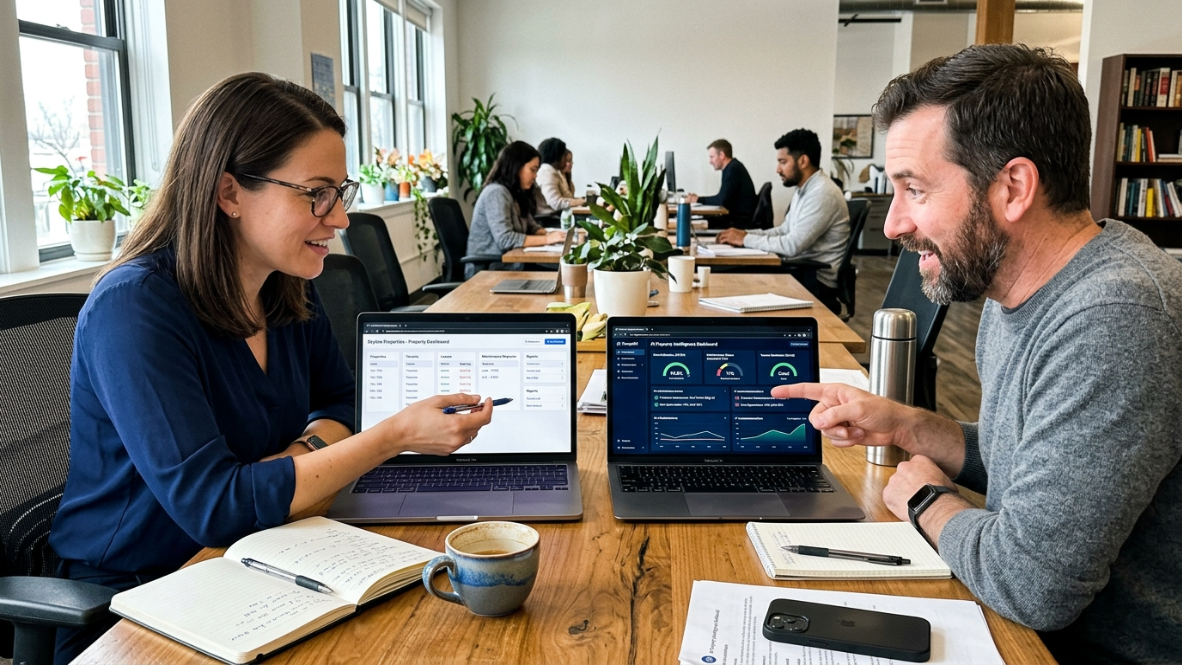
These are two fundamentally different implementation paths, and confusing them is a common source of timeline miscalculation.
The Layer Approach
You keep your existing PMS (AppFolio, Yardi, Buildium, RentManager) and add a specialized AI agent on top. No data migration. No platform learning curve. The timeline is integration plus training only, which means days to weeks for simple tools and 2 to 6 weeks for comprehensive AI agents.
This is the faster path. Tools like Haven connect to your existing PMS through API integrations and take operational actions (creating work orders, dispatching vendors, scheduling tours) without requiring you to abandon your current system.
For a closer look at how this works with specific platforms, see the AppFolio AI integration guide.
The Platform Swap
You’re replacing your legacy PMS with an AI-native platform. This means full data migration, team retraining on a new interface, and reconfiguring every workflow. Migrating into a new system is described as “a real project, not a weekend task,” with data migration and training typically taking 4 to 12 weeks.
The platform swap makes sense when your current PMS is fundamentally limited, when it lacks API access, when its data structure won’t support automation, or when you’re scaling rapidly and need a system built for your next stage of growth. But it’s a 2x to 5x timeline commitment compared to the layer approach.
When Each Approach Makes Sense
Choose the layer approach when your current PMS works well for accounting, reporting, and day-to-day operations, and you just need AI for specific functions like maintenance triage or leasing response. Choose the platform swap when your current system is the bottleneck, when it can’t support integrations, or when you’re consolidating multiple systems.
Typical AI Deployment by PMS
PMS | AI Layer | Full Migration Required |
|---|---|---|
AppFolio | Yes | No |
Buildium | Yes | No |
Yardi | Yes | No |
Rent Manager | Yes | No |
Entrata | Yes | Rarely |
Which AI Implementation Path Fits Your Property?
If Your Situation Is... | Best Choice |
|---|---|
Happy with current PMS | AI Layer |
Need AI maintenance only | AI Layer |
Need AI leasing only | AI Layer |
Current PMS lacks APIs | Platform Migration |
Multiple disconnected systems | Platform Migration |
Rapid portfolio expansion | Depends on future growth plans |
Legacy software nearing replacement | Platform Migration |
2026 Industry Context: Why Timelines Are Shrinking
The AI implementation timeline for property management is getting shorter, and the pressure to move quickly is getting stronger. Here’s what the numbers say.
AI adoption among property managers surged from 21% in 2024 to 34% in 2025. Buildium and NARPM’s survey showed an even more dramatic jump: from 20% to 58% in a single year, meaning a majority of professionals are now augmenting at least one business process with AI.
The performance gap is widening. Firms that have broadly adopted AI expect an average portfolio growth of 31% in 2026, nearly triple the 12% growth anticipated by those yet to implement the technology.
At the same time, a significant trust gap persists. 78% of survey respondents report that they cannot yet rely on the AI features in their legacy property management software. That gap is driving demand for third-party AI agents that specialize in specific workflows rather than trying to be everything.
For the full picture on where the industry is headed, see AI property management statistics.
Agentic AI Changes What “Implementation” Means
The shift to agentic AI, where AI doesn’t just respond to prompts but autonomously manages workflows, is changing the implementation equation. Entrata announced an agentic PMS with more than 100 embedded AI agents in March 2026. AppFolio shipped its Realm-X agentic workflows in mid-2025.
The practical difference: a feature drafts a renewal letter when you ask; an agent watches the expiration calendar, drafts the letter, sends it, books the renewal call, and updates the record. When you’re “implementing AI,” you’re now handing over a workflow, not installing a button. That means the testing and trust-building phases of your timeline become more important, even as the technical setup gets faster.
Organizations using AI in property management report a 20 to 30% improvement in operational efficiency. AI can reduce errors in lease administration by up to 42% and save property managers up to 10 hours per week.
How to Compress Your AI Implementation Timeline
Based on everything above, here are concrete steps to move faster without cutting corners.
Audit your data before you talk to vendors. Two weeks of cleanup now saves a month later.
Start with one workflow. Maintenance request intake or leasing inquiry response, not everything at once.
Assign an internal champion. One person who owns the project and has authority to make decisions.
Schedule training as a phase, not an event. Block time weekly for the first month post-launch.
Choose the layer approach if your PMS works. Adding AI on top of an existing system is fundamentally faster than migrating platforms.
Run compliance review in parallel. Don’t wait until the end to involve your legal team or compliance officer.
See how Haven’s AI agents work within your existing PMS, with no platform migration required.
Frequently Asked Questions
How long does it take to implement AI for maintenance requests?
For a purpose-built maintenance AI that connects to your existing PMS, expect 2 to 4 weeks for technical go-live. This includes API integration, workflow configuration, vendor list setup, and emergency triage rules. Full team adoption typically follows 4 to 8 weeks after that. Read more in the AI maintenance coordinator guide.
How long does leasing AI take to implement?
Leasing AI follows a similar 2 to 6 week timeline for go-live, but may require additional configuration for listing site integrations (Zillow, Apartments.com), lead qualification rules, and tour scheduling logic. Compliance review for Fair Housing adds time if your AI handles screening-adjacent communications. The leasing AI implementation roadmap breaks this down step by step.
Do I need to migrate my PMS to use AI?
No. Most property managers add AI as a layer on top of their current PMS. This avoids the 8 to 24 week data migration timeline entirely. You only need to migrate if your current system lacks API access or has fundamental data structure limitations.
What if my PMS data is messy?
Dirty data is the single biggest implementation delay. Before starting, clean up vendor names, standardize unit numbering, merge duplicate tenant records, and ensure your property data is complete. If your data needs significant work, budget an extra 2 to 4 weeks before the AI timeline even starts.
What’s the difference between go-live and seeing ROI?
Go-live is when the AI handles its first real interaction. ROI is when the time savings, error reduction, and revenue protection add up to measurable financial returns. Go-live can happen in weeks. ROI typically takes 3 to 12 months, as the system learns your data and the compounding benefits accumulate.
How much of the timeline should go to staff training?
At least 20 to 30%. Training is the most commonly underinvested phase. Schedule initial training during soft launch, weekly check-ins for the first month, and monthly reviews after full deployment. The technology is only as good as your team’s willingness to use it.
Does Fair Housing compliance add to the implementation timeline?
Yes, and it should. Any AI that touches tenant screening, leasing communications, or application processing should go through a compliance review. Plan for 1 to 3 weeks of legal and compliance review running in parallel with your technical implementation. Don’t treat this as optional.
Will AI implementation require me to hire more people?
Not necessarily for the implementation itself, but AI adoption is driving headcount growth, not replacement. According to the AppFolio 2026 benchmark survey, 34% of AI adopters plan to increase headcount to support expanded operations, compared to 25% of non-users. AI handles the repetitive work so your team can focus on higher-value tasks.