PMS API and AI: 2026 Playbook for Read/Write Access
Master PMS API and AI in 2026—learn read vs. write access, tier gating, and platform limits. Compare options and must-ask questions. Book a demo.

TL;DR
A PMS API is the connection point that determines whether an AI tool can actually take actions inside your property management software, or just read data from it. Not all PMS platforms offer the same level of API access, and the difference between read-only and read/write access is the difference between AI that informs you and AI that works for you. This guide breaks down how PMS APIs and AI work together, compares access across major platforms, and gives you the questions to ask before buying any AI tool that claims “PMS integration.”
Property management runs on software. Tenant records, lease terms, work orders, vendor lists, accounting, communication logs: it all lives inside your PMS. But here’s the problem. That system of record is only as useful as what can connect to it.
AI tools promise to automate maintenance intake, leasing follow-ups, vendor dispatch, and dozens of other repetitive tasks. Whether they actually deliver depends almost entirely on one thing: the API connection between the AI and your PMS.
This is the technical handshake that most vendors gloss over. Understanding it will save you from buying tools that sound impressive in a demo but can’t do anything meaningful inside your actual system.
Book a demo to see how Haven’s AI agents connect directly to your PMS and take real operational actions.
A PMS API (Property Management System API) is the software interface that allows AI tools, CRMs, accounting platforms, maintenance software, and other applications to securely exchange information with your property management system.
For AI, API capabilities determine whether the software can:
Read tenant and property data
Create maintenance work orders
Update lease records
Log conversations
Dispatch vendors
Trigger automated workflows
The biggest distinction is read-only vs. read/write API access.
Read-only APIs allow AI to retrieve information.
Read/write APIs allow AI to perform real operational tasks inside the PMS.
If your PMS only supports read-only access, automation will always require manual staff intervention.
PMS API Access at a Glance
PMS | API Available | Read/Write | Tier Restrictions | Best For AI Automation |
|---|---|---|---|---|
AppFolio | Yes | Read (Plus), Read/Write (Max) | Yes | Excellent on Max |
Rentvine | Yes | Read/Write | No | Excellent |
Buildium | Yes | Limited | No | Good |
Entrata | Yes | Read/Write | Partnership approval | Very Good |
Rent Manager | Yes | Varies | Some | Good |
Yardi | Limited | Module dependent | Partnership | Fair |
RealPage | Limited | Varies | Enterprise | Fair |
What Is a PMS API?
Let’s start with the basics.
PMS stands for Property Management System. It’s the central software where you manage everything: tenant data, lease agreements, maintenance requests, vendor information, rent collection, and communications. The major platforms in residential property management are AppFolio, Yardi, Buildium, RealPage, Rent Manager, and Entrata.
API stands for Application Programming Interface. In plain terms, an API is a set of rules that lets two software systems talk to each other. When an AI tool connects to your PMS via API, the API defines exactly what data the AI can see, what actions it can take, and how it proves it has permission to do those things.
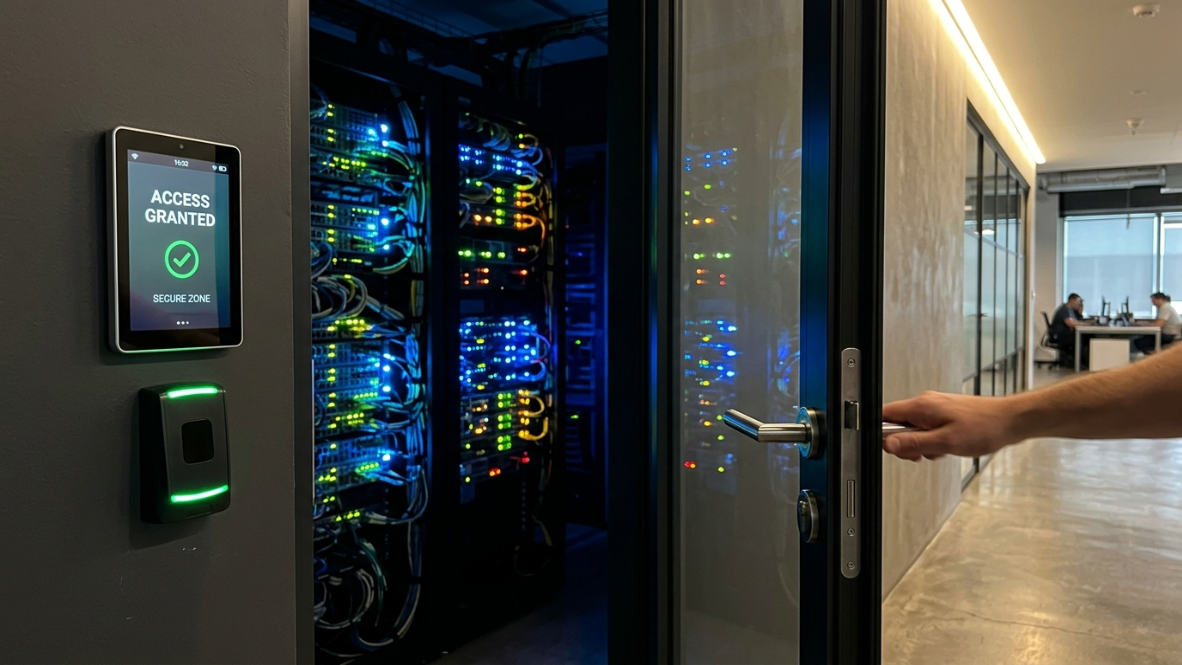
Think of it this way: the PMS is the building, and the API is the door. Some doors are wide open. Some require a special key. Some are locked entirely.
Most PMS APIs follow a pattern called REST (Representational State Transfer), which uses standard web protocols to exchange data. You’ll also encounter webhooks, which are real-time notifications that fire when something specific happens, like a new maintenance request being submitted or a lease application coming in. Together, REST APIs and webhooks form the communication layer that AI tools depend on.
For a broader look at how these connections work in practice, see this PMS integration glossary guide.
How AI Uses PMS APIs in Property Management
When an AI tool has proper API access to your PMS, it can do two categories of things: read data and write data.
Read Operations
Reading means pulling information out of the PMS. This includes:
Current unit availability and pricing
Tenant contact information and lease terms
Open work order status
Vendor lists and contact details
Delinquency balances and payment history
Read access is the baseline. Any AI tool that claims PMS integration should at minimum be able to pull this data in real time, not through a nightly CSV export.
Write Operations
Writing means pushing data back into the PMS. This is where automation gets real. Write operations include:
Creating work orders from tenant phone calls or messages
Logging conversation transcripts as notes on tenant records
Dispatching vendors from your preferred vendor list
Updating the status of maintenance requests
Capturing and recording new leasing leads
Write access is what separates AI tools that inform you from AI tools that actually work for you. An AI that can read your unit availability but can’t schedule a tour or create a work order still requires a human to do the actual data entry.
Real-Time vs. Batch Sync
Some integrations sync data in real time, meaning changes appear instantly. Others batch-sync on a schedule (every 15 minutes, every hour, once a day). For maintenance triage, real-time matters. A tenant reporting a gas leak at 2 AM needs the work order created immediately, not queued for the next sync window.
As one AI integration provider, Domos, puts it: “Without integration, automation creates more problems than it solves. Adding another software to manage increases the workload instead of reducing it.”
Common PMS API Endpoints Used by AI
Although every PMS structures its API differently, most expose similar endpoints.
Typical endpoints include:
Tenant Records
Contact information
Lease dates
Occupancy status
Properties and Units
Availability
Pricing
Amenities
Unit status
Maintenance
Work orders
Inspection reports
Vendor assignments
Completion status
Accounting
Charges
Payments
Balances
Owner statements
Communications
Notes
Messages
Phone calls
Emails
Understanding available endpoints helps determine what an AI platform can realistically automate.
The API Access Spectrum: What Your PMS Actually Allows
This is the part most AI vendors don’t want to talk about. PMS platforms don’t offer uniform API access. Access varies by vendor, pricing tier, and partnership program. Understanding this spectrum is critical before you evaluate any AI tool.
AppFolio: The Tiered Model
AppFolio is the clearest example of tiered API gating. Their three plans offer dramatically different levels of access:
Core: No API access. Excludes workflow automation and the Realm-X platform entirely.
Plus: Read-only API access. You can pull data out, but AI tools cannot write anything back in.
Max: Read and write API access. This enterprise-level tier gives full database access for custom integrations and automations.
The implication is significant. If your AI tool needs to create work orders in AppFolio (which is the whole point of maintenance automation), your account needs to be on the Max tier, or the AI vendor needs to work through AppFolio’s Stack marketplace. This cost gating is a real barrier that many property managers discover only after they’ve already committed to an AI product.
For a detailed breakdown of AppFolio’s AI capabilities and limitations, see this AppFolio AI integration glossary.
How Other Major Platforms Compare
The access picture varies significantly across the industry:
PMS Platform | API Access | Read/Write | Tier Gating | Notes |
|---|---|---|---|---|
AppFolio | Yes | Read on Plus, Read/Write on Max | Yes, by tier | Third-party bridge services exist |
Yardi | Limited | Varies by module | Partnership-dependent | Often requires direct partnership |
Buildium | Yes | Limited endpoints | Included at all tiers | Many integrations route through Zapier |
Rent Manager | Yes | Varies | Varies | Relies on middleware for some connections |
Entrata | Yes | Read/Write available | Partnership marketplace | Requires approval process |
Rentvine | Yes | Read/Write | No tier gating | API included at every tier with no surcharge |
RealPage | Limited | Varies | Enterprise-focused | Closed ecosystem tendencies |
Rentvine stands out here by including API access at every tier with no surcharge, while AppFolio and Yardi gate access by tier. Buildium includes API access but with limited endpoints. If you’re evaluating a move to a new PMS, this table should factor into your decision. Practitioners on forums and review sites have voiced frustration with closed systems. One Capterra reviewer described their legacy PMS experience bluntly: “Totally closed system (no open API), so it’s impossible to integrate other things with.”
If you’re on Buildium, this guide on AI and Buildium integration covers what’s possible today and what to prepare for.
The Structural Problem
According to API infrastructure company Supergood, “most property management platforms make programmatic access difficult” through limited or one-way APIs that restrict bidirectional integration. Official integration marketplaces frequently exclude entire categories of tools, and minimum unit counts with steep monthly minimums can exclude smaller property managers.
This has created a market for third-party API bridging services. Skywalk API, for example, provides an unofficial API layer for AppFolio databases, specifically because the official access is so restricted for non-Max customers. These bridges work, but they add another dependency to your tech stack.
Why API Quality Matters More Than AI Features
Many software buyers focus on AI capabilities before evaluating API access, but the opposite approach usually produces better results.
An AI platform can only automate tasks that your PMS allows through its API.
For example:
AI Feature | Requires Read Access | Requires Write Access |
|---|---|---|
Vacancy lookup | ✓ | |
Lease lookup | ✓ | |
Maintenance history | ✓ | |
Create work order | ✓ | |
Schedule tour | ✓ | |
Dispatch vendor | ✓ | |
Update tenant notes | ✓ | |
Close maintenance ticket | ✓ |
When vendors advertise "AI-powered automation," ask which of these actions are actually supported through the PMS API rather than assuming full integration.
Read-Only vs. Read/Write Access: Why It Matters
This distinction deserves its own section because it’s the single most misunderstood aspect of PMS API and AI integration.
Read-only access means the AI can look at your data but can’t change anything. It can tell you which units are vacant, pull up a tenant’s maintenance history, or surface delinquency data. Useful, but limited. Every action still requires a human to log into the PMS and do the work.
Read/write access means the AI can both retrieve information and create or modify records. This is where genuine automation happens:
A tenant calls at midnight about a broken pipe. The AI triages the issue, creates a work order in the PMS, and dispatches a plumber from your preferred vendor list. No human touched the PMS.
A prospect inquires about a two-bedroom unit. The AI pulls real-time availability, qualifies the lead, schedules a tour, and logs the interaction. The leasing team sees a complete record in the morning.
Without write access, every “automated” workflow still bottlenecks at data entry. A 2023 survey found that 36% of property management employees’ time is spent on “busy work,” with roughly 15 hours per week identified as optimizable through technology. Write access is what actually optimizes those hours.
How to Check Your Current Access Level
Log into your PMS admin panel and look for an “API” or “Integrations” section
Check your subscription tier against the vendor’s API documentation
Ask your PMS account representative directly: “Does my current plan include read/write API access for third-party integrations?”
If you’re evaluating an AI vendor, ask them: “What level of PMS API access does your tool require, and what happens if my plan only offers read access?”
For a deeper look at how permissions affect AI functionality, see this PMS permissions for AI guide.
Common PMS API and AI Use Cases
Here are the workflows where API-connected AI creates the most value in property management today.
Maintenance Request Intake and Work Order Creation
This is the highest-impact use case. A tenant calls, texts, or emails about a maintenance issue. AI handles the conversation, identifies the problem, checks for emergency conditions, and creates a detailed work order directly in the PMS. The entire process happens in minutes, 24/7.
AI adoption among property managers is accelerating fast. One industry report from SurfaceAI found that AI adoption for property management jumped from 20% in 2024 to 58% in 2025. Maintenance automation is a primary driver of that growth.
For a walkthrough of how this works in AppFolio specifically, see this guide on AI work order creation in AppFolio.
Leasing Inquiry Response and Lead Capture
Speed kills in leasing. When a prospect inquires about a unit on Zillow or Apartments.com, AI connected to your PMS can respond within seconds, pull real-time unit data, qualify the lead, and schedule a tour. The lead and all interaction details get logged in the PMS automatically.
Vendor Dispatch Automation

Once a work order is created, AI with write access can match the issue type to your preferred vendor list and initiate dispatch. This eliminates the manual step of a property manager looking up vendors and making calls, which is especially valuable for after-hours emergencies.
Follow-Up and Status Updates
AI can check on open work orders, send tenants updates about scheduled repairs, and confirm completion after the vendor finishes. These follow-ups are exactly the kind of repetitive communication that eats up staff time but directly affects tenant satisfaction and retention.
Delinquency and Collections Communication
AI tools with read access to financial records can identify delinquent accounts and initiate outreach via phone, SMS, or email, following your configured scripts and compliance guidelines. Write access lets them log every interaction back to the tenant record.
See how Haven’s AI agents handle these workflows across phone, SMS, and email channels.
Native PMS AI vs. Third-Party AI via API
There are two models for AI in property management, and the distinction matters.
Native AI (Built Into the PMS)
AppFolio’s Realm-X is the prime example. It’s built directly into the platform, so it has full access to all data and workflows. AppFolio reports that Realm-X users save over 10 hours per week on tasks. The advantage is seamless integration. The tradeoff is that you’re limited to what the PMS vendor builds, and the AI capabilities are tied to your PMS choice.
Third-Party AI (Connected via API)
Tools like Haven, EliseAI, and others connect to your PMS through API integrations. They operate as a separate layer on top of your existing system. The advantage is specialization: a third-party AI vendor focused solely on maintenance triage or leasing follow-up can often go deeper than a PMS vendor’s built-in features. The tradeoff is that the quality of the integration depends on the API access your PMS provides.
YC-backed company Wayline frames the underlying problem well: “Property management is human-intensive, low-margin, and full of repetitive communication. Operators juggle endless leasing calls, maintenance triage, and support inquiries, all while managing constant staff turnover and fragmented tools.”
Both models can work. The right choice depends on your portfolio size, your PMS platform, and how specialized your automation needs are. For larger operators who want purpose-built AI for specific workflows, the third-party model often delivers more depth. For smaller operators on a single PMS, native AI may be simpler to deploy.
What to Ask Before Buying an AI Tool
The market for AI property management tools is growing fast. The global property management software market was estimated at $3.61 billion in 2025 and is projected to reach $5.89 billion by 2033. With that growth comes a flood of vendors making big claims about PMS integration.
Here’s a checklist for cutting through the marketing.
Integration Questions
“Does your AI connect to my PMS through a direct API, or does it use middleware like Zapier?” Direct API connections are faster and more reliable. Buildium and Rent Manager, for instance, rely on Zapier or middleware for most marketing tool connections. That adds latency and fragility. An AI tool routing through Zapier to create a work order is fundamentally different from one with direct API access.
“What PMS tier do I need for your tool to have write access?” If you’re on AppFolio Core or Plus, some AI tools simply won’t be able to create work orders or update records. Know the tier requirement before you sign.
“What data does your AI read, and what actions can it write?” Get a specific list. “We integrate with AppFolio” is not an answer. You need to know: can it create work orders? Log notes? Update tenant records? Dispatch vendors?
Security and Reliability Questions
“How does authentication work?” Look for OAuth-based authentication rather than static API keys. Supergood notes that “enterprise-grade security including MFA, session management, and rotating tokens complicates any automated access,” so your AI vendor should have clear answers about how they handle this.
“How do you handle rate limits?” PMS platforms throttle API calls to prevent overload. If your AI is processing 100 maintenance calls overnight, it could hit those limits. Ignoring rate limits and authentication best practices can cause integration failures and security vulnerabilities.
“What happens when the API connection drops?” Good AI tools have fallback behavior: queuing actions for retry, alerting your team, or gracefully degrading to data collection mode until the connection restores.
For a broader evaluation framework, see this guide to the best AI tools for property managers.
Key Terms Glossary (Quick Reference)
API (Application Programming Interface): A set of rules that lets two software systems communicate. In property management, APIs connect AI tools to your PMS.
REST API: The most common API architecture. Uses standard web protocols (HTTP) to send and receive data. Most PMS APIs are RESTful.
Webhook: A real-time notification sent from one system to another when a specific event occurs. Example: your PMS sends a webhook to your AI tool when a new maintenance request is submitted.
Endpoint: A specific URL that an API exposes for a particular function. For example, a PMS might have one endpoint for reading tenant data and a different endpoint for creating work orders.
OAuth: An authentication protocol that lets an AI tool access your PMS on your behalf without sharing your password. It uses temporary tokens instead of static credentials.
Rate Limit: A cap on how many API calls a tool can make within a given time period. Exceeding rate limits results in temporarily blocked requests.
Read/Write Access: Read access lets a tool pull data. Write access lets it create or modify records. True automation requires both.
Middleware: Software that sits between two systems and translates data between them. Zapier is a common example. It works, but adds latency and a point of failure compared to direct API connections.
SDK (Software Development Kit): A package of tools and documentation that makes it easier for developers to build integrations with a specific platform.
System of Record: The authoritative source for a particular type of data. Your PMS is the system of record for tenant information, lease terms, and work orders.
Agentic AI: AI that doesn’t just answer questions or generate text but takes autonomous actions within defined boundaries. In property management, an agentic AI might answer a tenant’s call, triage the issue, create a work order, and dispatch a vendor, all without human intervention. Learn more about AI workers in property management.
The Bottom Line
The phrase “PMS integration” has become table stakes in AI vendor marketing. Everyone claims it. Few explain what it actually means for your daily operations. The truth is that PMS API and AI integration quality exists on a spectrum, from read-only data pulls through Zapier all the way to real-time, bidirectional API connections with full write access.
Your ability to automate maintenance, leasing, vendor dispatch, and tenant communication depends not just on the AI tool you choose, but on the API access your PMS plan provides. Check your tier. Ask the hard questions. And don’t accept vague integration claims.
As Jurny, a PropTech company, observes: “Property managers are no longer asking whether their PMS ‘has AI.’ They are asking what the AI does, how it can be configured, and what data it uses to make decisions.”
That’s the right question. And the answer always starts with the API.
Book a demo with Haven to see how AI agents connect to your PMS and take real actions, from work order creation to vendor dispatch, without system migration.
Choosing the Right PMS for Future AI Adoption
If you're selecting a new property management system, API capabilities deserve as much attention as pricing or accounting features.
Consider asking:
Does every pricing tier include API access?
Is read/write access available?
Are webhooks supported?
Is OAuth authentication available?
Is developer documentation public?
Does the platform maintain an integration marketplace?
Are API rate limits reasonable?
Does the vendor actively expand API endpoints?
Choosing an API-friendly PMS today makes future AI adoption significantly easier.
Frequently Asked Questions
What is a PMS API in simple terms?
A PMS API is the connection point that allows outside software (like AI tools) to communicate with your property management system. It defines what data can be read, what actions can be taken, and how the connection is secured. Without an API, your PMS is a closed box that nothing else can interact with programmatically.
Does my PMS plan include API access?
It depends on the platform. AppFolio gates API access by tier: Core has none, Plus offers read-only, and Max provides full read/write. Rentvine includes API access at every tier. Buildium includes access but with limited endpoints. Check with your PMS vendor directly, because API access is often buried in plan comparison pages rather than prominently listed.
What’s the difference between read-only and read/write API access?
Read-only access means an AI tool can pull data from your PMS (like tenant info or unit availability) but cannot create or change anything. Read/write access means the AI can also push data back, creating work orders, logging notes, updating records. Real automation requires write access.
Can AI tools integrate with my PMS without me switching platforms?
Yes. Third-party AI tools connect to your existing PMS via API, so no system migration is required. The quality of the integration depends on your PMS’s API capabilities and your subscription tier, but the whole point of API-based integration is working with what you already have.
What’s the difference between a direct API integration and a Zapier connection?
A direct API integration connects two systems without an intermediary, offering faster data transfer and greater reliability. Zapier and similar middleware tools act as a bridge between systems that don’t have direct integrations. Middleware works for simple automations, but adds latency, costs extra, and creates an additional point of failure.
How do rate limits affect AI tools that use PMS APIs?
Rate limits cap how many API calls a tool can make in a given timeframe. If your AI is processing a high volume of requests (say, handling 50 maintenance calls in an hour), it could hit these limits and temporarily lose the ability to read or write data. Good AI vendors design their tools to handle rate limits gracefully, through queuing, retry logic, and efficient API call patterns.
Is native PMS AI (like AppFolio Realm-X) better than third-party AI?
Neither is universally better. Native AI has seamless access to all PMS data and workflows, but is limited to what the PMS vendor builds. Third-party AI tools can specialize more deeply in specific workflows (like maintenance triage or leasing automation) but depend on the API access the PMS provides. Many property managers use both.
How fast is AI adoption growing in property management?
Rapidly. AI adoption among property managers jumped from roughly 20% to 58% between 2024 and 2025, according to industry surveys. The global property management software market is projected to grow from $3.61 billion in 2025 to $5.89 billion by 2033, with AI integration as a major growth driver.