The 2026 Guide to Maintenance AI for Small Portfolios
Learn how Maintenance AI for Small Portfolios delivers 24/7 intake, triage, self-fixes, vendor dispatch, and PMS integration to cut costs and speed repairs.

TL;DR
Maintenance AI is the intelligence layer between a tenant submitting a repair request and a vendor closing it out. It handles intake, triage, self-resolution guidance, vendor dispatch, and follow-up communication automatically. For small portfolios (roughly 50 to 500 units), maintenance AI solves a specific problem: you don’t have a dedicated maintenance coordinator, but you still need 24/7 coverage, consistent triage, and documented work orders flowing into your PMS.
At a Glance: How Maintenance AI Transforms Small Portfolios
In 2026, Maintenance AI serves as an automated coordination layer that manages the lifecycle of a repair from intake to resolution. For portfolios of 50–500 units, it reduces operational costs by an average of 20% and prevents 40% of unnecessary emergency dispatches through intelligent triage. Unlike basic chatbots, true Maintenance AI integrates directly with Property Management Systems (PMS) like AppFolio, Entrata, or Buildium to update work orders in real-time without human intervention.
What Is Maintenance AI?
Maintenance AI refers to artificial intelligence applied to the coordination work that sits between a resident reporting a problem and a vendor resolving it. That middle layer, the scheduling, triage, communication, prioritization, dispatch, and follow-up, is where property managers lose the most time. And it’s exactly where AI creates the most value.
Property Meld offers one of the clearest practitioner-grade definitions: maintenance coordination encompasses everything from a resident submitting a request to a vendor closing it out, and AI maintenance coordination means using machine learning, natural language processing, and pattern recognition to handle the decisions and communications that coordinators currently do by hand.
Entrata frames their product similarly, describing maintenance AI as a tool that “helps your team resolve work orders faster by automating intake, reducing ticket volume, and ensuring the right issues are addressed at the right time.”
For small portfolios, this distinction matters enormously. You’re not buying a fancy dashboard. You’re buying back the hours you spend playing phone tag with tenants and vendors.
For a deeper look at how AI maintenance coordinators work in practice, see this guide to AI maintenance coordinators in property management.
What Maintenance AI Is Not
Three things get confused with maintenance AI constantly. They shouldn’t be.
It’s not a digital work order form. A tenant filling out a form on a portal and clicking submit is not AI. It’s digitized paper. The form doesn’t ask follow-up questions, doesn’t assess urgency, and doesn’t route anything intelligently.
It’s not a basic chatbot. A chatbot that responds with canned text and asks residents to select from a dropdown menu is not performing triage. It’s a phone tree with a friendlier interface. Real maintenance AI engages conversationally, asks diagnostic questions, and makes routing decisions based on the answers.
It’s not predictive maintenance. Predictive maintenance uses sensor data and historical patterns to anticipate equipment failure before it happens. That’s a different problem entirely, one that typically requires IoT hardware and is most relevant for commercial HVAC systems or large multifamily mechanicals. Maintenance AI focuses on the coordination of reactive requests that tenants submit.
Why Maintenance AI Matters for Small Portfolios
Small-portfolio operators, those managing roughly 50 to 500 units, face a structural disadvantage when it comes to maintenance. They bear the same coordination burden as larger operators but without the staff to handle it.
According to FacilitiesDive, property managers spend 30 to 40 percent of their time on administrative coordination tasks, including maintenance intake, vendor assignment, and communication follow-ups. For a team of two or three people managing 200 units, that’s not just an annoyance. It’s the reason the business can’t grow.
One writer at ThePropertyManager.ai framed it well: “Manual maintenance triage caused delays and tenant dissatisfaction. Spreadsheet accounting hid underperforming assets. Inbox-driven renewals led to missed revenue. None of these were failures of effort. They were failures of architecture.” The point is that manual processes don’t break because people are lazy. They break because they don’t scale.
The After-Hours Gap
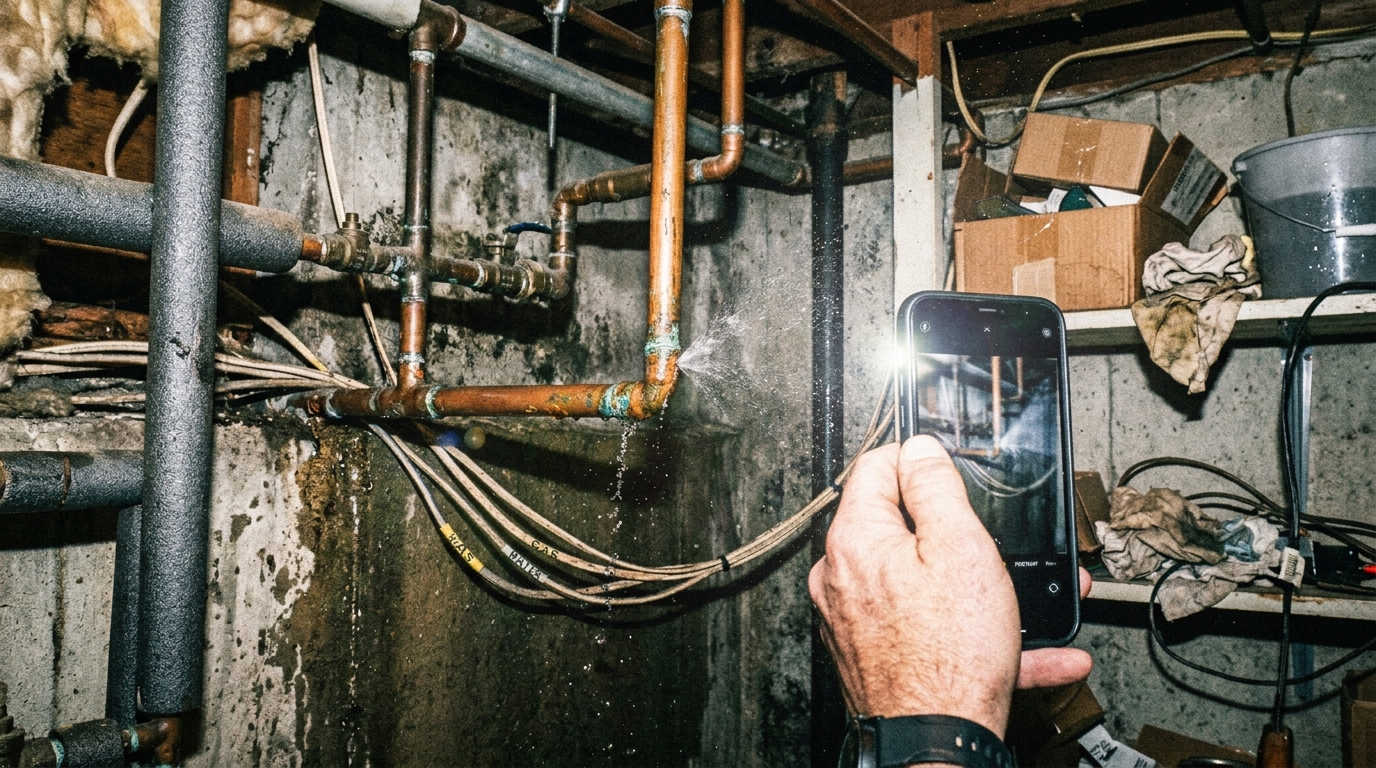
The single biggest pain point for small operators is after-hours coverage. Someone has to answer the phone at 2 AM when a pipe bursts. Traditional options are limited: you take the calls yourself, you hire an answering service, or you hope nothing goes wrong overnight.
Answering services charge per minute, and as Property Meld points out, per-minute billing models mean your highest-need months are your most expensive months. A cold snap that generates 30 after-hours calls in a week can blow through a monthly budget in days. After-hours vendor rates typically run 1.5x to 2x the normal labor cost, compounding the problem.
For a detailed look at how AI handles this specific problem, read this guide to after-hours maintenance AI for property managers.
The False Emergency Problem
Here’s a stat that should change how you think about maintenance triage: 40 percent of issues residents report as emergencies aren’t actually emergencies. That means nearly half of those urgent after-hours calls, the ones that trigger premium vendor dispatch rates, could have waited until morning.
For a 200-unit portfolio, even a few unnecessary emergency dispatches per month at $400 or more each adds up fast. Maintenance AI for small portfolios catches these misclassifications before an expensive truck rolls.
The Growth Gap
AI adoption in property management is accelerating. It surged from 21 percent in 2024 to 34 percent in 2025, with another 28 percent of respondents planning to adopt AI tools. More telling: according to AppFolio’s 2026 Benchmark Report, firms that have broadly adopted AI expect an average portfolio growth of 31 percent in 2026, nearly triple the 12 percent growth anticipated by those yet to implement.
The gap between adopters and non-adopters is widening. For small portfolios trying to compete with better-resourced operators, maintenance AI isn’t a luxury. It’s becoming a competitive necessity.
How Maintenance AI Works (Step by Step)
Understanding what maintenance AI for small portfolios actually does requires walking through a real scenario. Here’s what the workflow looks like when a tenant reports an issue:
Step 1: Intelligent Intake
A resident texts, calls, or emails about a problem. Instead of reaching a voicemail or a generic form, the AI engages conversationally. It asks follow-up questions: Where is the leak? Is there standing water? Can you send a photo? This eliminates the back-and-forth phone tag that typically eats up coordinator time.
The AI collects structured information (location, severity, photos, access instructions) in a single interaction, whether it’s 11 PM on a Tuesday or noon on a Saturday.
Step 2: Emergency Triage
Based on the information gathered, the AI classifies urgency using trained models rather than rigid scripts. A toilet that won’t stop running gets a different priority than a gas smell. This is where the emergency maintenance triage capability pays for itself, by preventing costly false-alarm dispatches while ensuring genuine emergencies get immediate attention.
Step 3: Self-Resolution Guidance
For common, simple issues (tripped breakers, garbage disposal resets, HVAC filter replacements), the AI walks the resident through troubleshooting steps. This is a major cost saver. If 15 percent of incoming requests can be resolved by the tenant with proper guidance, that’s 15 percent fewer work orders, fewer vendor invoices, and fewer scheduling headaches.
Step 4: Work Order Creation
When the issue requires a vendor, the AI creates a structured, documented work order directly inside the property management system. No manual re-entry. No copying notes from an email into the PMS the next morning. The work order includes the problem description, photos, urgency classification, and tenant contact details.
Step 5: Vendor Dispatch
The AI assigns vendors from preferred lists based on issue type, location, and availability. For small operators who don’t have a coordinator available around the clock, this is transformative. A plumbing emergency at midnight gets routed to the right plumber without anyone on the management team waking up (unless it needs to escalate).
Step 6: Follow-Up Communication
After the repair is scheduled or completed, the AI checks in with the resident. Was the issue resolved? Are you satisfied? This step improves tenant satisfaction scores without requiring any additional staff time.
Maintenance AI vs. the Alternatives
Small-portfolio operators typically choose from a handful of options for handling maintenance. Here’s how they compare:
Approach | Pros | Cons | Best Fit |
|---|---|---|---|
Owner handles everything | Zero cost | Burnout, inconsistent response, 3 AM calls | Under 10 units |
Answering service | Human voice, immediate pickup | Per-minute billing spikes, triage inconsistency, data stays outside PMS | 50 to 200 units, budget-conscious |
Virtual assistant (VA) | Flexible, human judgment | Requires training, time-zone gaps, no PMS integration | 50 to 300 units, scattered sites |
Maintenance AI | 24/7 consistency, PMS integration, self-resolution, subscription pricing | Setup investment, resident adoption curve | 50 to 1,000+ units |
Full-stack PMS with AI | All-in-one platform | May not specialize in maintenance coordination | 200+ units with growth plans |
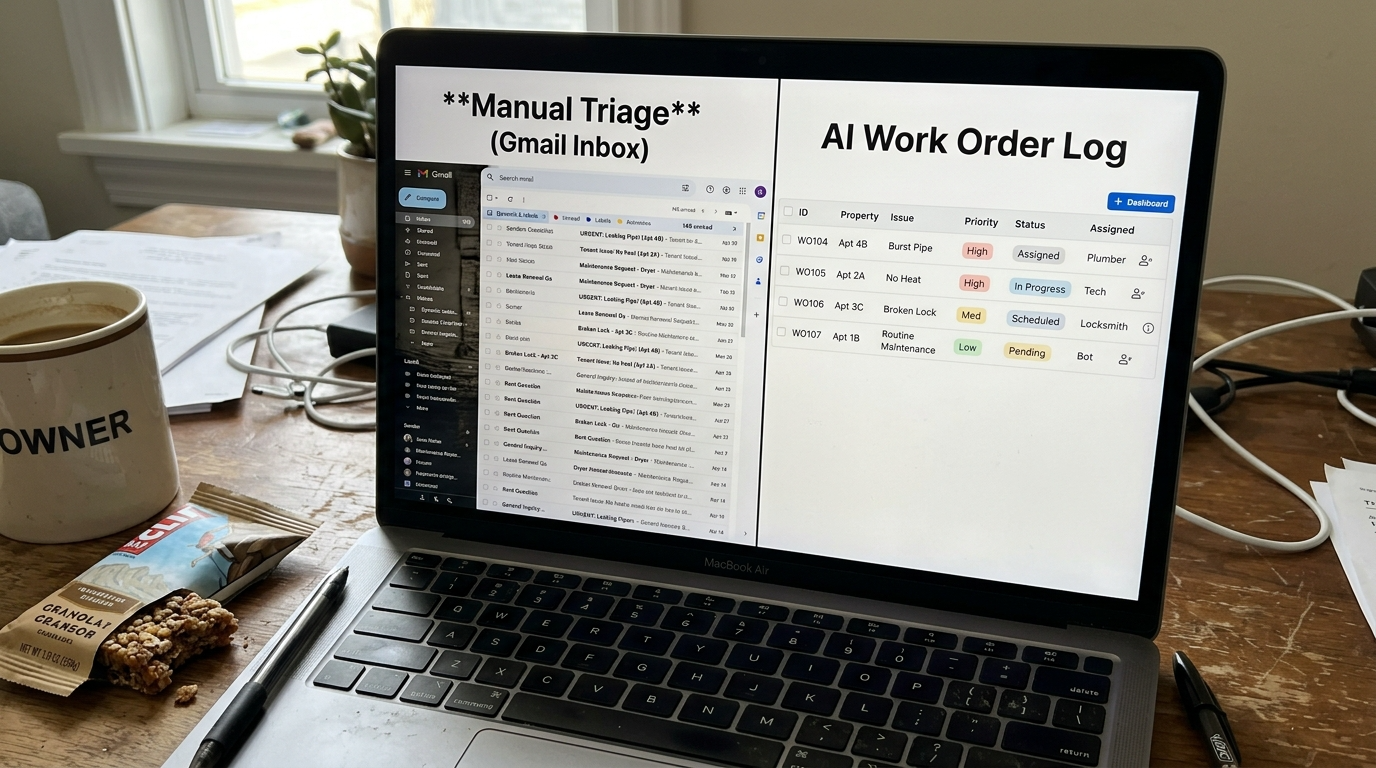
The key structural advantages of maintenance AI over answering services are worth unpacking. Property Meld details several: answering service interactions happen outside the PMS, so someone has to reconcile voice transcripts or email summaries every morning. Different agents make different judgment calls on the same scenario. And cost predictability is poor because billing scales with call volume, not portfolio size.
For a more detailed head-to-head comparison, see this breakdown of maintenance AI vs. call centers.
Practitioners on BiggerPockets confirm the frustration from the small-operator perspective. One poster built their own tool because existing options were either “too expensive enterprise software” or “just use a spreadsheet”, with nothing practical in between. Maintenance AI for small portfolios is increasingly filling that middle ground.
Key Metrics Maintenance AI Improves
Maintenance AI isn’t just about convenience. It moves measurable KPIs. Here are the benchmarks that matter, along with the evidence that AI improves them.
Response Time
Industry standard from Buildium’s maintenance metrics guide: under 4 hours is strong, under 24 hours is acceptable, and anything over 24 hours creates risk. AI handles intake instantly, any time of day, which compresses response time from hours to minutes.
Time to Resolution
For emergencies, the target is under 24 hours. For non-urgent issues, 1 to 3 days. Property Meld reports that companies using their AI system see repairs completed within 24 hours nearly double, from 12.5 percent to 23.75 percent.
Cost Per Repair
The same Property Meld data shows average cost per repair dropping from $394 to $320 after implementing AI. That $74 savings per work order adds up quickly across a portfolio. Vendoroo reports their clients see an average drop of $12 in maintenance cost per door per month.
Tenant Satisfaction
Property Meld’s data shows resident satisfaction scores rising from 4.11 out of 5 to 4.36 out of 5 with AI-assisted maintenance. The improvement comes from faster responses, better communication, and consistent follow-up.
First-Time Fix Rate
Buildium’s benchmark: above 80 percent is excellent, 50 to 79 percent is acceptable. AI improves this indirectly by collecting better diagnostic information upfront (including photos), so the right vendor shows up with the right parts the first time.
For a full analysis of how these metrics translate into financial returns, read this maintenance AI ROI guide covering costs, savings, and retention.
Financial Impact: 2026 ROI Benchmarks for 100-500 Units
Implementing AI coordination isn't just about saving time; it’s about protecting your bottom line from high-cost labor spikes.
Metric | Traditional (Manual) | AI-Enabled (2026) | Impact |
Response Time | 4 - 12 Hours | < 2 Minutes | 95% Improvement |
Emergency Triage Accuracy | ~60% | 98% | 40% fewer "false" dispatches |
Avg. Cost per Repair | $394 | $320 | $74 Savings per ticket |
Staff Labor (Weekly) | 15 - 20 Hours | 2 - 4 Hours | 80% Admin Reduction |
Tenant Satisfaction | 4.1 / 5.0 | 4.4 / 5.0 | Higher Lease Renewal Rates |
The 2026 Maintenance AI Tech Stack
To achieve full automation, your AI layer must "speak" to your existing software. Most small portfolio managers are using one of the following "Big Three" configurations:
AppFolio + Maintenance AI: Best for rapid scaling; allows AI to trigger "Work Order Created" notifications directly to owners.
Buildium + AI Triage: Ideal for cost-conscious managers; focuses on reducing per-minute answering service fees.
Entrata + Layered AI: Best for 300+ units requiring complex vendor routing and specialized labor categories.
What to Look for When Evaluating Maintenance AI
Not all maintenance AI is created equal. When evaluating tools for a small portfolio, these criteria separate genuinely useful products from marketing fluff.
PMS Integration Depth
The most important question: does the AI create work orders inside your existing property management system, or does it just log notes that someone has to act on later? Deep integration means work orders are created, updated, and tracked without manual re-entry. Shallow integration means you’re still reconciling data by hand every morning.
If PMS integration is a top concern, check which systems your prospective AI tool connects with before committing.
Training Data Quality
A general-purpose AI model doesn’t know that a “running toilet” and a “flooding bathroom” require very different responses. The best maintenance AI tools are trained on property management-specific data, thousands of real maintenance interactions, so they understand the vocabulary and urgency patterns unique to residential properties.
Channel Coverage
Can the AI handle phone calls, SMS, and email? Tenants communicate in different ways, and limiting intake to one channel creates blind spots. Voice capability is especially important for after-hours emergencies, where texting instructions to a panicking tenant isn’t always practical.
Emergency Escalation Protocols
When the AI identifies a true emergency (gas leak, fire, flooding), it needs a clear escalation path. That means notifying the property manager immediately and dispatching an emergency vendor, not just logging a high-priority ticket.
Fair Housing Compliance
This is a topic competitors consistently ignore, but it matters enormously for small operators who often lack legal review of their processes. AI systems must respond consistently regardless of the tenant’s name, accent, or language. Look for tools that document every interaction and apply the same triage logic universally. For more on this, see this guide to AI property management compliance and Fair Housing considerations.
Pricing That Fits Small Portfolios
Per-unit pricing is the most common model for AI property management tools. Tiered pricing segments costs by unit ranges or feature sets, while enterprise flat fees work for large operators but aren’t cost-effective below 1,000 units. For small portfolios, look for subscription models without steep minimums.
Custom development is an option but rarely makes sense at this scale: basic MVPs run $20,000 to $50,000, and advanced systems with predictive analytics cost $100,000 to $300,000 or more.
Common Misconceptions About Maintenance AI
“It’s Only for Large Operators”
This was true three years ago. Enterprise platforms dominated, and minimum unit counts priced out smaller operators. That’s changed. Subscription-based maintenance AI for small portfolios now exists specifically for the 50 to 500 unit range. The AppFolio benchmark data shows AI adoption is spreading across portfolio sizes, not just among the largest firms.
“It Replaces My Team”
Maintenance AI changes what your team does. It doesn’t eliminate the need for people. Instead of spending hours on intake calls and vendor coordination, your team focuses on vendor relationships, property inspections, and owner communication. The AI handles the repetitive, high-volume coordination work.
“It’s Just a Chatbot”
The distinction between a menu-based chatbot and real maintenance AI is the difference between a phone tree and a conversation. A chatbot says “Press 1 for plumbing, press 2 for electrical.” Maintenance AI says “Can you describe what’s happening? Is there water on the floor? How long has this been going on?” and then makes a triage decision based on the answers.
“My Portfolio Is Too Small to See ROI”
Consider the math. If maintenance AI prevents just two unnecessary emergency dispatches per month at $400 each, that’s $800 in savings. Add the time savings from automated intake and follow-up, the reduced cost per repair, and the tenant retention that comes from better satisfaction scores, and the ROI math works even at 50 units.
McKinsey’s research supports this at a broader level: AI-driven operations in asset-heavy industries reduce coordination cost by 20 to 40 percent when deployed systemically.
Getting Started with Maintenance AI for Small Portfolios
For small-portfolio operators ready to move beyond spreadsheets and answering services, the path forward starts with understanding your current maintenance volume and costs. Track your work orders for a month. Count after-hours calls. Note how many “emergencies” turned out to be non-urgent. That baseline tells you exactly where AI can help.
Haven builds AI agents specifically for property management maintenance, handling 24/7 intake, emergency triage, work order creation inside your PMS, vendor dispatch from preferred lists, and post-repair follow-ups across phone, SMS, and email. If you want to see what this looks like in practice, book a demo and walk through it with a real scenario from your portfolio.
Related Terms
AI maintenance coordinator: An AI system that performs the full coordination role for maintenance requests, from intake through resolution. Learn more about AI maintenance coordinators.
Emergency maintenance triage: The process of classifying incoming maintenance requests by urgency to determine response priority and dispatch timing.
Work order automation: Using software to create, route, update, and close work orders without manual data entry between systems.
Predictive maintenance: Using sensor data and historical patterns to anticipate equipment failures before they happen. This is distinct from maintenance AI, which focuses on coordinating reactive requests.
After-hours answering service: A human-staffed or AI-powered service that handles tenant maintenance calls outside business hours.
FAQ
How many units do you need before maintenance AI makes sense?
Most subscription-based tools work for portfolios as small as 50 units, though the ROI becomes clearer above 100 units. The key factor isn’t unit count alone but maintenance volume. A 75-unit portfolio with older properties generating 40 work orders per month will benefit more than a 200-unit portfolio of new construction with 15 requests per month.
How much does maintenance AI cost for a small portfolio?
Per-unit pricing is the most common model, typically charged monthly. Exact pricing varies by vendor and feature tier. Avoid tools with enterprise-level minimums (500 or 1,000+ units) that aren’t designed for smaller operators. Some providers, like Haven, use a sales-led model where pricing is discussed during a demo based on your specific portfolio.
Will tenants actually use it?
Adoption rates are generally high because AI maintenance tools meet tenants where they already communicate: phone, text, and email. AI chatbots resolve 65 to 75 percent of tenant inquiries without human intervention, suggesting tenants are comfortable interacting with AI when it solves their problem quickly.
Does maintenance AI integrate with my property management software?
The best tools create work orders directly inside your PMS. This is the single most important integration point. If a tool can’t write to your PMS, you’re still doing manual data entry, which defeats the purpose. Always verify integration depth before committing, and check available integrations for any tool you’re evaluating.
What happens when there’s a real emergency?
Properly configured maintenance AI identifies true emergencies (gas leaks, flooding, fire) and escalates them immediately. This means notifying the property manager directly and dispatching an emergency vendor, not just flagging a ticket. The AI should never delay a genuine emergency, and that escalation protocol should be something you configure and test during setup.
How is maintenance AI different from predictive maintenance?
Maintenance AI coordinates the reactive requests tenants submit (leaky faucets, broken appliances, HVAC issues). Predictive maintenance uses IoT sensors and data analysis to anticipate failures before they happen. They solve different problems. Most small portfolios will get far more value from coordination AI than from predictive systems, which require sensor hardware and work best on large commercial equipment.
Can maintenance AI handle multiple languages?
Some tools offer multilingual support across voice, SMS, and email channels. This is worth asking about during evaluation, especially for portfolios in areas with diverse tenant populations. Consistent service regardless of language also supports Fair Housing compliance.
How long does it take to set up?
Setup timelines vary, but most cloud-based maintenance AI tools can be configured within a few weeks. The key steps are connecting your PMS, uploading your vendor list, configuring escalation rules, and testing the system with sample scenarios before going live with tenants.