Weekend and Holiday Calls AI for Property Managers (2026)
Weekend and Holiday Calls AI covers after-hours 24/7, triages emergencies, creates PMS work orders, and reduces on-call burnout. Learn how in 2026.

TL;DR
Weekend and holiday calls AI refers to voice-powered AI agents that answer tenant and prospect phone calls when management offices are closed, covering the roughly 70% of weekly hours that standard 9-to-5 staffing leaves unattended. These systems triage emergencies, capture leasing inquiries, create work orders in your PMS, and dispatch vendors without waking up your on-call team for a dripping faucet at 2 AM. For property managers, the technology closes the gap between tenant expectations and operational reality during the most vulnerable hours of the week.
Weekend and holiday calls AI allows property management companies to answer tenant and leasing calls 24/7 using AI voice agents instead of voicemail or traditional answering services. The AI answers every call, identifies emergencies, creates work orders inside the property management system (PMS), dispatches vendors when required, schedules leasing tours, and documents every interaction.
For most property managers, the biggest benefits are:
- Never miss leasing inquiries during weekends
- Faster emergency response
- Reduced on-call burnout
- Lower answering service costs
- Better tenant satisfaction
- Automatic work order creation
- Complete call documentation
Unlike voicemail, AI actively resolves requests instead of simply recording messages.
Definition: What Is Weekend and Holiday Calls AI?
Weekend and holiday calls AI describes artificial intelligence voice agents designed to answer, understand, and act on tenant and prospect phone calls during periods when property management offices are closed. This includes Saturday and Sunday coverage, federal and local holidays, evenings, and any other time outside standard business hours.
Unlike voicemail (which most callers ignore) or traditional answering services (which employ human operators reading scripts), AI voice agents hold full conversations, classify issues by urgency, and write structured data directly into property management systems like AppFolio, Yardi, and Buildium.
The core idea is simple: tenants live in their homes around the clock, and problems don’t wait for Monday. AI that handles 24/7 maintenance request intake ensures that every call gets answered, documented, and routed correctly, whether it comes in at 3 PM on a Tuesday or 11 PM on Christmas Eve.
Book a demo with Haven to see how AI voice agents handle weekend and holiday calls for property managers.
At a Glance
Feature | Weekend & Holiday Calls AI |
|---|---|
Available | 24/7 |
Answers Every Call | Yes |
Handles Emergencies | Yes |
Creates Work Orders | Yes |
Schedules Tours | Yes |
Sends SMS Updates | Yes |
PMS Integration | Yes |
Vendor Dispatch | Yes |
Human Required | Only for escalations |
Why Weekend and Holiday Calls Matter in Property Management
A standard property management office operates Monday through Friday, 9 AM to 5 PM. That’s 40 hours out of 168 in a week. The remaining 70% of weekly hours are completely uncovered by typical staffing.
That math alone should give any property manager pause. But the real problem isn’t the schedule gap. It’s what happens during those uncovered hours.
Missed Calls Are Expensive
Property management companies have some of the worst missed call rates of any industry, with over 60% of calls to multifamily properties going unanswered. When a prospect calls about a vacant unit on Saturday afternoon and nobody picks up, 62% of those callers contact a competitor instead. They don’t call back. A single missed leasing call can represent $15,000 to $30,000 in annual rent depending on the unit.
Voicemail Doesn’t Work
The fallback for most offices is voicemail. But roughly 80% of callers who reach voicemail hang up without leaving a message. This isn’t surprising. A prospective renter browsing listings on Saturday afternoon wants to schedule a tour, not hear about your Monday hours.
The Monday Morning Surge Is a Warning Sign
Here’s a diagnostic insight many property managers overlook: if your maintenance team faces a flood of requests every Monday morning, that’s not just a busy start to the week. It’s evidence that weekend issues went unreported until business hours resumed. Tenants gave up trying to reach someone, waited it out, and called Monday. By then, a small leak may have become a big one.
Responsiveness Drives Tenant Retention
Among renters still deciding whether to renew their lease, 31% say that being more responsive to maintenance requests would likely convince them to stay. Tenant turnover costs property owners $3,000 to $5,000 or more per unit. Weekend and holiday calls AI directly addresses the communication gap that drives those decisions. For a deeper look at how AI supports tenant satisfaction and renewals, the connection between response times and retention is well documented.
Who Benefits Most From Weekend and Holiday Calls AI?
Property management companies
Multifamily operators
Single-family portfolios
HOA managers
Build-to-rent communities
Student housing
Affordable housing
Mixed-use developments
Teams experiencing
High after-hours call volume
Leasing inquiries on weekends
Burnout from on-call rotations
Slow maintenance response
Missed emergency calls
Tenant retention problems
What Weekend and Holiday Calls AI Actually Does
This isn’t just a fancy voicemail replacement. A properly configured AI voice agent performs several distinct functions during off-hours.
Emergency Maintenance Triage
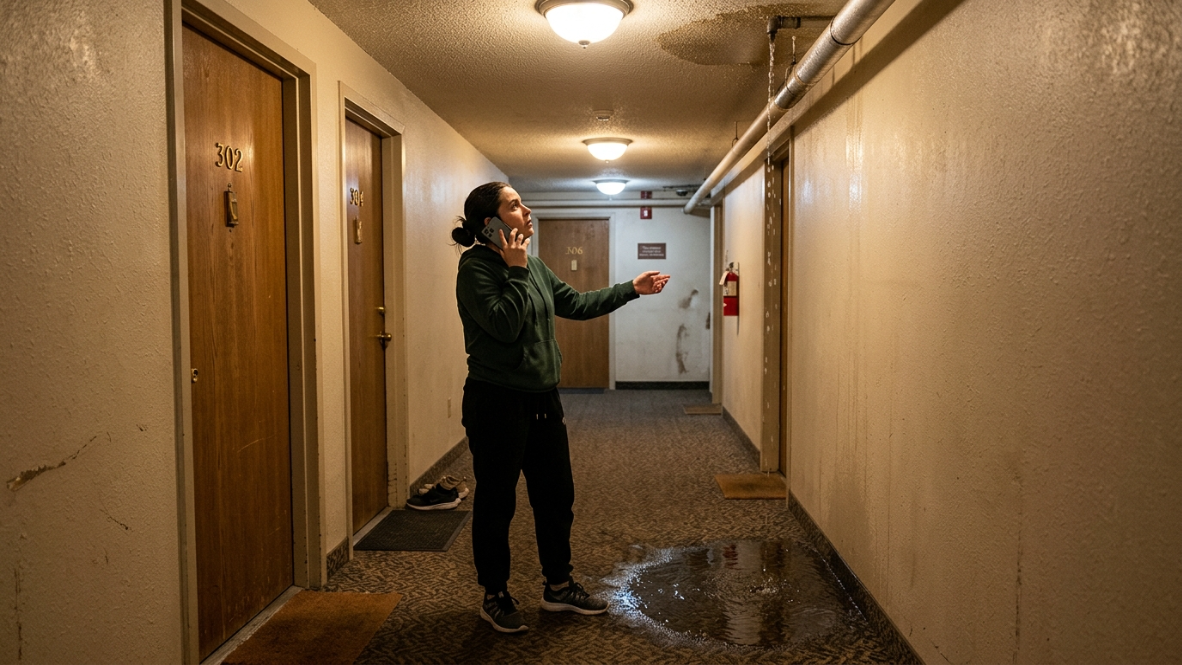
The single most important job. When a tenant calls about a burst pipe at midnight on a holiday, the AI identifies it as a true emergency, immediately notifies the on-call person or dispatches a vendor, and creates a work order in the PMS. For a dripping faucet, it creates a morning work order and sends the tenant an SMS confirmation. This classification system is the backbone of effective emergency maintenance triage.
Leasing Inquiry Capture and Tour Scheduling
Prospects don’t browse apartments on your schedule. Thursday evenings and Saturday afternoons are peak search times. AI answers those calls instantly, qualifies leads, provides unit details, and books tours without any human involvement.
Automatic Work Order Creation
The AI agent classifies the issue, proposes a maintenance slot, creates a ticket in the PMS, and sends a confirmation to the tenant. One analysis found this entire process takes about 2 minutes and 40 seconds, compared to six to nine minutes for a human handling the same call.
Vendor Dispatch
For emergencies that need immediate attention, AI can dispatch vendors from your preferred vendor list based on the issue type and property location.
Holiday-Aware Scheduling
A solid weekend and holiday calls AI system isn’t thrown off by public holidays. It automatically applies federal, state, or local holiday calendars to each property location, switches to special messages during maintenance blackout periods, and adjusts scheduling rules for seasonal needs like snow season emergencies or summer move-in surges.
Call Documentation
Every call is logged, transcribed, and stored. This creates an audit trail that matters for both operations and legal protection (more on that below).
Typical Weekend Call Workflow
Tenant calls.
AI answers immediately.
AI verifies resident information.
AI identifies issue.
AI determines emergency level.
AI checks property information.
AI creates work order.
AI dispatches vendor if necessary.
Tenant receives SMS confirmation.
PMS updates automatically.
AI vs. Traditional Weekend and Holiday Coverage
Property managers typically choose from four options for covering off-hours calls. Here’s how they compare:
Voicemail | On-Call Rotation | Human Answering Service | AI Voice Agent | |
|---|---|---|---|---|
Monthly cost | Free | $500 to $1,500 per employee | $235 to $1,600+ | $49 to $99 |
Answer rate | Low (80% hang up) | Variable | High | Near 100% |
Emergency triage | None | Human judgment | Script-based | Keyword recognition + escalation logic |
PMS integration | None | Manual entry next day | Rarely | Automatic |
Availability | Always on | Subject to human limits | Staffing-dependent | Always on |
Scalability | N/A | Doesn’t scale | Expensive to scale | Scales with no added cost |
The cost differences are stark. Traditional live answering services like Smith.ai start at $292.50 per month for just 30 calls, with overages of $9.75 to $11 per call. Ruby plans run from $235 for 50 minutes up to $1,640 for 500 minutes. On-call rotation stipends cost $500 to $1,500 per month per employee. AI voice agents typically start around $49 per month with per-minute rates around $0.35.
The data suggests that 88% of after-hours calls are non-emergencies. For those calls, AI handles the work just fine, and humans only need to get involved for the remaining 12%. For a detailed comparison, see this breakdown of AI vs. human leasing agents, which covers similar trade-offs in the leasing context.
Estimated ROI Example
Portfolio Size | Missed Calls Per Month | Estimated AI Savings |
|---|---|---|
50 Units | 8 | Moderate |
150 Units | 24 | High |
300 Units | 50+ | Very High |
800 Units | 100+ | Extremely High |
Example
A 250-unit apartment community paying an answering service $600/month could reduce costs while improving response time through AI automation. Capturing only one additional lease renewal or one new renter each month may offset the entire AI investment.
How Emergency Triage Works During Off-Hours
Property management is one of the few industries where an unanswered call at 10 PM can lead to thousands of dollars in damage, a displaced tenant, or a legal claim. A burst pipe that floods three floors overnight. A heating system that fails in January, freezing every pipe in the building. These situations don’t wait for business hours.
The Classification System
AI voice agents categorize calls into tiers:
True emergency: Gas leak, flooding, fire, no heat in winter, security breach. These trigger immediate on-call notification or vendor dispatch.
Urgent but not emergency: No hot water, lockout, HVAC failure in moderate weather. These create priority work orders for same-day or next-morning response.
Routine: Dripping faucet, squeaky door, cosmetic issues. These generate standard work orders scheduled during normal business hours.
One property management company found that after deploying weekend and holiday calls AI, after-hours interruptions to human staff dropped by 78%. Only about 10% of weekend calls needed human escalation.
The Legal Dimension
Depending on your jurisdiction, failure to respond to a habitability emergency can create legal exposure. The difference between “we have a timestamped transcript showing our AI identified the emergency at 11:04 PM and dispatched a plumber at 11:06 PM” and “it went to a generic voicemail nobody checked until Monday” is enormous in a courtroom. Emergency maintenance that goes unaddressed also costs far more to fix. Average water leak claims run over $55,000 according to Chubb, and emergency repairs typically cost three to five times more than preventive maintenance.
The Burnout Problem That Weekend AI Solves
The human cost of after-hours coverage deserves its own section. The responsibility for weekend and holiday calls typically falls on property managers themselves through rotating on-call schedules. There is no “off switch.” A property manager on call is tethered to their phone through every dinner, every family event, every attempt at rest.
This model is a recipe for burnout. It leads to high employee turnover and declining performance during regular business hours. The property management industry already struggles with retention, and 24/7 availability expectations make it worse.
Weekend and holiday calls AI doesn’t eliminate on-call entirely. Someone still needs to be reachable for true emergencies. But it does mean that person only gets called for actual emergencies, not for the tenant who wants to know if they can paint their bedroom or the prospect asking about pet policies at 9 PM on a Sunday. That’s a fundamentally different quality of life.
For property managers exploring this path, understanding the full scope of an AI maintenance coordinator helps clarify what the technology handles versus what still needs a human.
Common Weekend Calls AI Can Handle
Call Type | AI Handles? | Human Needed? |
|---|---|---|
Water Leak | Yes | Sometimes |
Lockout | Yes | If locksmith required |
Leasing Question | Yes | No |
Pet Policy | Yes | No |
Maintenance Request | Yes | No |
Parking Question | Yes | No |
Noise Complaint | Yes | Sometimes |
Gas Leak | Yes | Immediate escalation |
Fire | Yes | Immediate escalation |
Broken Appliance | Yes | Usually no |
Key Features to Look For
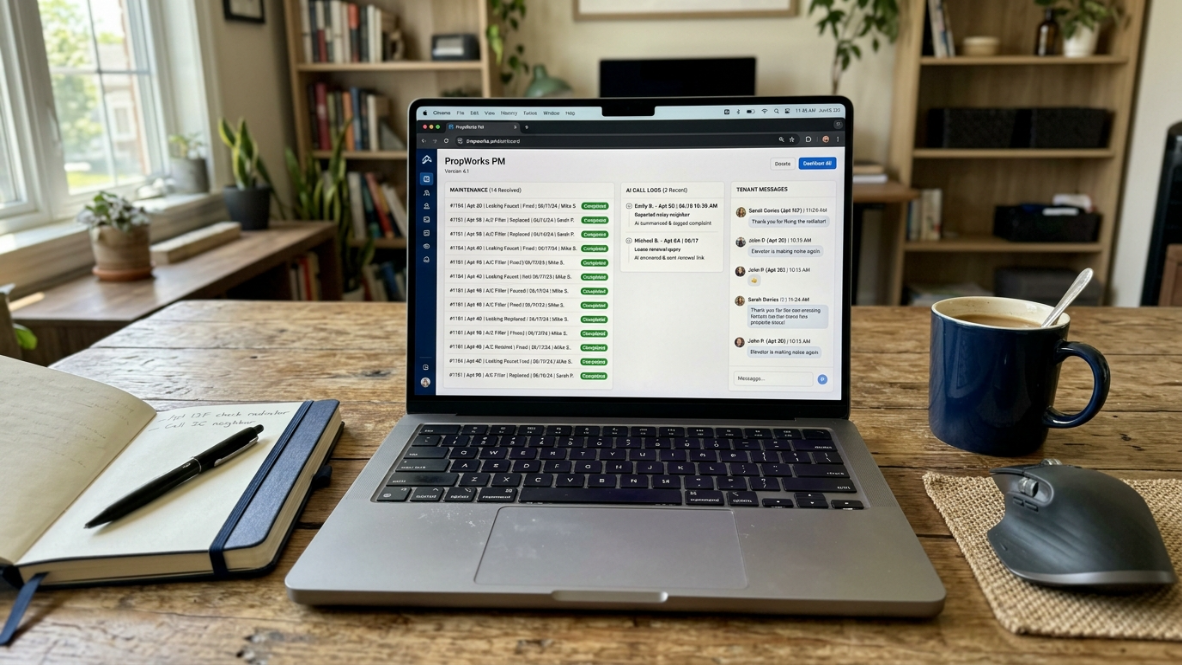
Not all weekend and holiday calls AI systems are equal. When evaluating solutions, prioritize these capabilities:
PMS integration that actually writes data. The AI should create work orders, update ticket statuses, and log notes directly in AppFolio, Yardi, or Buildium. If it just sends you an email summary, you’re still doing manual data entry Monday morning. Property managers using AppFolio should look specifically at AI work order creation capabilities.
Emergency keyword recognition and escalation logic. The system needs to understand that “water everywhere” and “smell gas” require immediate human notification, while “toilet runs sometimes” does not.
Holiday and seasonal scheduling rules. Can it automatically recognize holidays? Can you set blackout periods? Does it adjust behavior for seasonal patterns like snow emergencies or summer move-ins?
Multichannel support. Voice is the primary channel, but the best systems also handle SMS and email, creating a unified record across all tenant touchpoints.
Call documentation and transcription. Every interaction should be logged with timestamps, transcripts, and classification data for both operational review and legal protection.
Conversation memory. If a tenant calls twice about the same issue, the AI should remember the first conversation and reference the existing work order rather than starting from scratch.
See how Haven’s AI agents work across voice, SMS, and email with full PMS integration.
Questions to Ask AI Vendors Before Buying
Before choosing a platform, ask:
Does it integrate directly with AppFolio, Yardi, or Buildium?
Is work order creation automatic?
Can it dispatch vendors?
Does it support multilingual callers?
Can conversations transfer to a live person?
How are emergencies detected?
Is every call recorded?
Can the AI learn property-specific rules?
Is Fair Housing compliance built into responses?
What uptime guarantee is provided?
Honest Limitations and Trade-Offs
Any honest discussion of weekend and holiday calls AI needs to address what can go wrong.
The biggest risk is emergency misclassification. If the AI fails to recognize a true emergency and routes it as a routine request, the consequences can be serious. This is why triage logic, keyword libraries, and escalation rules need careful configuration and ongoing QA.
As one industry analysis put it, “A fast, accurate, professional AI conversation usually goes unnoticed. A slow, confused one feels worse than a missed call.” Quality of the AI experience matters enormously. A poorly implemented system can damage tenant relationships rather than improve them.
Buying an AI agent also doesn’t finish the job. The system needs clear goals, guardrails, regular testing, and someone reviewing escalation patterns. Property managers who want to avoid common pitfalls should review maintenance AI mistakes and fixes before deployment.
There’s also the Fair Housing compliance question. AI must follow the same fair housing rules as human agents. It cannot screen tenants differently based on protected characteristics, and property-management-specific training is essential to avoid inadvertent violations.
Common Implementation Mistakes
Many failed AI deployments happen because organizations:
Skip emergency testing
Use generic prompts
Fail to train the AI on property policies
Ignore escalation rules
Never review call transcripts
Don't update vendor lists
Lack PMS integration
Expect AI to replace every employee
Successful deployments continuously improve based on real call data.
How to Measure Success
Track these KPIs after deployment.
KPI | Goal |
|---|---|
Answer Rate | 95–100% |
Average Response Time | Under 5 seconds |
Emergency Escalation Time | Under 2 minutes |
Leasing Calls Captured | Increasing |
Tenant Satisfaction | Increasing |
Missed Calls | Near Zero |
Work Order Accuracy | Above 95% |
On-call Interruptions | Declining |
The Market Is Moving Fast
AI adoption among property managers jumped from 21% in 2024 to 34% in 2025, with another 28% planning to adopt AI tools. Organizations using AI report 20% to 30% improvements in operational efficiency and time savings of up to 10 hours per week.
The broader AI voice agent market was valued at $2.54 billion in 2025 and is forecast to reach $35.24 billion by 2033. Property management is one of the fastest-moving verticals in this space.
The threshold where after-hours answering services become necessary rather than optional typically falls around 200 units. At that volume, the cost of missed calls exceeds what you’d pay for AI coverage. But with AI pricing starting as low as $49 per month, even smaller portfolios can justify the investment now.
Is Weekend and Holiday Calls AI Worth It?
Weekend AI is generally worthwhile if your business experiences one or more of the following:
More than 20 after-hours calls each month
Frequent missed leasing inquiries
High answering service costs
Burned-out on-call staff
Growing maintenance requests
Multiple properties
Desire for 24/7 tenant communication
Smaller portfolios may benefit primarily from improved tenant experience, while larger operators often realize measurable cost savings and operational efficiency.
FAQ
Can AI really handle emergencies on a holiday?
Yes, with proper triage configuration. The AI uses keyword recognition and contextual understanding to identify true emergencies (flooding, gas leaks, no heat in winter) and immediately escalates them to your on-call person or dispatches a vendor. The key is getting the classification rules right during setup and testing them regularly.
Will tenants know they’re talking to AI?
Most won’t notice if the system is fast and accurate. The technology has reached the point where natural-sounding conversations happen in real time. Tenants care about getting their problem addressed, not whether the voice on the phone is human or artificial. That said, a poorly configured AI with long pauses or irrelevant responses will be obvious and frustrating.
What happens if the AI can’t handle a call?
Good systems have clear escalation paths. If the AI can’t resolve the issue or detects the caller is upset and wants a human, it transfers the call to your on-call person or takes a detailed message with a callback commitment. The goal is never to leave a caller stranded.
Is weekend and holiday calls AI only for large portfolios?
No. While the economics become more compelling at scale (200+ units is a common inflection point), smaller portfolios benefit from eliminating on-call burnout, capturing weekend leasing inquiries, and ensuring emergency response. AI pricing has dropped enough that even operators with a few dozen units can see positive ROI.
How does AI handle different property types?
Residential properties generate the most after-hours calls because tenants live there and experience problems around the clock. Commercial properties tend to have fewer overnight emergencies. The AI can be configured with different rules, escalation thresholds, and vendor lists for each property type in your portfolio.
Does the AI integrate with my property management software?
Most weekend and holiday calls AI systems integrate with major PMS platforms including AppFolio, Yardi, and Buildium. The integration should be read-write, meaning the AI can both pull property and tenant data and create work orders, notes, and tickets directly in your system. Check out this guide on PMS integration best practices for what to look for.
What about multilingual tenants?
Many AI voice agents support multiple languages, switching automatically based on the caller’s language preference. This is particularly valuable for portfolios in diverse markets where tenants may not be comfortable communicating in English.
How quickly can weekend and holiday calls AI be deployed?
Most implementations take one to four weeks depending on portfolio size, PMS integration complexity, and the level of customization needed for triage rules, vendor lists, and property-specific instructions. The setup phase matters. Rushing it leads to misconfigurations that erode tenant trust.
Haven’s Maintenance AI and Voice AI provide 24/7 coverage across voice, SMS, and email, with emergency triage, automatic work order creation in your PMS, and vendor dispatch from your preferred lists. That includes every weekend, every holiday, and every hour in between.
Book a demo with Haven to see how it works for your portfolio.