Leasing AI ROI in 2026: Costs, Formula & Benchmarks
Learn how to measure Leasing AI ROI in 2026—formula, key metrics, benchmarks, and a worked example. Cut vacancy, save labor, and boost conversions.

TL;DR
Leasing AI ROI measures the net financial return a property management operation gets from deploying AI-powered leasing tools, expressed as a ratio of gains (reduced vacancy loss, labor savings, higher conversion rates) to the cost of the tool. The typical ROI multiple ranges from 3x to 10x. Most teams see measurable time savings within weeks, with full financial payback in 12 to 18 months. In 2026, with median list-to-lease times hitting 41 days and 60% of prospect engagement happening after hours, the case for leasing AI has shifted from “nice to have” to “cost of not adopting.”
What Is Leasing AI ROI?
Leasing AI ROI is the net financial return a property management operation gains from deploying AI-powered leasing automation. It accounts for measurable gains like reduced vacancy loss, lower labor costs, and higher lead-to-lease conversion, minus the total cost of the AI tool itself. The result is typically expressed as a percentage or a return multiple.
This isn’t an abstract concept. It’s the number you bring to your owner, your CFO, or your board when someone asks, “Is this AI thing actually working?”
Why It Matters More in 2026
Three market forces make leasing AI ROI especially relevant right now:
Longer vacancy periods. The median list-to-lease time hit 41 days in January 2026, up from 26 days in January 2022. Every day a unit sits empty costs money, and every day AI shaves off that timeline goes straight to the bottom line.
After-hours demand. Roughly 60% of prospect engagement happens outside traditional business hours. If your leasing office closes at 5 PM, you’re invisible during the majority of active demand.
Competitive pressure. According to EliseAI’s 2025 State of AI in Multifamily survey of 280 executives, 78% admitted they’ve already lost business to AI-enabled competitors. Two-thirds believe early adopters will maintain a permanent advantage.
For a broader look at where AI fits across property management operations, see our guide on AI property management benefits, use cases, and ROI.
The ROI question is largely settled among operators. The real debate has moved to execution. As recent industry analysis shows, multifamily operators are embracing AI quickly, but integration problems slow adoption more than ROI concerns or staff training gaps do.
The ROI Formula
Here’s the standard formula for calculating leasing AI ROI:
ROI (%) = [(Recovered Revenue from Reduced Vacancy + Labor Cost Saved + Efficiency Gains) – Cost of the AI Tool] / Cost of the AI Tool × 100
Let’s break down each component.
The Three Revenue Buckets
1. Recovered revenue from reduced vacancy. This is the rent you would have lost to empty units. If AI fills a unit 5 days faster and your daily vacancy cost is $60, that’s $300 recovered per unit turn.
2. Labor cost saved. This covers the hours your team no longer spends on repetitive leasing tasks like answering routine inquiries, scheduling tours, and following up with leads. AppFolio noted that users of its AI leasing assistant saved 10+ hours per week in administrative work per agent.
3. Efficiency gains. Higher conversion rates mean you spend less on marketing per signed lease. Better lead qualification means agents focus on prospects who are ready to act, not tire-kickers.
Leasing isn’t the only area where AI generates measurable returns. If you manage maintenance workflows, the ROI math looks similar; our maintenance AI ROI guide walks through costs, savings, triage, and retention.
Worked Example: 100-Unit Property
Let’s say you manage a 100-unit property with an average rent of $1,500/month ($50/day).
Component | Calculation | Annual Value |
|---|---|---|
Vacancy reduction | 100 units × 0.5 turns/year × 5 days saved × $50/day | $25,000 |
Labor savings | 10 hours/week × $25/hour × 52 weeks | $13,000 |
Conversion efficiency | 15% reduction in cost per lease × $500 avg cost × 50 leases | $3,750 |
Total gains | $41,750 | |
AI tool cost | $5/unit/month × 100 units × 12 months | $6,000 |
Net return | $35,750 | |
ROI | ($35,750 / $6,000) × 100 | 596% |
This example is conservative. It doesn’t include the value of improved tenant retention, which avoids the $2,000 to $5,000 cost of a full unit turn (vacancy loss, make-ready expenses, leasing commissions).
Key Metrics That Feed Leasing AI ROI

You can’t calculate ROI without knowing which numbers to track. Here are the metrics that matter most.
Lead-to-Lease Conversion Rate
The percentage of prospective renters who become actual tenants. This is the single most important metric for evaluating whether your leasing operation is working.
Baselines: Manual leasing workflows convert only 10% to 15% of leads into leases without automation, according to industry benchmarks. But “conversion rate” means different things to different teams. With tight lead definitions, you might see 1 lease per 9 leads (about 11%). With broader definitions that count every inquiry, it’s closer to 1 in 25 (4%). Both are valid measurements of different realities.
AI impact: AI-powered leasing assistants can increase tour-to-lease conversion rates by 30% or more. In EliseAI’s survey, 56% of operators saw moderate conversion uplift with AI, and nearly 30% reported a significant increase.
Cost Per Lease
The total cost (marketing, labor, technology) to produce one signed lease. Improving conversion rate directly reduces cost per lease because you need fewer leads to achieve the same number of move-ins.
Vacancy Cost Per Day
According to NMHC research, the average cost of one vacant unit day in a Class B multifamily property runs $45 to $75. An AI leasing assistant that fills units even 5 days faster generates $225 to $375 per unit turn in avoided vacancy loss.
With U.S. multifamily vacancy at 4.8% in Q1 2026 and average rents at $2,217/month, every vacant day is more expensive than it was two years ago.
Average Days on Market (DOM)
The average time from listing a vacant unit to signing a lease. This KPI reflects marketing effectiveness, pricing competitiveness, and overall desirability. Tracking DOM is essential for minimizing vacancy loss. When AI reduces DOM by even a few days across a portfolio, the cumulative revenue impact is substantial.
Lead Response Time
This one is backed by hard data. According to Zillow’s research, responding within the first 1 to 2 minutes of receiving an inquiry produces a 40% chance of prospect engagement. Waiting 30 minutes drops that to 10%.
AI responds in seconds, every time. That speed advantage alone can explain a large portion of the conversion uplift.
To understand what AI leasing tools actually do at each stage, see our overview of AI leasing assistants, their key features, and how vendors compare.
Staff Hours Saved Per Week
AI handles the repetitive volume (answering FAQs, scheduling tours, qualifying leads) so your team can focus on high-value activities like closing and relationship building. The typical savings range is 10 to 15 hours per week per agent.
Tenant Retention and Renewal Rate
This one often gets overlooked in leasing AI ROI calculations, but it matters. Over 65% of operators report improved renewal rates when AI handles consistent communication throughout the tenant lifecycle. Improving retention by 5% to 10% avoids the $2,000 to $5,000 cost of a unit turn.
Leasing Funnel Stages
A leasing funnel breaks your pipeline into five sequential stages: inquiries, showings, applications, approvals, and signed leases. Measuring how many prospects survive each transition reveals exactly where AI is (or isn’t) moving the needle. If your inquiry-to-showing rate jumps but showing-to-application stays flat, you know the AI is great at scheduling but your in-person experience needs work.
Benchmark Data: What “Good” Looks Like
Here’s what the numbers look like across the industry, pulled from multiple sources rather than any single vendor.
Conversion Benchmarks
Metric | Manual Baseline | AI-Enabled |
|---|---|---|
Lead-to-lease rate | 10–15% | 13–20%+ (30% uplift) |
Tour-to-lease rate | Varies by market | 30%+ improvement |
After-hours lead capture | Near zero | 60% of engagement captured |
Operational Savings
The average AI property management ROI falls in the 3x to 10x range, driven by:
15% to 30% reduction in vacancy days
20% to 40% reduction in administrative time
10 to 15 hours saved per week on leasing tasks per agent
Enterprise AI platforms typically cost $500 to $5,000 per month, which works out to $2 to $10 per unit for portfolios of 100 to 500 units.
Real-World Results
Asset Living reported a 300-basis-point increase in occupancy across a 450,000-unit portfolio after deploying an AI leasing and communication platform.
Mill Creek Residential cut their overflow call center subscription, which had been converting under 1% of leads to leases, and saw conversion improvements across the entire prospect-through-customer lifecycle with AI. This case is worth noting because it highlights that leasing AI ROI should be measured against the baseline failure rate of your current solution, not against zero.
EliseAI reports that across its client base, with over 1.5 million customer interactions per year and 90% of prospect workflows automated, the platform has contributed to $14 million in aggregate payroll savings.
For more data points on how AI is performing across property management, see our AI property management statistics page.
Payback Timelines
Most teams see measurable time savings within weeks of implementation. Broader financial impact typically becomes visible within a few months depending on portfolio size. Full ROI justification (15% to 25% operational cost reductions across enterprise portfolios) often takes 12 to 18 months.
How Leasing AI Drives Each ROI Component
Understanding the formula is one thing. Understanding the mechanisms is another.
Speed: Capturing the After-Hours Gap
When 60% of prospect engagement happens outside business hours, a leasing team that only operates 9-to-5 is leaving money on the table. AI responds instantly at 2 AM on a Sunday just as well as it does at 10 AM on a Tuesday. That consistency is worth more than most operators initially estimate.
Conversion: Consistent Follow-Up at Scale
Human leasing agents are inconsistent. Some follow up religiously. Others let leads go cold. AI sends every follow-up, qualifies every lead, and schedules every tour with the same process every time. The 30%+ conversion uplift isn’t magic; it’s consistency at scale.
Labor: More Units Per Agent
A 20-unit property that reduces staff time by 60% on leasing tasks saves about 20 hours weekly, roughly half a full-time employee. At a fully loaded property management salary of $60,000 annually, that’s $30,000 in labor recovery. Scale that to a 500-unit portfolio and you’re looking at $750,000 in potential labor savings.
This doesn’t necessarily mean layoffs. In most cases, it means each agent can manage more units, which changes the economics of growth. Our guide on AI workers in property management explores how this shift plays out for staffing and operations.
Vacancy: Compounding Days Saved
A 5-day reduction per unit turn at Class B rents ($45 to $75/day vacancy cost) saves $225 to $375 per turn. Multiply that across hundreds of units and multiple turns per year, and vacancy reduction alone can justify the entire cost of the tool.
Retention: The Hidden Multiplier
Better communication during the lease period leads to higher renewal rates. When tenants feel heard and issues get resolved quickly, they stay. Every renewal you secure avoids a full unit turn cycle, which is one of the most expensive events in property management.
Common Mistakes When Calculating Leasing AI ROI
Measuring Only Cost Savings, Ignoring Revenue Recovery
The labor savings are easy to quantify. The revenue recovery from reduced vacancy and higher conversion is harder to calculate but often 2 to 3 times larger. If your ROI model only includes the cost side, you’re dramatically understating the return.
Not Establishing Pre-Implementation Baselines
You can’t measure improvement without knowing where you started. Before deploying any AI tool, document your current lead response time, conversion rate, average days on market, and staff hours spent on leasing tasks.
Comparing AI to Zero Instead of Current Costs
Some operators compare the AI cost to having no tool at all. That’s the wrong comparison. Compare it to what you’re spending now: call centers, additional headcount, marketing waste from low conversion. Mill Creek’s experience is instructive here. Their overflow call center was converting under 1% of leads. The relevant comparison is AI performance versus that baseline, not versus some theoretical minimum.
For a deeper look at how AI stacks up against traditional call centers, see our AI vs. call center comparison for property management.
Ignoring Integration Complexity as Hidden Cost
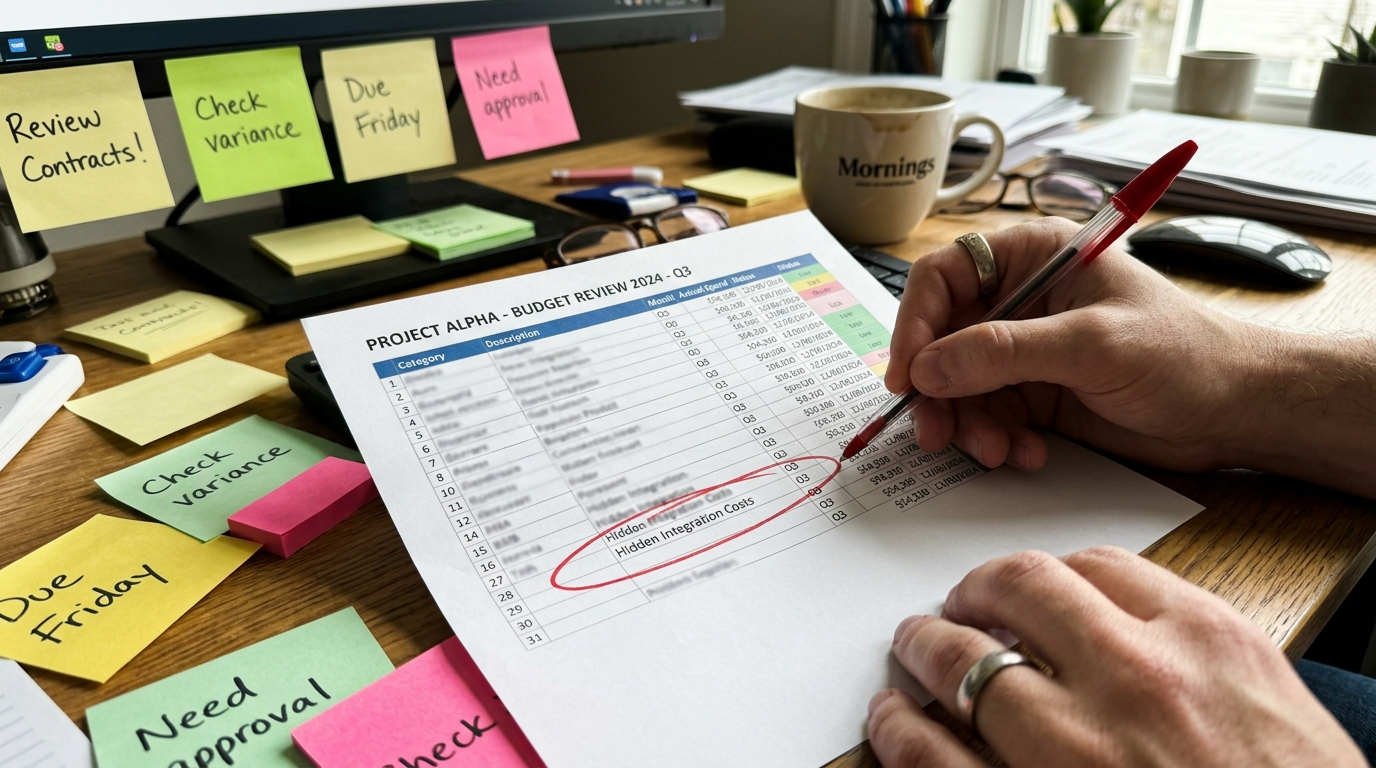
Practitioners on Reddit consistently flag this point. People often like AI for simple tenant questions, but they warn against tools that need too much manual cleanup after setup. Integration with your PMS, data quality issues, and staff training time all add real costs that belong in your ROI calculation. The tool might pay for itself quickly, but only if implementation goes smoothly.
Over-Counting Projected Savings Without Pilot Validation
Vendor projections are optimistic by design. Run a 60-to-90-day pilot on a subset of your portfolio before extrapolating savings across everything you manage. ROI depends on portfolio size and current response latency, and many pilots show measurable gains within that window.
Related Terms
Leasing automation. The broader category of technology that streamlines leasing workflows, from lead capture through lease signing. AI leasing is a subset that adds intelligent decision-making to automation.
AI leasing assistant vs. AI leasing agent. An AI leasing assistant handles specific tasks (answering questions, scheduling tours). An AI leasing agent operates more autonomously, managing entire workflows from lead qualification through follow-up across phone, SMS, and email.
Agentic AI in property management. AI systems that don’t just respond to commands but take independent actions, like creating work orders, dispatching vendors, or nurturing leads based on behavior patterns. Learn more about where this trend is heading in our property management AI trends guide.
Net Operating Income (NOI). The revenue metric AI leasing directly influences. By reducing vacancy and lowering operational costs, AI tools push NOI higher without requiring rent increases. In EliseAI’s survey, 72% of executives worried that slow AI adoption could negatively impact NOI within two years.
Cost per door. The operational cost to manage a single rental unit. Enterprise AI platforms typically add $2 to $10 per door per month, making it one of the lower-cost line items in a property management budget.
Lead nurturing. The process of maintaining engagement with prospects who aren’t ready to lease immediately. AI excels here because it never forgets to follow up, never gets busy, and never deprioritizes a “maybe” lead.
Frequently Asked Questions
What is a good ROI for leasing AI?
The industry benchmark is a 3x to 10x return on the cost of the tool. A well-implemented deployment on a 100+ unit portfolio should comfortably exceed 3x. The wide range depends on your starting baseline (how inefficient your current leasing process is), portfolio size, and local market conditions.
How long does it take to see ROI from AI leasing tools?
Time savings show up within weeks. Agents immediately spend less time on repetitive tasks. Financial ROI (measurable impact on vacancy, conversion, and revenue) typically becomes visible within 2 to 3 months. Full payback on the investment, including implementation costs, usually takes 12 to 18 months for enterprise portfolios.
Does leasing AI replace leasing agents?
No, and operators who deploy it with that expectation usually get poor results. Leasing AI handles the high-volume, repetitive work (answering FAQs, qualifying leads, scheduling tours, sending follow-ups) so that human agents can focus on closing, relationship building, and complex situations. The practical outcome is that each agent can manage more units, not that you eliminate agents.
That said, there is a generational dimension. Some senior staff acknowledge the value of AI tools but don’t expect to implement them before retiring. This creates an organizational dynamic that can delay ROI realization.
How do I measure leasing AI ROI for a small portfolio?
The formula is the same, but the inputs scale differently. For a small portfolio (under 50 units), labor savings and faster vacancy fills are the biggest ROI drivers. Track these four metrics before and after implementation: lead response time, lead-to-lease conversion rate, average days on market, and weekly hours spent on leasing tasks. A 60-to-90-day pilot will give you enough data to project annual returns. For guidance on growing from there, our AI scaling guide for property management covers the progression.
What’s the biggest risk to leasing AI ROI?
Poor integration with your existing PMS or CRM. If the AI tool can’t read your listings, sync with your calendar, or update your lead records automatically, your team ends up doing manual cleanup that erodes the time savings. Before signing any contract, verify the tool integrates with your specific systems and test the integration during a pilot.
Should I factor in the cost of NOT adopting AI?
Yes. With 78% of multifamily executives reporting they’ve already lost business to AI-enabled competitors, the ROI calculation increasingly includes opportunity cost. If your competitors respond to leads in 30 seconds and you respond in 3 hours, you’re losing leases to speed, not price.
What data do I need to build a leasing AI business case?
At minimum, you need: current lead volume and source breakdown, lead-to-lease conversion rate, average days on market, vacancy cost per day, staff hours spent on leasing tasks per week, and current technology costs (call center, lead management tools). With those numbers and the formula above, you can model projected ROI at different improvement levels.
Making the Case
The leasing AI ROI conversation has shifted. Two years ago, the question was whether AI could meaningfully improve leasing operations. Today, the data from hundreds of thousands of units and millions of interactions makes the financial case clear. The remaining question is execution: which tool, how fast, and how well it integrates with your existing stack.
If you’re building a business case or evaluating tools for your portfolio, book a demo with Haven to see how AI leasing agents handle phone, SMS, and email inquiries, qualify leads, schedule tours, and integrate directly with your PMS.